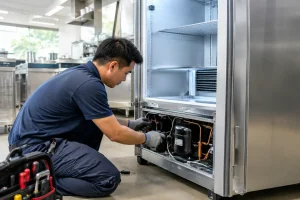

A washing machine that suddenly sounds like a train during spin cycle is not just noisy – it may be telling you when to replace washer bearings. Bearings support the inner drum as it turns at high speed. Once they wear out, the machine can become loud, unstable, and eventually unable to spin properly.
For homeowners, landlords, and businesses in Singapore, acting early can prevent a bearing fault from damaging the drum, tub, motor components, or drive system. The key is separating a genuine bearing problem from other faults that can create similar symptoms.
What Washer Bearings Do
Washer bearings are heavy-duty rings fitted around the rear of the drum shaft. They allow the drum to rotate smoothly while carrying wet laundry, which can be very heavy during a spin cycle. A seal sits near the bearings to stop water, detergent residue, and moisture from reaching them.
Over time, that seal can fail. Water then enters the bearing housing, washing away grease and causing corrosion. Once the bearings become rough or loose, the drum no longer turns evenly.
Front-load washers are especially likely to show bearing-related wear because their drum spins at high speeds. Top-load models can also develop similar issues, although the design and repair process are different.
When to Replace Washer Bearings
Bearings should be replaced when they are clearly worn, noisy, or loose, but before the damaged parts affect the washer’s drum assembly. Waiting until the machine stops completely can turn a straightforward component repair into a more expensive repair-or-replace decision.
Age alone is not a reliable reason to replace them. A well-maintained washing machine may run quietly for many years, while a unit exposed to repeated overloading, water leaks, or heavy daily use may develop bearing problems sooner. What matters most is the condition of the bearings and the drum shaft, not simply how old the appliance is.
1. A loud roaring or rumbling sound during spin
A deep rumble, growl, or aircraft-like roar that becomes louder as the drum speeds up is the most common sign. The sound is usually much more noticeable during spinning than during washing or filling.
Do not confuse this with a coin, bra wire, zipper pull, or other object trapped between the inner and outer drums. A trapped object may scrape or tick at a certain point in each rotation. Worn bearings usually produce a continuous rumble that rises with the drum speed.
2. The inner drum has too much movement
With the washer switched off and empty, open the door and hold the inner drum near the top. Gently lift it up and down. A small amount of normal movement may be present, but obvious play, knocking, or a clunking feel can point to worn bearings or a damaged drum support.
Do not force the drum. If it drops noticeably, rubs against the door seal, or feels off-center, stop using the machine until it is inspected.
3. The washer bangs and vibrates despite being level
An unbalanced load can make any washer shake, especially with towels, bedding, or a single heavy item. But if strong vibration happens repeatedly with ordinary loads, even after the machine has been leveled, the drum bearings may be worn.
Bearing wear allows the drum to move out of alignment. This can make the machine thump against the cabinet and strain other parts during high-speed spinning. Loose shipping bolts on a newly installed washer, weak suspension components, and uneven flooring can cause similar movement, so a proper diagnosis is worthwhile.
4. Brown marks, water leaks, or grease near the rear
When a bearing seal fails, moisture can escape around the drum shaft area. You may notice rusty water marks, a small leak behind the machine, or dark grease-like residue on laundry. These signs often mean the bearing and seal have been exposed to water for some time.
A rear leak should not be ignored. Apart from causing bearing damage, it can affect nearby electrical components and lead to more extensive corrosion inside the appliance.
5. The drum feels rough when turned by hand
Turn the empty drum slowly by hand. It should rotate smoothly and quietly. A gritty, rough, or grinding sensation can indicate deteriorating bearings.
This check is useful, but it is not conclusive by itself. Some machines may make noise because of a foreign object, a worn drive belt, or a damaged pulley. An experienced technician can inspect the drum movement, rear shaft, seal, and related components to confirm the cause.
6. The washer struggles to spin or shows repeated errors
In advanced cases, damaged bearings create enough resistance that the motor has difficulty bringing the drum up to speed. The washer may stop before spin, leave clothes unusually wet, or display an error related to motor load, imbalance, or spin performance.
Those errors do not automatically mean the bearings are at fault. A drain blockage, worn carbon brushes on certain older models, motor issues, or control board faults can also affect spinning. The difference is that bearing problems are usually accompanied by abnormal noise or drum play.
7. The noise is getting worse from one wash to the next
A bearing fault rarely improves. If the rumble becomes louder, vibration increases, or the machine starts moving across the floor, arrange an inspection soon. Continued use can score the drum shaft or damage the drum spider – the metal support that connects the inner drum to the shaft.
Once the shaft or spider is severely corroded or worn, replacing bearings alone may not restore reliable operation.
Can You Keep Using a Washer With Bad Bearings?
A washer may continue working for a short time with early bearing wear, but it is a risk. The longer it operates with a loose, noisy drum, the more likely it is to damage the seal, tub, shaft, belt, pulley, or motor mounting. It can also create a leak or cause excessive movement during spin.
If the machine is only mildly noisy and there is no leak, some owners choose to schedule a repair around their routine. However, stop using it promptly if there is scraping, a burning smell, a major leak, severe shaking, or metal-on-metal noise. Switch off the power supply before checking the drum, and do not attempt to run another spin cycle to test a clearly failing machine.
Is Washer Bearing Replacement Worth It?
This depends on the washer’s condition, design, age, and the cost of related parts. Bearing replacement is labor-intensive because the technician often needs to remove the drum assembly, split the outer tub where possible, remove the old bearings and seal, and inspect the shaft before reassembly.
On a quality washer with a sound drum, a healthy motor, and no major electronic faults, bearing repair can be a sensible way to extend its service life. This is particularly true when the alternative is replacing a machine that otherwise performs well.
The decision is less favorable when the drum spider has corroded, the shaft is deeply worn, the outer tub is damaged, or the manufacturer supplies the tub only as one costly sealed assembly. For an older washer with multiple faults, replacement may provide better value and reduce the chance of another major repair soon after.
A technician should explain whether the repair involves bearings and seal only, or whether additional parts are needed. An honest assessment includes the condition of the drum shaft, tub, suspension, belt or direct-drive system, and any evidence of leakage.
Why Bearing Repairs Are Usually Not a DIY Job
Replacing washer bearings requires more than removing a back panel. The job may involve lifting heavy components, disconnecting hoses and wiring, extracting seized bearings, pressing in replacements squarely, and rebuilding the drum without creating a leak.
Using the wrong bearing size, damaging the new seal, or fitting the bearing unevenly can cause the problem to return quickly. There is also a risk of cracking a plastic tub or damaging wiring during dismantling. For most households and commercial laundry users, professional diagnosis and repair are the safer route.
How to Help New Bearings Last Longer
No bearing lasts forever, but a few habits reduce unnecessary strain. Avoid consistently overloading the drum, distribute bulky loads as evenly as possible, and pause the machine if it begins repeated violent shaking. Check that the washer stands level and stable, especially after moving it.
Use the recommended amount of detergent. Excess suds and residue can contribute to seal and moisture problems over time. If you notice a small leak, unusual noise, or repeated imbalance, address it early rather than waiting for the machine to fail during a busy week.
A loud spin cycle is often the first warning, not the final failure. A prompt inspection can show whether your washer needs new bearings, a simpler repair, or a realistic replacement recommendation – helping you make the next decision with confidence.