A cooker hood that only makes noise without clearing steam is not doing its job. Grease may build up faster around the cooktop, odors can remain long after cooking, and moisture may spread through nearby cabinets. Understanding how cooker hood repairs help makes it easier to act before a small ventilation fault turns into a bigger appliance problem.
For homes, rental units, offices, and commercial kitchens in Singapore, a working cooker hood helps maintain a more comfortable cooking area. The right repair restores airflow, addresses worn components, and can extend the useful life of an appliance that would otherwise be replaced too soon.
How cooker hood repairs help restore proper extraction
A cooker hood works by drawing airborne grease, steam, heat, and cooking odors through its filters. Depending on the model, it either expels the air through ducting or recirculates it after passing it through grease and carbon filters. When airflow drops, the cause is not always the motor itself.
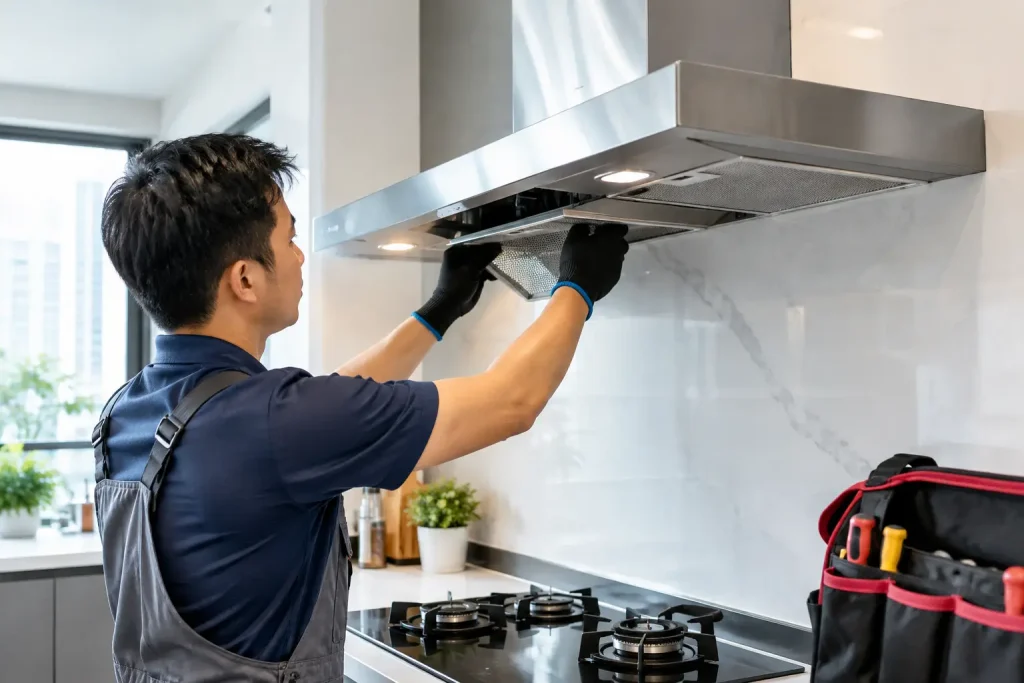
A technician starts by checking the hood’s extraction strength, fan speeds, filters, controls, internal wiring, and duct connection where applicable. This diagnosis matters because several faults can produce the same symptom. For example, weak suction may come from saturated filters, a blocked duct, a damaged fan blade, a failing capacitor, or a motor that is losing power.
Replacing the correct part instead of guessing can bring the hood back to normal performance while avoiding unnecessary costs. If the motor is still sound, a filter replacement or duct correction may be enough. If the motor is worn or noisy, fitting a compatible replacement may be the more reliable long-term solution.
Less grease, moisture, and lingering odor
Poor extraction affects more than the air directly above the cooktop. Steam can condense on cabinets, backsplash surfaces, and nearby walls. Grease particles settle on surrounding surfaces and create a sticky film that is difficult to remove over time. In compact Singapore kitchens, this effect can be especially noticeable because cooking zones are often close to cabinets and living spaces.
Cooker hood repairs help by returning the appliance to its intended airflow. A repaired fan motor, clear air path, and properly fitted filters allow the hood to capture more fumes before they spread. This does not mean a cooker hood will remove every smell immediately, especially when cooking produces heavy smoke. However, good extraction should make a clear difference during and shortly after normal use.
Recirculating hoods need particular attention. Their carbon filters absorb odors but do not last indefinitely. Washing a metal grease filter does not restore an exhausted carbon filter. If odors remain despite the fan running normally, the carbon filter may need replacement based on the manufacturer’s recommended schedule and how often the appliance is used.
Repairing common cooker hood faults early
Most cooker hood problems start with small changes in performance. Owners may notice that the hood takes longer to clear steam, one fan speed no longer works, or the lights flicker. These are useful warning signs, not faults to ignore until the appliance stops completely.
Common issues that can often be diagnosed and repaired include:
- Weak or no suction caused by dirty filters, blocked ducting, a worn motor, or a faulty capacitor.
- Loud rattling, humming, or grinding caused by loose fittings, an obstructed fan wheel, or motor wear.
- Fan speeds that do not change because of a damaged switch, touch-control panel, wiring fault, or control board issue.
- Lights that fail or flicker due to a failed bulb, driver, socket, switch, or wiring connection.
- A hood that trips the power supply or will not start because of an internal electrical fault, moisture exposure, or damaged component.
The repair approach depends on the model and fault condition. A loose fan cover may be a straightforward adjustment. A hood that trips power needs more careful testing before it is used again. Repeatedly resetting power or continuing to run a noisy motor can cause further damage and may create a safety concern.
Better safety around heat and electrical components
Cooker hoods operate close to heat, steam, and airborne grease. Over time, grease accumulation can affect the filter, fan housing, and internal surfaces. Electrical parts can also deteriorate, particularly when moisture enters areas that should remain dry.
Professional cooker hood repair helps identify components that are no longer operating safely. This may include damaged wiring insulation, burnt switches, loose electrical connections, overheating motors, or lights that have the wrong rating for the appliance. A technician can also check that replacement parts are suitable for the hood model rather than using an improvised part that may not fit or perform correctly.
Owners can safely handle basic routine care, such as removing and washing metal grease filters according to the manufacturer’s instructions. However, dismantling the motor assembly, testing live electrical circuits, or working around internal capacitors should be left to a trained appliance technician. Switching off the hood at the wall before cleaning or inspecting it is a sensible first step.
When repair is more practical than replacement
Replacing a cooker hood can involve more than buying a new unit. Built-in and chimney-style models must match the available cabinet space, duct position, mounting points, and electrical connection. A replacement may also require adjustments if the new appliance has different dimensions or duct requirements.
Repair is often a sensible option when the hood is in otherwise good condition and the issue is limited to a serviceable part, such as a switch, lamp driver, capacitor, fan motor, or control board. It can be particularly worthwhile for integrated units that are difficult to match or remove.
Replacement becomes more reasonable when the appliance has several major faults, key spare parts are no longer available, the casing is badly corroded, or repair costs are close to the cost of a suitable new hood. Age alone does not decide the answer. A well-maintained older hood with one failed part may still be worth repairing, while a newer hood with recurring faults may not be.
An honest diagnosis should explain the fault, the parts required, and whether repair offers reasonable value. This allows homeowners, landlords, and property managers to make a decision based on condition rather than pressure to replace an appliance immediately.
Preventive care that keeps repairs manageable
Regular care does not eliminate every cooker hood fault, but it reduces strain on the fan and helps maintain extraction. Grease filters should be cleaned regularly, with frequency based on cooking habits. Heavy daily use needs more attention than occasional light cooking. Allow filters to dry fully before reinstalling them, and make sure they sit securely in place.
For ducted hoods, visible duct connections should remain secure and free from obvious crushing or disconnection. A hood needs somewhere for the extracted air to go. Even a strong motor cannot deliver good performance through a severely restricted duct path.
Pay attention to changes rather than waiting for complete failure. New noises, reduced airflow, a burning smell, unresponsive buttons, or repeated power trips justify a professional inspection. Early repair may limit the issue to one component instead of allowing heat, vibration, or electrical stress to damage others.
Choosing professional cooker hood repair in Singapore
A reliable repair service should assess the appliance before recommending parts or replacement. The technician should consider the hood type, whether it is ducted or recirculating, the age of the unit, its fault symptoms, and the availability of compatible spare parts. This is especially useful for built-in models, where access and fitment affect the repair process.
Fix It Appliance provides cooker hood diagnostics, troubleshooting, spare parts replacement, maintenance, installation, and dismantling services across Singapore. For a hood with weak suction, unusual noise, failed lights, or controls that no longer respond, professional testing helps identify the real cause and avoid unnecessary work.
A cooker hood is easy to overlook until steam clouds the kitchen and odors refuse to leave. Addressing the first signs of poor performance can keep the appliance safer, cleaner, and more effective each time it is needed.