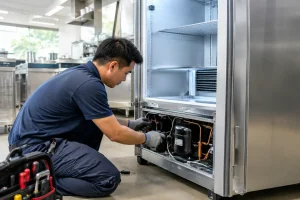

A refrigerator that runs but does not stay cold, a washer that stops mid-cycle, or an oven that heats unevenly may look like simple faults. In practice, appliance diagnostics are what separate a correct repair from replacing a part that was never the problem. A proper diagnosis identifies the failed component, checks why it failed, and confirms whether repair is worthwhile before work begins.
For homes, this means fewer repeat breakdowns and clearer repair decisions. For cafés, offices, hotels, and other businesses, it can also reduce downtime when a wine chiller, freezer, dishwasher, or coffee machine is needed every day.
What appliance diagnostics involve
Diagnostics are more than reading an error code or switching an appliance off and on again. A technician starts by listening to the reported symptoms, checking the appliance’s operating condition, and inspecting visible components such as seals, hoses, filters, fans, connections, and controls. The next steps depend on the appliance and fault.
For example, refrigerator diagnostics may include checking temperature performance, airflow, condenser condition, door sealing, fan operation, defrost parts, and the compressor system. Washing machine diagnostics can involve the drain path, pump, door lock, inlet valves, motor, belt, suspension, and control board. An oven or induction cooktop may require checks of heating elements, sensors, cooling fans, switches, wiring, and electronic controls.
Where appropriate, the technician uses test equipment to measure electrical continuity, voltage, resistance, and component response. The aim is to confirm the cause, not guess from the symptom. A machine that will not start may have a faulty control board, but it could also have a failed door latch, blown thermal safety device, damaged cable, or water-related fault.
Symptoms point the way, but they are not a diagnosis
Many appliance faults produce similar symptoms. A dishwasher that leaves dishes wet may have a heating issue, but it could also be caused by unsuitable settings, a blocked filter, poor water circulation, or a dispenser problem. A dryer that takes too long may have a worn heater, restricted airflow, a thermostat fault, or an overloaded drum.
This is why replacing the most obvious part is risky. It can add cost without solving the original issue. Accurate testing narrows down the possibilities and allows the repair recommendation to be based on evidence.
When to arrange a diagnostic visit
Book professional help when an appliance stops performing its main job, trips power repeatedly, leaks, makes new mechanical noises, produces a burning smell, or displays a persistent error code. Do not continue using an appliance that smells burnt, sparks, overheats, or has visible damaged wiring. Turn it off and disconnect it from power if safe to do so.
Some faults need attention even when the appliance still works. A fridge that is warmer than normal can put stored items at risk and force the compressor to work harder. A washing machine that shakes violently can damage internal suspension parts and connections. A small freezer water leak may develop into ice buildup that affects cooling performance.
Commercial users should act early when equipment begins cycling unusually, losing temperature consistency, or taking longer to complete its normal program. Waiting until a unit fails completely can be more disruptive than arranging diagnostics at the first sign of trouble.
Safe checks to make before calling for appliance diagnostics
A few basic checks can help provide useful information and occasionally resolve a simple issue. They should never involve opening sealed panels, handling wiring, or attempting repairs on a powered appliance.
Check that the appliance has power, its plug is properly connected, and the relevant switch is on. Confirm that doors and lids close fully, as many washers, dryers, dishwashers, and refrigerators will not run correctly when a latch or seal is obstructed. For water-using appliances, make sure the water supply valve is open and that an external hose is not sharply kinked.
Clean accessible lint filters, dishwasher filters, and refrigerator door seals according to the manufacturer’s instructions. Note any error code, unusual sound, leak location, and when the issue occurs. Does the washer fail only during draining? Does the fridge struggle more in the afternoon? Does the oven heat poorly on one setting but not another? These details help make diagnostics quicker and more accurate.
Avoid repeatedly resetting the appliance in the hope that the fault will disappear. A reset can clear a temporary error, but recurring codes usually indicate a condition that needs inspection.
What affects the repair recommendation
Once the fault is identified, the next question is whether to repair or replace the appliance. There is no single answer. The condition of the appliance, availability of spare parts, repair cost, age, usage level, and likelihood of further faults all matter.
A repair often makes sense when the appliance is otherwise in good condition and the failed part is a common, replaceable item. Pumps, door locks, heating elements, thermostats, seals, belts, fans, and certain sensors can frequently be replaced without replacing the whole appliance. Built-in appliances may also be worth repairing because removal and replacement can be more involved.
Replacement may be the better choice when a major component has failed in an older appliance, multiple expensive parts are worn, or the required spare part is unavailable. A corroded cabinet, recurring refrigerant-system issue, or heavily damaged control system can change the calculation. The best decision is an honest one: compare the expected repair outcome and cost with the appliance’s overall condition, not just the price of one part.
Why genuine fault confirmation matters for spare parts
Ordering a spare part from a symptom alone can lead to delays and unnecessary expense. Different model versions may use different components, even when appliances look nearly identical. A professional diagnostic process checks the model details and confirms that the part matches the actual fault.
It also checks for the reason behind the failure. If a dryer heater has failed because airflow was restricted, fitting a new heater without addressing the restriction can result in another breakdown. If a refrigerator fan is damaged by ice buildup from a defrost fault, replacing only the fan may not provide a lasting repair.
Common diagnostic findings by appliance type
Refrigerators and freezers commonly have cooling complaints linked to blocked airflow, faulty fans, worn door gaskets, defrost faults, temperature sensors, or compressor-system problems. Wine chillers may have similar temperature issues, although vibration, ventilation space, and control accuracy are especially relevant.
Washing machines and dryers often develop drainage, filling, spinning, heating, or door-lock faults. In a washer, a small object in the pump filter or a worn drain pump can prevent draining. In a dryer, lint accumulation and airflow restrictions can cause poor drying and overheating protection to activate.
Dishwashers may have circulation, drainage, heating, or water-detection faults. Ovens, microwave ovens, cooktops, and hobs need careful testing because their heating and control systems operate at high temperatures and, in some cases, high electrical loads. Gas hobs require particular caution if there is an ignition problem or any smell of gas. Stop using the appliance and arrange qualified assistance rather than trying to dismantle it.
How to get the most from a technician visit
Before the appointment, leave the appliance accessible if possible and avoid moving a heavy built-in unit yourself. Keep the model number available and explain what happened before the fault started, including recent power interruptions, leaks, unusual noises, or changes in performance.
A good diagnostic visit should leave you with a clear explanation: what has failed, whether there are related issues, what part or work is required, and whether repair is sensible. Ask if the recommended repair addresses the root cause and whether the part needs to be ordered. For businesses, ask about expected downtime and whether temporary appliance rental is suitable while repairs or parts are arranged.
Prevent faults before they become urgent
Preventive maintenance does not eliminate every breakdown, but it helps appliances work under less strain. Keep refrigerator ventilation areas clear, clean lint filters after dryer use, clear accessible washing machine and dishwasher filters regularly, and avoid overloading washers and dryers. Use appliances according to their intended load and settings rather than forcing a cycle to handle more than it should.
For appliances used heavily in commercial settings, scheduled checks are especially practical. Small changes in temperature, noise, drainage, or cycle duration are easier to address before they interrupt operations.
When an appliance problem appears, the fastest path is not always the fastest-looking fix. Careful appliance diagnostics give you the information to choose a repair with confidence. For Singapore households and businesses, Fix It Appliance can assess the fault, explain the options plainly, and help bring essential equipment back to reliable operation.