A built-in oven can fail at the worst possible time: it heats unevenly before a busy week, trips the power when switched on, or shows an error code just as you need to use it. Built in oven repair is often possible, but the right solution depends on the fault, the oven’s age, and whether the problem involves high-voltage parts, heat damage, or a failed control system.
For homeowners, landlords, and commercial kitchens in Singapore, a proper diagnosis matters. Replacing the wrong part can be expensive, while continuing to use an unsafe oven can damage the appliance further. Here is how to recognize common faults, what you can safely check, and when to arrange professional help.
When a Built-In Oven Needs Repair
An oven does not need to stop working completely before it needs attention. Changes in heating performance are often the first warning. Food may take much longer to cook, browning may be uneven, or the oven may reach the selected temperature but cycle off too soon.
Other signs need faster action. A burning smell, sparking, a cracked door glass, repeated circuit breaker trips, or smoke from the control panel should not be ignored. Turn the oven off at the isolator switch if it is safe to do so, allow it to cool, and avoid using it until it has been checked.
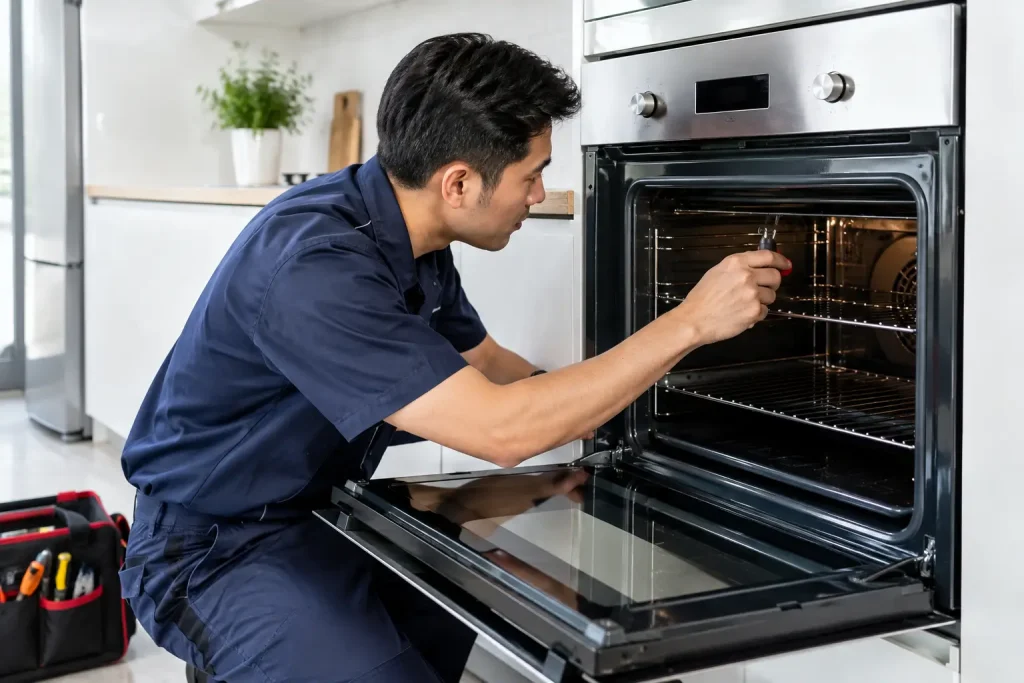
Built-in models are more complicated to access than countertop appliances. The oven is fixed into cabinetry and may need to be carefully removed for testing or parts replacement. For that reason, a repair should account for both the appliance fault and safe reinstallation.
Common Built In Oven Repair Problems
The oven will not heat up
If the display lights up but the oven remains cold, the heating element is a likely cause. Most electric ovens use separate elements for baking, grilling, and fan-assisted heating. One failed element can cause a specific mode to stop working while another mode still produces heat.
A faulty thermostat, temperature sensor, thermal fuse, relay, or electronic control board can create the same symptom. The difference matters. An element may visibly blister, crack, or show burn marks, but sensors and relays usually require electrical testing to confirm the fault. Replacing parts based on guesswork is rarely cost-effective.
The oven heats, but the temperature is wrong
An oven that runs too hot can burn food and place unnecessary strain on internal components. An oven that runs too cool causes long cooking times and inconsistent results. In many cases, the temperature sensor has drifted out of range or the thermostat is no longer regulating properly.
Before assuming the oven is faulty, test it with a reliable oven thermometer placed in the center of the cavity. Allow the oven enough time to preheat and cycle. A small variation is normal because ovens turn the heating element on and off to maintain heat. Large or repeated differences from the selected setting point to a calibration or component issue.
Fan ovens can also heat unevenly when the convection fan is weak, blocked, or not turning. A technician may need to inspect the fan motor, fan blade, wiring, and rear heating element.
The oven trips the circuit breaker
A breaker that trips when the oven heats is a safety concern. A damaged heating element may leak current to the metal casing, particularly after years of repeated heat cycles. Moisture, burnt wiring, a failing fan motor, or a shorted component can also be responsible.
Do not keep resetting the breaker and trying again. Repeated trips are not a normal inconvenience. They indicate that the electrical protection is responding to a potential fault. Professional testing can identify whether the problem is inside the oven or related to its connection point.
The oven fan is noisy or does not run
Many built-in ovens have more than one fan. The cooling fan protects the control panel and nearby cabinetry from excessive heat, while the convection fan circulates hot air inside the oven cavity. A rattling sound may come from a loose fan blade, worn motor bearings, or an obstruction.
If the cooling fan does not operate, the oven may overheat around the controls even though the cavity still appears to work. If the convection fan fails, fan-assisted cooking modes may be ineffective or uneven. Both issues deserve inspection before regular use continues.
The display, controls, or timer do not work
A blank display can result from a power supply issue, a blown internal fuse, a damaged wiring connection, or a failed control board. Some ovens will not heat if the clock is flashing after a power interruption or if the timer has been accidentally set to automatic mode. Check the user controls first and reset the clock if required.
Buttons that do not respond, random error codes, or a display that switches off during use usually need a technician’s assessment. Moisture, heat exposure, worn touch panels, and failed board components are common causes. Control boards can sometimes be repaired, but replacement may be the better option when damage is extensive and a compatible part is available.
The oven door will not close, lock, or seal
Heat escapes when the door gasket is torn, flattened, or loose. This makes the oven work harder and can lead to poor temperature control. A worn hinge can prevent the door from closing fully, while a damaged latch or lock assembly may affect models with a self-cleaning or safety-lock function.
Do not force a stiff oven door. The glass panels and hinge mechanisms are under tension, and forcing them can cause further damage. Door repairs are usually straightforward when the correct gasket, hinge, or latch is fitted.
Safe Checks Before Calling for Service
There are a few practical checks that can help describe the fault clearly. Confirm that the oven has power, review the clock and timer settings, and try more than one cooking mode. Note whether the light works, whether the fan runs, and whether the problem occurs immediately or only after the oven has heated for several minutes.
Look for obvious damage only when the oven is switched off and fully cool. A loose gasket, cracked element, or damaged rack can be useful information for a repair technician. Avoid removing rear panels, pulling out the built-in unit, or touching internal wiring. Ovens can retain heat and involve electrical connections that are not safe for untrained repair work.
It also helps to record the brand, model number, and any error code shown on the display. This improves the chance that the correct spare parts can be identified before the appointment.
Repair or Replace: What Makes Sense?
Repair is usually worth considering when the oven is relatively modern and the fault is limited to a heating element, fan motor, thermostat, door seal, hinge, switch, or sensor. These are common wear parts, and a successful replacement can extend the appliance’s usable life considerably.
Replacement may be more sensible if the oven has several unrelated faults, severe corrosion, repeated electronic board failures, or damaged parts that are no longer available. Age alone is not the deciding factor. A well-built older oven with a replaceable element may be a better repair candidate than a newer unit with costly control-board damage.
For landlords and businesses, downtime is part of the decision as well. A reliable repair with available parts may be more practical than waiting for a replacement appliance, cabinet adjustments, and installation. A diagnosis should explain the fault, the parts required, expected repair cost, and whether the repair is likely to be durable.
Preventing Repeat Oven Faults
Built-in ovens work in a hot, enclosed space, so basic care goes a long way. Keep the door seal and cooling vents clear of heavy grease buildup. Do not line the oven base or cover air openings with foil, as this can interfere with heat circulation and damage the enamel or elements.
Avoid slamming the door, and clean spills once the cavity has cooled. If the oven has a self-cleaning function, follow the manufacturer’s guidance carefully. The intense heat can place extra stress on older door locks, seals, and electronic components.
If your oven is heating unpredictably, making unusual noises, tripping power, or displaying errors, arrange a professional inspection rather than waiting for a complete failure. Fix It Appliance provides built-in oven diagnostics and repair across Singapore, helping you understand the fault and choose a practical next step. A timely repair can often bring your appliance back to safe, dependable use.