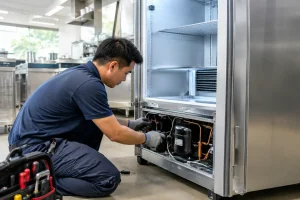
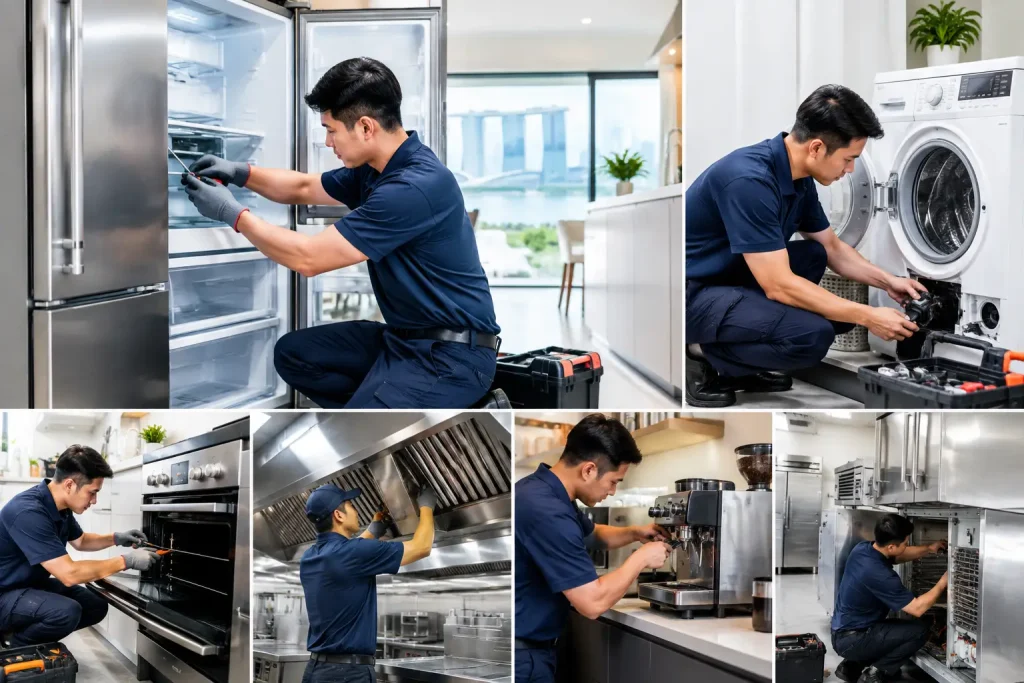
A faulty refrigerator in a staff pantry, a freezer that cannot hold temperature, or an oven that will not heat properly can disrupt an entire workday. Commercial appliance repair Singapore services help businesses, property managers, and shared facilities restore essential equipment quickly while preventing a minor fault from becoming a costly breakdown.
The right response depends on the appliance, the fault, and how critical that appliance is to your daily operations. A washing machine that leaks may be manageable for a few hours with the water supply turned off. A freezer that is warming up, however, needs immediate attention. Knowing what to check, what to stop using, and when to arrange a technician helps protect your equipment and avoid unnecessary downtime.
When Commercial Appliances Need Professional Repair
Commercial environments put appliances under heavier and more frequent use than a typical household. Appliances may run for long hours, serve multiple users, and operate in warm, humid conditions. Over time, door seals wear out, drainage lines clog, motors strain, and electronic components can fail.
A repair visit is usually warranted when an appliance shows a repeated fault rather than a one-time interruption. For example, a refrigerator that becomes cold again after being switched off may still have a failing fan motor, sensor, or defrost component. Restarting it does not solve the underlying issue.
Arrange commercial appliance repair Singapore support promptly if you notice any of these signs:
- A refrigerator, wine chiller, freezer, or ice maker is not maintaining temperature
- A washing machine, dishwasher, or dryer is leaking, stopping mid-cycle, or displaying an error code repeatedly
- An oven, microwave, induction cooktop, ceramic hob, or gas hob is not heating correctly
- A cooker hood has weak extraction, unusual vibration, or a burning smell
- The appliance trips power, produces sparks, emits smoke, or has a strong burning odor
For smoke, sparks, exposed wiring, or repeated power trips, switch off the appliance at the appropriate power source if it is safe to do so. Do not continue testing it. These symptoms can indicate a serious electrical fault within the appliance.
Common Commercial Appliance Faults and What They Mean
Refrigerators, Freezers, and Wine Chillers
Temperature problems are among the most urgent faults. A unit that runs constantly but is not cold enough may have blocked airflow, dirty condenser components, a failed fan, a faulty thermostat, a refrigerant-related problem, or an issue with the compressor system. Frost buildup can also prevent proper air circulation in frost-free units.
Before calling for service, check that the door closes fully and that boxes or containers are not blocking internal vents. Confirm that the temperature setting has not been changed and that the unit has adequate ventilation around it. If temperature remains unstable, move temperature-sensitive contents to another working unit where possible and request a diagnosis.
Water pooling beneath a refrigerator or freezer does not always mean a major failure. A blocked defrost drain, loose water line, damaged door gasket, or overflowing drip tray can be responsible. Still, water around an appliance should be addressed quickly because it can damage flooring and create a slip hazard.
Washing Machines, Dryers, and Dishwashers
A commercial washing machine that will not drain often has a blocked filter, obstructed drain hose, worn drain pump, or foreign object trapped in the system. Continued use can strain the pump and lead to further damage. Avoid forcing the door open or repeatedly restarting the cycle, especially if the drum is full of water.
Dryers commonly lose performance when airflow is restricted or when heating components and sensors fail. If laundry takes much longer than usual to dry, the appliance may have a clogged lint path, weak airflow, a faulty heating element, or a thermostat issue. Clean accessible lint filters after each use, but leave internal dismantling and electrical checks to a trained technician.
Dishwashers may leave water at the bottom, fail to fill, produce poor cleaning results, or leak from the door. Filters, spray arms, inlet valves, circulation pumps, and door seals are common sources of trouble. Using the wrong detergent or overloading racks can affect results, but a recurring error code or leak requires professional inspection.
Ovens, Cooktops, and Microwave Ovens
Cooking appliances often fail gradually. An oven may heat unevenly because an element, fan, thermostat, or control board is no longer working as it should. A built-in oven that takes much longer to preheat should not be ignored, particularly when it is relied on throughout the day.
For induction cooktops and ceramic hobs, intermittent heating may be caused by a faulty heating zone, sensor, control module, or unsuitable cookware. Cracked glass should be assessed before further use. With gas hobs, weak ignition, uneven flames, or the smell of gas should be treated seriously. Turn off the appliance and arrange qualified service rather than attempting a repair yourself.
Microwave ovens should only be repaired by experienced technicians. Internal high-voltage components can retain dangerous electrical charge even after the unit is unplugged. If a microwave sparks, makes loud buzzing sounds, fails to heat, or has a damaged door, stop using it.
Repair or Replace? Make the Decision Based on Value
Replacing an appliance immediately can seem like the quickest answer, but it is not always the most practical one. Many faults are limited to replaceable parts such as pumps, thermostats, door gaskets, heating elements, switches, fans, or control components. A proper diagnosis identifies the failed part and confirms whether repair is worthwhile.
Repair is often a sensible choice when the appliance is otherwise in good condition, the fault is isolated, and compatible spare parts are available. It can also be preferable for built-in appliances, where replacement may require additional removal, installation, and fitting work.
Replacement may make more sense when an appliance has repeated major failures, extensive corrosion, severe compressor trouble, or an obsolete part that is no longer available. Age matters, but it should not be the only factor. A well-maintained appliance with a straightforward part failure may still have years of useful service left.
Ask the technician for a clear explanation of the fault, the parts required, and the expected repair scope. Honest advice should include whether there is a practical reason to replace rather than repair.
What Affects Commercial Appliance Repair Costs?
There is no single repair price for every appliance because the cost depends on diagnosis time, the appliance type, access, labor required, and replacement parts. A blocked drainage issue is generally different from a control board or compressor-related fault. Built-in appliances may also require more time to access safely.
Urgent faults can become more expensive when they are left unresolved. A damaged refrigerator door gasket, for example, can make the cooling system work harder over time. A small leak from a dishwasher can damage nearby cabinetry or flooring if it continues unnoticed.
The most useful estimate comes after the fault has been inspected. Accurate diagnosis avoids paying for parts that do not solve the actual problem. At Fix It Appliance, the focus is on identifying the cause, explaining the repair option clearly, and using suitable spare parts where needed.
Preventive Maintenance That Reduces Downtime
Preventive maintenance is especially useful for appliances that operate daily or are shared by many users. It does not eliminate every failure, but it reduces avoidable wear and helps detect problems early.
Keep refrigerator and freezer doors from being held open for long periods, and avoid packing items tightly against air vents. Check door seals for tears, looseness, or gaps. Clean visible dust from accessible ventilation areas and ensure there is enough space around freestanding units for heat to escape.
For washing machines and dishwashers, avoid overloading and check filters regularly. Remove foreign objects from pockets before washing. For dryers, clean lint filters consistently and watch for longer drying times. With ovens and cooktops, clean spills promptly and avoid forcing knobs, doors, or controls that feel loose or stuck.
Keep a simple record of recurring faults, error codes, and past repairs for high-use appliances. This gives the technician useful information and helps you spot when a machine is becoming unreliable.
Choosing a Reliable Commercial Appliance Repair Service
Speed matters, but a fast visit is only useful if the diagnosis is accurate. Choose a repair service that works on the specific appliance type, can explain the fault in plain language, and is transparent about parts and repair recommendations. Experience with refrigerators, freezers, washing machines, dryers, dishwashers, ovens, cooktops, coffee machines, and ice makers is valuable when your premises use several appliance categories.
Before the appointment, note the model number, error message, when the issue started, and any unusual sounds, smells, leaks, or temperature changes. If possible, take a photo of the error display. These details can help the technician arrive better prepared.
A commercial appliance does not need to fail completely before it deserves attention. Acting when performance first changes can protect your equipment, reduce disruption, and give you more options than an emergency replacement.