A washer usually picks the worst possible moment to stop working – right before work, right before guests arrive, or right when the laundry basket is already full. That is why washing machine repair Singapore homeowners and businesses can rely on is less about convenience and more about getting daily life back on track fast.
When a machine will not spin, will not drain, leaks onto the floor, or starts making harsh grinding sounds, the real question is not just what failed. It is whether the issue can be diagnosed correctly, priced fairly, and fixed without wasting time on guesswork. In Singapore, where many homes depend on compact laundry setups and busy schedules leave little room for delays, repair quality matters as much as response speed.
Why washing machine problems should be handled quickly
A washing machine fault rarely stays small for long. A weak drain pump can turn into standing water inside the drum. A worn bearing can move from extra noise to major damage during spin cycles. A small leak under the unit can affect flooring, cabinets, or nearby appliances if it is ignored.
For landlords, property managers, and businesses, delays create a different kind of cost. Tenant complaints build up, operations slow down, and replacement decisions get rushed before anyone has a clear diagnosis. A proper repair visit helps separate minor faults from major ones, which is often the difference between a sensible repair and an unnecessary replacement.
Common faults seen in washing machine repair Singapore calls
Most service calls come down to a handful of recurring problems, but the cause behind each symptom can vary. A machine that will not start may have a door lock issue, a control board fault, a power supply problem, or a failed switch. The symptom looks simple, but the repair path is not always obvious.
Washer not draining or spinning
This is one of the most common complaints. Sometimes the machine fills and washes but stops before the final spin. In other cases, the cycle ends with wet clothes and water still trapped inside.
The cause may be a faulty drain pump, a blocked drainage path, a damaged lid or door lock, or a sensor issue that prevents the machine from moving into spin mode. Front load and top load models can fail differently, so accurate troubleshooting matters.
Leaking water during or after a cycle
Leaks can come from hoses, door seals, internal connections, damaged tubs, or pump-related parts. The location of the water on the floor matters. Water at the front may point to a door gasket problem. Water underneath or behind the machine may suggest a hose or pump issue.
Not every leak means the machine is beyond repair. In many cases, replacing the failed component restores normal operation without major cost.
Loud noise, shaking, or banging
Some movement is normal during a spin cycle, especially if the load is uneven. But repeated knocking, scraping, or grinding is not. These sounds may indicate worn bearings, damaged shock absorbers, suspension issues, loose internal parts, or drum support problems.
This is one area where delay often makes the repair more expensive. What begins as a vibration issue can lead to added strain on other components if the washer keeps running in that condition.
Machine not powering on
If the panel stays dark or the machine does not respond, the fault could be electrical or component-related. Power supply issues, damaged control boards, failed door interlocks, and wiring faults are all possible. A proper diagnosis helps avoid replacing parts that are not actually causing the failure.
Repair or replace? It depends on the machine and the fault
This is the question most customers ask first, and the honest answer is that it depends. Age matters, but age alone should not decide it. A mid-range washing machine with a straightforward pump or lock replacement may still be well worth repairing, even if it is several years old.
On the other hand, if the machine has multiple failing parts, severe drum damage, or a costly board issue on an older unit, replacement may make more sense. The best service advice is not automatically pro-repair or pro-replacement. It should be based on the actual condition of the appliance, the price of parts, and the likelihood of reliable performance after the repair.
That is where transparent diagnosis matters. Customers should know what failed, what needs to be replaced, what the repair is expected to cost, and whether the fix is a practical long-term solution.
What to expect from a professional repair visit
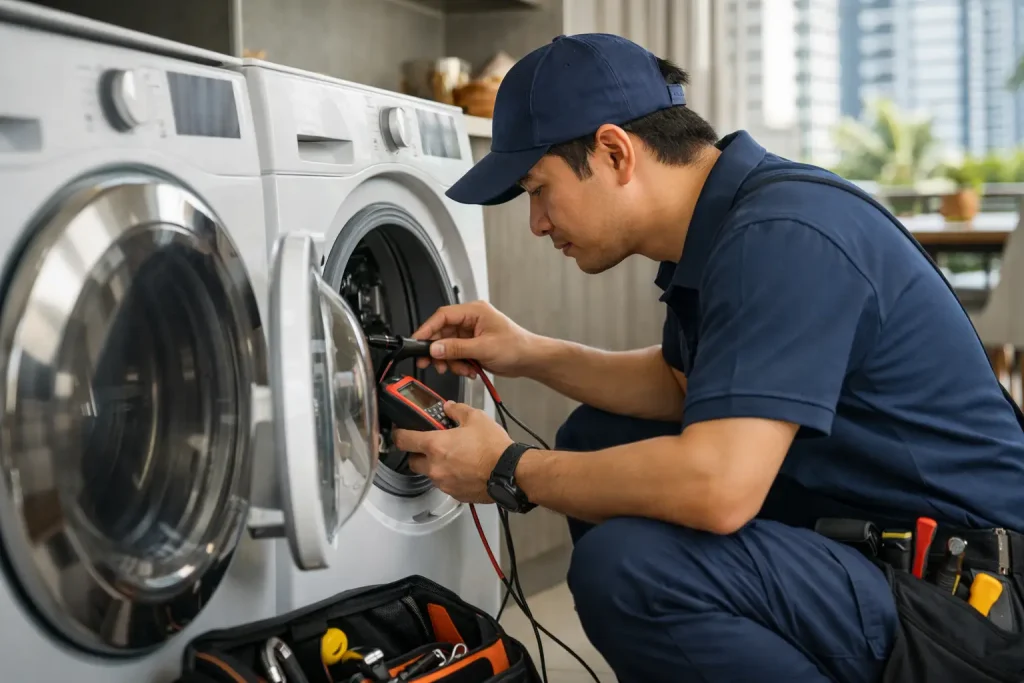
A professional washing machine service should reduce stress, not add to it. The process typically begins with symptom-based troubleshooting. The technician checks the machine’s behavior, tests likely failure points, and identifies whether the fault is mechanical, electrical, or control-related.
Once the problem is confirmed, the next step should be clear communication. That means explaining the issue in plain language, outlining the recommended repair, and giving transparent pricing before work moves ahead. For many customers, this matters just as much as technical skill. No one wants vague answers when an essential appliance is out of service.
For homes, speed is important because laundry routines pile up quickly. For cafes, offices, and managed properties, responsiveness matters because downtime affects more than one person. A dependable repair company understands that the real service being provided is not just a part replacement. It is the return of normal operations.
How pricing usually works for washing machine repair Singapore services
Repair cost depends on the brand, model, fault, and parts required. A simple issue such as a hose-related leak or door lock problem will usually cost less than a motor, control board, or drum-related repair. Access can also affect labor time, especially in tight service yards or compact laundry areas.
What customers should look for is not the lowest advertised number but clear, honest pricing. A cheap quote without proper diagnosis often leads to repeat visits, unnecessary part changes, or a machine that fails again soon after. Good repair work saves money by solving the correct problem the first time.
This is especially relevant in Singapore, where many households and businesses want to extend the life of appliances instead of replacing them too quickly. Reliable repairs can be the more cost-effective option, but only when the diagnosis is sound and the workmanship is consistent.
Why experience matters with different washer brands and models
Not all washing machines are built the same. Front load models, top load machines, washer-dryer combinations, and commercial-use units each come with different layouts, components, and fault patterns. Even when two machines show the same symptom, the repair approach can be different.
Brand familiarity helps speed up diagnosis and reduces trial-and-error work. An experienced technician often recognizes recurring issues tied to specific models, which makes the repair process faster and more accurate. That kind of experience is valuable for homeowners and even more so for landlords or business operators who need quick decisions and minimal disruption.
Fix It Appliance approaches repairs with that practical mindset – diagnose accurately, explain clearly, and restore the appliance without wasting the customer’s time.
Choosing a repair service you can trust
A good repair company should be easy to evaluate. First, they should communicate clearly and respond promptly. Second, they should be willing to give honest advice if a machine is not worth repairing. Third, they should focus on workmanship, not pressure.
That last point matters. Customers do not just need a technician who can replace a part. They need a service provider who respects their time, property, and budget. Whether the washer is in a family home, rental unit, office pantry, or food business, trust is built through straightforward service.
When fast service makes the biggest difference
Urgency is not only about complete breakdowns. A washer that leaks intermittently, stops mid-cycle, or spins unpredictably may still function part of the time, but it is already affecting reliability. Waiting for total failure usually means more disruption and fewer scheduling options.
Prompt repair is especially useful for larger households, rental properties, and businesses where laundry equipment supports day-to-day operations. In these situations, fast response is not a luxury. It is part of keeping routines and responsibilities manageable.
A washing machine does not need to fail dramatically to deserve attention. If the signs are there – unusual noise, poor drainage, incomplete cycles, leaks, or power issues – professional diagnosis can prevent a smaller problem from becoming a larger one. The right repair service brings clarity first, then a practical solution that gets your routine moving again.