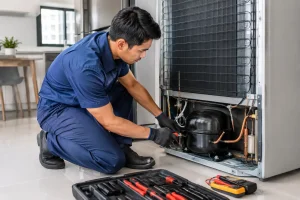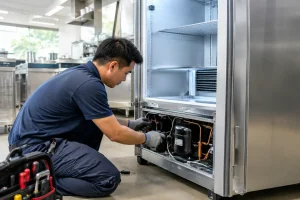

A fridge that has lights on but feels warm inside is not necessarily working properly. If you are asking, “why is fridge not cooling,” the cause may be as simple as a blocked air vent or a door that is not sealing. It can also point to a failed fan, compressor issue, or refrigerant leak that needs professional diagnosis.
In Singapore’s warm, humid conditions, a refrigerator has to work harder to hold a safe temperature. Acting early can help prevent food spoilage, avoid damage to the compressor, and keep a smaller fault from turning into a major repair.
Why Is Fridge Not Cooling Even Though It Has Power?
Power at the display or interior light only confirms that some electrical parts are receiving electricity. Cooling depends on several components working together: the thermostat or sensor, compressor, condenser, evaporator fan, condenser fan, and refrigerant system. A fault in any one of these parts can leave the fridge warm while the light still works.
Before assuming a serious failure, check whether the temperature setting was accidentally changed. Most refrigerators should be set around 37 to 40°F (3 to 4°C), while the freezer should be around 0°F (-18°C). Turning the setting to its coldest level is not always the answer. If airflow is restricted or a component has failed, the fridge may still remain warm and may run continuously.
1. The Door Is Not Closing or Sealing Properly
A worn, dirty, or warped door gasket allows warm room air to enter the refrigerator. This is especially common when the door is frequently opened, overloaded, or blocked by large containers. The fridge then runs longer but struggles to reach temperature.
Inspect the rubber seal for cracks, gaps, hardened areas, and food residue. Clean it with a soft cloth and mild soap, then close the door on a sheet of paper. If the paper slides out easily in several places, the gasket may no longer be sealing well. Also check that the fridge is level and that no shelf, drawer, or item is preventing the door from closing fully.
2. Air Vents Are Blocked by Food or Containers
Cold air moves from the freezer or evaporator area into the refrigerator compartment through internal vents. Packing food tightly against these vents can stop that circulation. The freezer may seem reasonably cold while the fresh-food section becomes warm.
Move large containers, grocery bags, and stacked items away from the rear wall and air outlets. Leave some space between items so cold air can circulate. This is a simple check, but it is often overlooked in busy homes, offices, and shared staff pantries.
3. Dirty Condenser Coils Are Trapping Heat
The condenser releases heat from the refrigeration system. On many models, the coils are located behind the fridge or underneath it. Dust, grease, and pet hair can build up around them, reducing the appliance’s ability to release heat.
Switch the refrigerator off before cleaning around accessible coils and vents. Use a soft brush or vacuum attachment carefully, without bending tubing or disturbing wiring. Built-in refrigerators and some modern models have coils that are difficult to access, so do not dismantle panels unless you know the correct procedure.
Poor ventilation around the appliance can create a similar problem. A fridge pushed tightly against a wall or enclosed in a cabinet without adequate clearance may overheat, particularly in a warm kitchen. Check the manufacturer’s clearance guidance for your specific model.
4. The Evaporator Fan Is Not Circulating Cold Air
The evaporator fan blows cold air through the refrigerator and freezer compartments. When it fails, you may hear no fan sound when the door switch is pressed, or you may notice that the freezer is colder than the refrigerator section.
A fan can stop because of a failed motor, damaged blade, loose connection, or ice buildup around the fan housing. Do not force ice away with a sharp tool. You could damage the evaporator coil and create a much more expensive refrigerant repair.
5. Frost Has Built Up Behind the Freezer Panel
Frost on the back panel inside the freezer is a common sign of a defrost-system fault. Modern frost-free refrigerators periodically melt ice from the evaporator coil. If the defrost heater, sensor, timer, control board, or drainage system fails, thick ice can cover the coil and block airflow.
A temporary full defrost may restore cooling for a short time, but it does not fix the underlying failed part. If the fridge cools normally after defrosting and becomes warm again days or weeks later, arrange a proper diagnosis rather than repeating the process.
6. The Condenser Fan or Compressor Has a Fault
The compressor is the main pump in the refrigeration system. The condenser fan, where fitted, helps remove heat around it. If the fan is not running, the compressor area may become unusually hot and cooling performance can drop.
A repeated clicking sound from the back of the fridge can indicate that the compressor is trying but failing to start. The issue may be a start relay, overload protector, inverter board, compressor, or electrical connection. These parts should be tested by a qualified appliance technician because incorrect handling can damage the unit or create a safety risk.
A compressor repair is more involved than replacing a fan or gasket. The practical decision often depends on the fridge’s age, model, overall condition, and availability of compatible spare parts.
7. There Is a Refrigerant Leak or Restriction
Refrigerant is sealed inside the cooling system and should not need routine refilling. If a technician suggests simply “topping up gas” without checking for a leak, ask for a proper assessment. A low refrigerant charge usually means there is a leak, and the leak should be located and repaired before the system is recharged.
Signs can include weak cooling, a compressor that runs for long periods, or frost appearing only on one small section of the evaporator coil. A restriction in the refrigerant line can produce similar symptoms. These faults require specialized tools and should not be treated as a DIY repair.
8. The Thermostat, Sensor, or Control Board Is Misreading Temperature
Older refrigerators often use a mechanical thermostat, while newer models rely on sensors and electronic control boards. If the sensor reads the wrong temperature or the control board does not send the correct signal, the compressor may cycle off too early or fail to run when needed.
This problem can be confusing because the fridge may cool intermittently. It may work after being switched off and on, then become warm again later. A technician can test the relevant parts instead of replacing components based on guesswork.
9. The Refrigerator Is Overloaded or Recently Stocked
A large load of room-temperature groceries can temporarily raise the internal temperature, especially in a compact refrigerator. The appliance may need several hours to stabilize. Avoid placing hot food inside, keep the door closed as much as possible, and do not cover internal vents.
However, a healthy fridge should begin recovering within a reasonable time. If it stays warm overnight, the compressor runs constantly, or frozen items start softening, treat it as a fault rather than an overload issue.
What to Do First When Your Fridge Stops Cooling
Start by protecting the food inside. Keep the doors closed as much as possible to retain the remaining cold air. Transfer perishable items to another working refrigerator, freezer, or insulated cooler if available. If food has been sitting warm for an extended period, do not rely on appearance or smell alone when deciding whether to keep it.
Then check the temperature setting, door seal, blocked vents, and visible frost. Listen for unusual clicking, buzzing, or silence from the rear of the appliance. Check whether the appliance is firmly plugged in and whether the socket is working, but avoid using extension cords for a refrigerator unless they are specifically suitable for the appliance load.
Do not repeatedly switch the fridge on and off in an attempt to force it to cool. If the compressor is struggling, repeated restarting can add stress. After a power interruption, wait several minutes before restarting unless the manufacturer provides different instructions.
When to Call for Refrigerator Repair
Professional diagnosis is the sensible next step when the fridge is warm after basic checks, the freezer is also thawing, frost keeps returning, the compressor clicks repeatedly, or there is water leaking from a defrost issue. It is also advisable when you notice a burning smell, damaged wiring, or an unusually hot compressor area.
For landlords, offices, cafés, and other businesses, prompt repair matters because a refrigerator fault can disrupt daily operations and lead to stock loss. A technician can identify whether the repair is likely to be a straightforward fan, sensor, gasket, or defrost-part replacement, or whether a sealed-system or compressor issue changes the repair-versus-replacement decision.
Fix It Appliance provides refrigerator diagnostics and repair across Singapore, with practical advice on the fault, available parts, and the most sensible next step. A fridge that is not cooling rarely improves on its own, so an early check can give you a clearer answer before the problem becomes more costly.