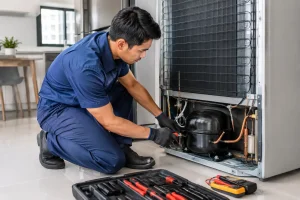
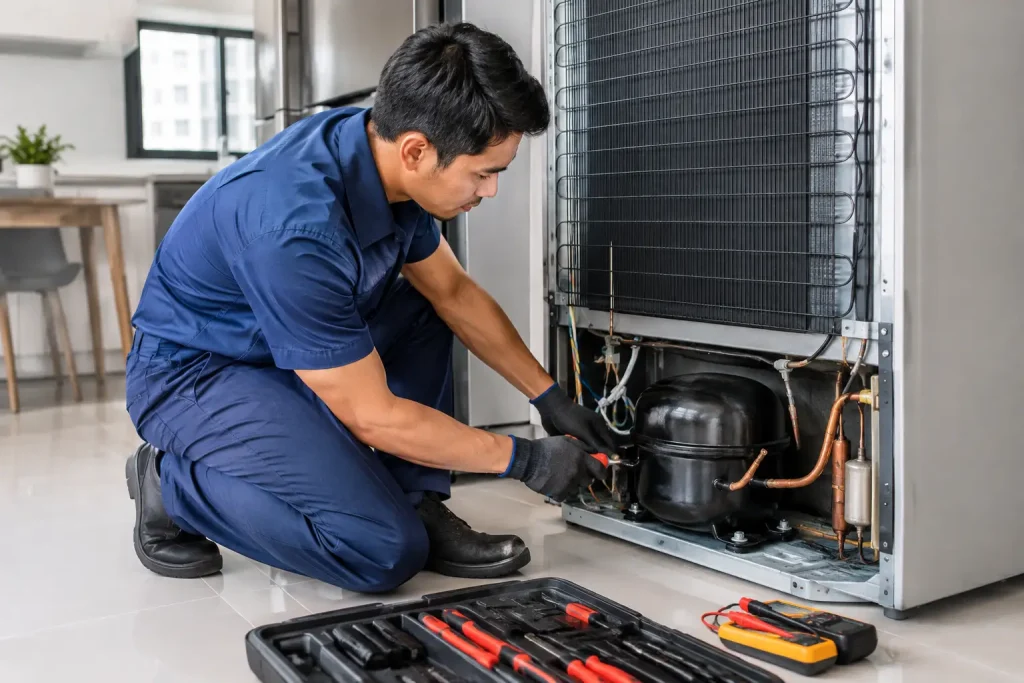
A refrigerator compressor repair review should begin with one practical question: is the compressor truly the problem? A refrigerator that is warm, noisy, or constantly running can have a compressor fault, but it may also have a failed starter relay, control board issue, dirty condenser, fan problem, or refrigerant leak. Getting the diagnosis right protects you from paying for a major repair that will not solve the fault.
For Singapore homes and businesses, this matters because refrigerators work hard in a warm, humid climate. When cooling becomes unreliable, food storage can quickly become a concern, especially for households, offices, cafés, and commercial kitchens. A professional assessment can clarify whether the appliance needs a smaller repair, a compressor replacement, or replacement of the refrigerator itself.
Refrigerator Compressor Repair Review for Singapore Homes
The compressor is the heart of the cooling system. It compresses refrigerant and circulates it through the sealed system, allowing heat to leave the refrigerator and freezer compartments. When it fails, the refrigerator may stop cooling altogether or struggle to maintain a safe, consistent temperature.
However, compressor failure is often assumed too quickly. A clicking noise from the back of the refrigerator, for example, is commonly caused by a faulty start relay or overload protector. These parts help the compressor start. They are far less expensive to replace than the compressor, so proper testing is essential before approving a major repair.
A technician should inspect the cooling performance, compressor operation, electrical components, fans, condenser condition, and signs of a refrigerant leak. For inverter refrigerators, the inverter board and compressor communication also need to be checked. A good diagnosis explains what has failed, why it failed, and whether other issues could affect the reliability of the repair.
Signs Your Compressor May Have a Problem
A refrigerator compressor rarely fails without noticeable changes. The appliance may become warmer over several days, or the freezer may remain partially cold while the refrigerator section warms up. Some faults appear suddenly after a power interruption, while others develop gradually as the compressor loses efficiency.
Watch for these signs, particularly when more than one occurs at the same time:
- The refrigerator and freezer are both not cooling properly, even after temperature settings are checked.
- The compressor runs continuously but the compartments remain warm.
- You hear repeated clicking every few minutes from the rear lower section of the appliance.
- The compressor is unusually hot, noisy, or vibrates more than normal.
- The interior light and display work, but cooling has stopped.
- The refrigerator trips its power supply when the compressor attempts to start.
These symptoms do not automatically confirm a bad compressor. A blocked condenser, failed condenser fan, evaporator fan issue, faulty thermostat, sensor failure, or defrost fault can create similar cooling problems. Do not judge the fault only by sound or by touching the back of the fridge.
What a Proper Compressor Diagnosis Involves
A reliable assessment starts with the basics. The technician confirms that the refrigerator has stable power, correct temperature settings, adequate airflow around the appliance, and clean condenser coils where accessible. They then listen for compressor start attempts and check the relay, overload protector, capacitor where fitted, and relevant wiring.
If the compressor is running but cooling is weak, further sealed-system checks may be needed. These can include pressure readings, temperature checks, current draw, and inspection for leak indicators. A compressor can run electrically but still fail mechanically. Likewise, low refrigerant from a leak can make a working compressor appear defective.
This distinction matters. Replacing a compressor without repairing the leak that caused the low refrigerant can lead to another cooling failure. On the other hand, replacing a relay when the compressor has an internal electrical fault will only provide a temporary answer, if it works at all.
For this reason, compressor work is not a do-it-yourself repair. It involves electrical testing, refrigerant handling, brazing pipe connections, vacuuming the sealed system, and recharging it correctly. Incorrect work can damage the refrigerator further and may create safety risks.
Refrigerator Compressor Repair Costs in Singapore
The cost of refrigerator compressor repair depends on the appliance type, brand, compressor model, refrigerant used, part availability, and the cause of failure. A small start relay or overload protector repair is often much less costly than compressor replacement. Inverter models can also require testing or replacement of an inverter board before the compressor is considered.
As a broad guide, a minor compressor starting component repair may cost around S$120 to S$350, depending on the part and service required. A full compressor replacement can commonly range from about S$500 to S$1,200 or more. This may include the new compressor, filter drier, refrigerant work, labor, pressure testing, and system evacuation. Large side-by-side refrigerators, built-in units, wine chillers, and commercial refrigeration equipment can cost more.
The lowest quote is not always the best value. A complete quotation should make clear whether it includes leak detection, refrigerant charging, replacement parts, labor, transport where applicable, and a warranty on the completed repair. Ask whether the technician found a reason for the compressor failure, especially if the appliance is relatively new.
Should You Repair or Replace the Refrigerator?
Compressor replacement can be worthwhile when the refrigerator is otherwise in good condition, the door seals are sound, replacement parts are available, and the repair cost is reasonable compared with a similar new appliance. It is often a sensible option for premium models, built-in refrigerators, newer appliances, or units that fit a specific cabinet space.
Replacement may be the better decision when the refrigerator is older and has several faults at once. For example, a compressor problem combined with damaged door seals, rusted cabinet panels, broken shelves, recurring defrost issues, or unavailable parts can make a major repair difficult to justify. A technician can help compare the expected repair cost against the remaining service life of the appliance.
For landlords and property managers, the decision also depends on downtime. A replacement may be more practical when tenants need a working refrigerator immediately and a major sealed-system repair cannot be completed quickly. For businesses, the value of preventing stock loss and operational disruption may make a prompt professional repair more attractive.
How to Protect a Refrigerator Compressor
Good maintenance cannot prevent every compressor failure, but it reduces unnecessary strain. Leave enough clearance around the appliance for heat to escape, avoid placing hot items directly inside, and check that door gaskets close tightly. Keep vents inside the refrigerator clear so cold air can circulate properly.
Where the condenser coils are accessible, remove dust buildup carefully according to the manufacturer’s instructions. Dust and poor airflow force the compressor to run longer and hotter. If the refrigerator is in a tight enclosure, near a heat source, or exposed to direct afternoon sun, its cooling system may work harder than intended.
Power fluctuations can also affect electronic controls and inverter systems. If your refrigerator has recently stopped cooling after a power trip or outage, arrange a diagnosis before assuming the compressor needs replacement. In some cases, the issue is limited to a control component rather than the sealed cooling system.
What to Do When Your Refrigerator Stops Cooling
If the refrigerator is warm, keep the doors closed as much as possible to retain cold air. Move perishable items to another working refrigerator or insulated cooler if available. Check that the appliance is switched on, the plug is secure, and the circuit has not tripped. Avoid repeatedly turning the refrigerator on and off, as this can place additional stress on the compressor.
Do not attempt to puncture, cut, or recharge refrigerant lines. Instead, arrange a professional inspection and ask for a clear explanation of the fault and repair options. Fix It Appliance provides refrigerator diagnostics and repair across Singapore, helping homeowners and businesses make an informed repair-versus-replacement decision.
A compressor repair is a significant job, but it does not always mean the refrigerator has reached the end of its life. The right next step is a careful diagnosis, a transparent quote, and a repair decision based on the appliance’s overall condition rather than one alarming symptom.