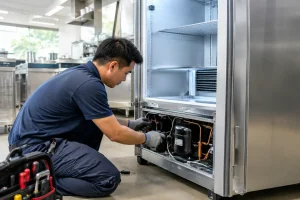

A puddle beneath the refrigerator can quickly become more than a cleaning problem. It can damage flooring, create a slip risk, and signal that the appliance is no longer draining or cooling as it should. If you are asking, why is my fridge leaking, the most useful clue is where the water is appearing and whether the refrigerator is still keeping food cold.
Not every leak means a major breakdown. Some cases involve condensation, a displaced drain component, or a water dispenser connection. Others point to a blocked defrost system or a worn internal part that needs professional attention. Acting early helps prevent water damage and avoids turning a manageable refrigerator issue into a full loss of cooling.
Why Is My Fridge Leaking? Check the Water Location First
Water does not always originate where it collects. A puddle at the front of the fridge, for example, may have traveled from a drain system at the back or from ice melting inside the freezer. Before arranging service, note the location, amount of water, and when it appears. Those details help narrow down the cause.
Water on the floor in front of the fridge
Water at the front is commonly caused by a blocked or frozen defrost drain. During normal operation, frost that forms around the evaporator melts during the defrost cycle. The resulting water should travel through a small drain channel and tube into a collection pan beneath the appliance.
When that route is blocked, water can overflow inside the refrigerator or freezer and eventually run onto the floor. You may also notice a sheet of ice beneath freezer drawers, water collecting under the crisper drawers, or a repeated puddle after the refrigerator has been closed for several hours.
An uneven refrigerator can also contribute. If the unit is not sitting at the correct angle, water may not flow toward the intended drain path. Door alignment and gasket contact can be affected as well, allowing extra warm air into the cabinet and increasing condensation.
Water inside the fresh-food compartment
If water is pooling beneath produce drawers or along the bottom shelf, the defrost drain is again a likely cause. This is one of the most common refrigerator leak complaints. Food packaging, ice buildup, and residue can obstruct the drain area, stopping defrost water from leaving the compartment.
A door that does not seal properly can make the issue worse. In Singapore’s warm, humid conditions, warm air entering through a worn, dirty, or misaligned door gasket can create substantial moisture inside the fridge. That moisture eventually becomes frost and then water during defrosting.
Water at the back of the refrigerator
A leak behind the appliance deserves prompt attention, especially if the refrigerator has a water dispenser or ice maker. A loose, damaged, or aging water supply line can drip slowly behind the unit, where it may go unnoticed until flooring or cabinets are affected.
The drip pan is another possibility. Refrigerators typically direct defrost water into a pan near the compressor, where heat helps it evaporate. If the pan is cracked, out of position, or overflowing because of an underlying drainage issue, water may appear at the rear or underneath the refrigerator.
Because water lines, electrical components, and tight spaces are involved, this is a situation where professional diagnosis is the safer choice. Do not ignore a leak simply because the fridge still appears to be cooling normally.
Common Causes of a Leaking Refrigerator
A blocked or frozen defrost drain
This is often the leading cause of water inside the refrigerator or on the floor near the front. The fridge may still cool, but water cannot reach the collection pan. Left unresolved, the blockage can lead to recurring ice buildup, water damage, and poor airflow around the evaporator.
A technician can identify whether the issue is a simple obstruction, a frozen drain channel, a damaged drain tube, or a defrost fault that is causing excessive ice to form.
A faulty door gasket or poor door closure
The rubber gasket around the door keeps humid room air out and cold air in. If it is torn, flattened, loose, or contaminated with food residue, the seal can fail. The fridge then works harder, and the added moisture can create condensation and frost that later melts into the cabinet.
Pay attention to doors that need to be pushed firmly to close, doors blocked by overfilled shelves, or visible gaps around the gasket. These signs can also explain rising electricity use and inconsistent temperatures.
A water filter or dispenser connection leak
For refrigerators with filtered water or ice dispensing, leaks may come from the filter housing, inlet valve, tubing, or fittings. Sometimes the leak occurs only when water is dispensed. In other cases, a slow drip continues behind the appliance.
The source matters. A filter that is not seated correctly may cause a localized leak, while a deteriorated line can create hidden water damage. Accurate inspection prevents replacing the wrong part and allows the refrigerator to be returned to normal operation quickly.
Excess condensation
Condensation can form when warm air repeatedly enters the refrigerator, when doors are left partly open, or when a gasket no longer seals reliably. It can also happen when hot food is placed directly inside, adding steam to the cabinet.
Small droplets can be normal in some conditions, particularly after frequent door opening. Standing water, dripping shelves, or repeated puddles are not normal. These signs should be checked before moisture affects stored food or internal components.
A damaged drain pan or internal component
The drain pan is not designed to hold large volumes of water. If it is cracked, misplaced, or receiving more water than it can evaporate, leakage may follow. A malfunctioning defrost heater, sensor, fan, or control can also produce unusual frost patterns and overwhelm the drainage system.
This is where symptoms matter more than guesswork. Frost at the rear freezer panel, weak cooling, unusual fan noise, or water returning shortly after cleaning all suggest that the refrigerator needs a proper diagnostic assessment.
What to Do When Your Refrigerator Is Leaking
First, protect the area around the appliance. Dry the floor, move nearby items away from the water, and keep children and pets clear of the affected space. If water is close to an electrical outlet, power strip, or exposed cord, avoid contact with the area and arrange assistance promptly.
Next, check whether the refrigerator and freezer are holding temperature. Food safety becomes a concern if the fridge is no longer cold enough or if the freezer contents are softening. Keep the doors closed as much as possible while you arrange service, since frequent opening adds more warm air and moisture.
Take note of a few useful details: whether water is inside or outside the fridge, whether there is ice under the drawers, whether the leak happens after dispensing water, and whether cooling performance has changed. A clear description helps a technician arrive prepared and reduces time spent tracing an intermittent issue.
Avoid treating repeated leaks as a minor nuisance. Towels on the floor may contain the immediate mess, but they do not address the cause. Moisture beneath a refrigerator can affect laminate flooring, cabinetry, wall edges, and electrical safety over time.
When to Arrange Professional Refrigerator Service
Professional service is advisable when the leak returns, water is coming from the rear of the appliance, ice is building up inside, or the refrigerator is not cooling consistently. It is also the practical option for built-in units, water-connected refrigerators, and any appliance that must be moved to inspect the source safely.
A proper diagnosis should identify the actual fault before parts are replaced. That may involve checking the defrost drainage route, door seals, leveling, water supply connections, drip pan, evaporator condition, and cooling performance. Honest diagnosis matters because a leaking fridge may need a small correction, a replacement part, or attention to a wider defrost problem.
Fix It Appliance provides on-site refrigerator diagnosis and repair across Singapore, with clear advice on what is causing the leak and what work is needed to restore reliable operation. The goal is straightforward: stop the water, protect your home or premises, and get your refrigerator back to doing its job.
A refrigerator should keep food cold, dry, and safely stored – not leave you checking the floor each morning. If the water returns after being cleaned up, arrange an inspection before a small leak becomes damaged flooring, spoiled groceries, or a sudden cooling failure.