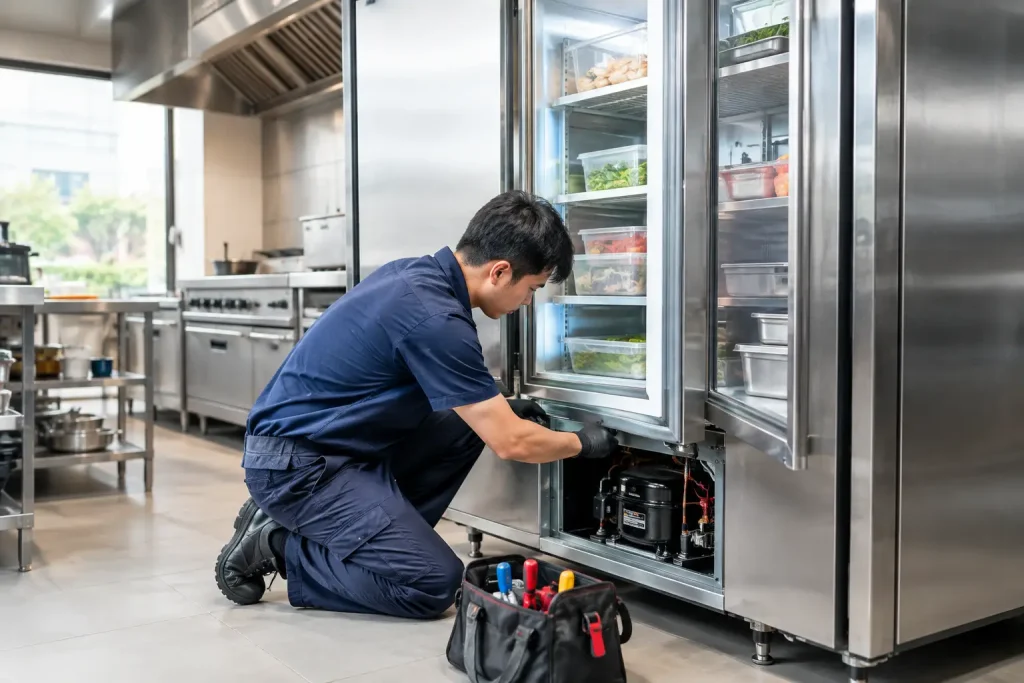
A commercial fridge that runs but cannot hold temperature can create a costly problem within hours. This best commercial fridge repair checklist helps Singapore business owners identify the fault, take sensible first steps, and decide when professional repair is the safer choice.
Start With Product Safety and Temperature Control
Before inspecting the appliance, check the internal temperature with a separate thermometer. Do not rely only on the display panel, as a faulty sensor or control board can show a reading that does not match the true cabinet temperature. Most commercial chillers should generally maintain a stable temperature between 35°F and 41°F, depending on the equipment type and what it stores.
If the temperature is rising, move temperature-sensitive stock to another working unit where possible. Keep the fridge door closed while you prepare the transfer. Repeatedly opening the door to check the contents lets in warm, humid air and makes recovery harder.
Also note whether the issue affects one section or the whole unit. A multi-door fridge with one warm compartment may have a localized airflow, fan, sensor, or door-seal issue. If every section is warm and the compressor is not operating normally, the fault may be more serious.
Best Commercial Fridge Repair Checklist: Initial Checks
These checks take only a few minutes and can rule out basic problems before you arrange a service visit.
- Confirm that the power plug is firmly connected and the wall socket is working. If the circuit breaker has tripped, reset it once only. If it trips again, stop using the fridge and arrange diagnosis.
- Check that the temperature controller has not been accidentally adjusted. Some units have separate controls for the cabinet and freezer compartment.
- Make sure the unit has enough clearance around its vents and condenser area. Poor ventilation causes the compressor to overheat and reduces cooling performance.
- Inspect the doors for gaps, damaged gaskets, loose hinges, or obstructions. A door that does not close fully can cause frost, water droplets, and continuous compressor operation.
- Look at the condenser coil and air intake. Thick dust and grease restrict heat release, especially in busy commercial environments.
- Check whether the fridge is overloaded. Products packed tightly against rear vents can block cold-air circulation and create warm zones.
Do not use sharp tools to remove ice or force open a frozen door. You can puncture an evaporator coil or damage the liner, turning a manageable repair into a major sealed-system repair.
Listen and Look for Fault Clues
Commercial refrigerators often give clear warning signs before they stop cooling completely. Record what you see and hear. This information helps a technician diagnose the appliance faster and may reduce downtime.
The fridge is running but not cold enough
If the compressor runs constantly but the cabinet remains warm, start with airflow. Dirty condenser coils, a failed condenser fan, blocked vents, frost-covered evaporator coils, or a weak door seal can all make the unit run without reaching the set temperature.
A refrigerant leak, restricted capillary line, or worn compressor can produce similar symptoms. These faults require professional testing. Refrigerant work is not a DIY job, and simply adding gas without locating the leak is rarely a lasting repair.
The compressor clicks but will not stay on
A repeated clicking sound every few minutes can point to a faulty start relay, overload protector, capacitor, or compressor. Unplug the unit if the compressor becomes unusually hot, smells burnt, or continues clicking without starting. Continuing to power it may cause further damage.
Excess frost or ice inside the cabinet
Frost usually means warm air is entering the fridge or the defrost system is not working correctly. Inspect door gaskets first. If the gasket is torn, hardened, or pulling away from the door, cold air escapes and moisture enters.
If the door seals properly but ice returns quickly after defrosting, the likely cause may be a defrost heater, sensor, timer, drain blockage, or control-board fault. A technician should test these components rather than replacing parts by guesswork.
Water is leaking onto the floor
Check the drain hole and drain tray for blockage, overflow, or poor positioning. Condensation may also form when door seals leak or the fridge operates in a hot, humid area. In Singapore, humidity can make minor sealing and drainage problems show up quickly.
Water near the plug, wiring, or compressor compartment is a reason to switch off the appliance and seek help. Avoid using extension cords or placing the unit back into service until the source is identified.
Check Airflow, Placement, and Daily Use
Not every cooling complaint is caused by a failed part. Commercial fridges work hard in warm environments, and small operating issues can raise cabinet temperature.
Keep cartons, containers, and bags away from internal air vents. Cold air must move freely through the cabinet. When products are stacked tightly against the rear panel, the temperature near the door can rise even when the thermostat setting is correct.
The fridge should also be positioned away from direct heat sources and have sufficient space around the condenser ventilation points. A built-in or under-counter commercial unit needs the clearance specified by its manufacturer. Pushing it tightly against a wall can trap heat and shorten compressor life.
Pay attention to door habits. A door left ajar, even briefly and repeatedly, can create condensation, frost, and temperature alarms. If staff use the fridge often, a door closer, hinge adjustment, or gasket replacement may be more valuable than an unnecessary major repair.
What You Can Clean Safely
Regular maintenance prevents many urgent commercial fridge calls. Before cleaning, switch off and unplug the appliance if the manufacturer instructions allow it.
Use a soft brush or vacuum with a brush attachment to remove dust from accessible condenser coils, vents, and fan guards. Do not bend coil fins or spray water directly into electrical components. Wipe door gaskets with mild soap and water, then dry them thoroughly so debris does not prevent a proper seal.
Clear visible debris from the drain opening using a soft, non-sharp tool. If the drain line is deeply blocked, overflowing, or inaccessible, leave it to a technician. Forcing a wire into the line can damage tubing or push the blockage further inside.
The right cleaning frequency depends on the location. A unit in a dusty utility area or high-use business setting may need attention more often than one in a clean, air-conditioned office pantry. Monthly visual checks and scheduled professional preventive maintenance are a practical starting point.
When to Stop Troubleshooting and Call for Repair
Call a commercial fridge repair technician promptly when the unit cannot maintain temperature, trips the power supply, has a burning smell, leaks water near electrical parts, shows recurring error codes, or makes loud grinding and clicking sounds. These symptoms can involve electrical components, fans, controls, or the sealed refrigeration system.
It is also worth arranging diagnosis if the fridge needs frequent manual defrosting, runs almost continuously, or has rising electricity use. These may be early signs of poor heat transfer, airflow restrictions, failing fans, refrigerant loss, or compressor strain.
When booking service, provide the brand, model number, error code, cabinet temperature, and a clear description of the symptoms. Mention whether the unit was recently moved, cleaned, overloaded, or exposed to a power interruption. This gives the repair team a better starting point and helps them prepare suitable spare parts where possible.
Repair or Replace: How to Decide
Repair is usually worthwhile when the fridge is otherwise in good condition and the fault involves serviceable parts such as a door gasket, fan motor, thermostat, sensor, start relay, capacitor, drain component, or control board. These repairs can restore performance without replacing the entire unit.
Replacement may be the better choice when an older fridge has a failed compressor combined with a refrigerant leak, repeated major faults, severe cabinet damage, or unavailable parts. The decision depends on the repair cost, the unit’s age, expected remaining life, and how much downtime affects your operations.
Do not make the decision based on the initial symptom alone. A fridge that seems to need a compressor may only have a failed fan or blocked condenser. Proper diagnosis protects you from paying for parts that do not solve the actual problem.
A commercial fridge is easier and less expensive to keep running when small warning signs are handled early. If basic checks do not restore stable cooling, a professional assessment can help protect the appliance, your stored items, and your business continuity.