
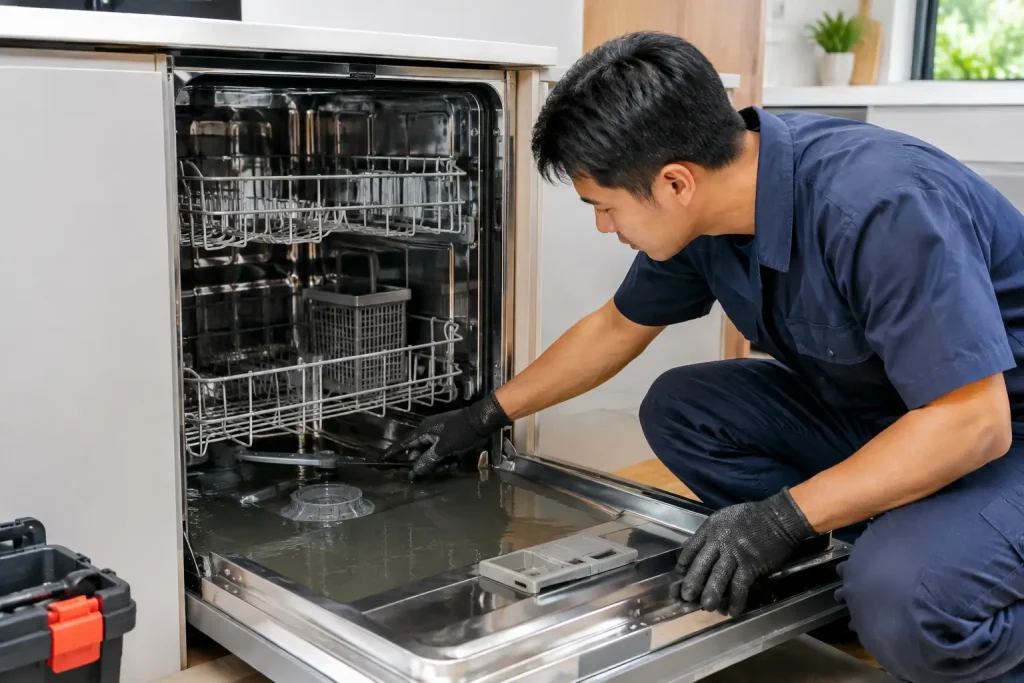
A small pool of dishwasher standing water after a cycle is more than an inconvenience. It can leave dishes dirty, create unpleasant odors, and signal that the appliance cannot drain properly. In many cases, the cause is simple and can be checked safely. If water remains after basic checks, however, a blocked drain line, faulty pump, or control issue may need professional attention.
Is Some Water in the Dishwasher Normal?
A little water beneath the filter area or sump is normal in many dishwasher models. This water helps keep seals from drying out and is usually not visible unless the filter is removed.
Water covering the base of the tub, pooling around the filter, or sitting above the lower spray arm is not normal. If it remains after the dishwasher has completed its cycle, treat it as a drainage problem. Do not keep running cycles in the hope that the issue will clear itself. Repeated cycles can cause water to overflow or put extra strain on the drain pump.
Common Causes of Dishwasher Standing Water
A clogged filter or sump area
The filter catches food scraps, labels, small pieces of broken glass, and other debris before they reach the pump. When it is blocked, water may drain slowly or not at all. This is one of the most common causes of standing water, especially when the filter has not been cleaned for several months.
Turn off the dishwasher, remove the lower rack, and take out the filter according to your model’s instructions. Rinse it under warm running water and use a soft brush to remove residue. Check the area below the filter for visible debris. Never reach into the sump blindly, as sharp fragments may be present.
A blocked or kinked drain hose
The drain hose carries used water from the dishwasher to the waste pipe. If it is bent behind the appliance, crushed during installation, or blocked by grease and debris, the dishwasher may drain poorly.
This is more likely after a dishwasher has been moved, installed, or removed for cabinet work. A hose connection that sits too low can also allow dirty water to flow back into the tub after draining. The hose should be routed correctly and secured at the proper height for the appliance and drainage setup.
Accessing the hose often requires pulling out a built-in dishwasher. This can damage cabinetry, flooring, or the water connection if done without care. For this reason, it is usually better to have a technician inspect hose routing and internal blockages.
A clogged sink drain connection
Some dishwashers drain through a connection under the kitchen sink. If this connection or the sink drain is restricted, water may back up into the dishwasher.
Look for signs such as slow drainage in the sink, gurgling noises, or water returning to the dishwasher shortly after a cycle ends. If the dishwasher was newly installed, check whether the knockout plug at the sink drain connection was removed. Leaving this plug in place prevents the dishwasher from draining at all.
A faulty drain pump
The drain pump pushes water out at the end of the wash and rinse stages. A pump can fail because its impeller is jammed by debris, its motor is worn, or an electrical fault prevents it from receiving power.
A dishwasher with a pump problem may make a humming sound but leave water behind. It may also stop during the drain stage and show an error code, depending on the model. A completely silent dishwasher during draining can point to a failed pump, wiring issue, door latch issue, or control board fault.
Drain pumps are serviceable parts, but the correct diagnosis matters. Replacing a pump will not solve a blocked hose or a faulty control board, so testing should come before ordering parts.
A dirty or faulty check valve
Certain dishwashers use a check valve to stop drained water from returning to the tub. If it is stuck open, damaged, or obstructed, water can flow back after the pump has completed its work.
This fault can be confusing because the dishwasher may appear to drain normally at first. Water then reappears in the bottom of the appliance later. A technician can inspect the valve, hose arrangement, and drain system to identify where the backflow is coming from.
Incorrect cycle interruption or power issue
If a cycle is canceled, interrupted by a power outage, or stopped because the door was opened for too long, the dishwasher may not reach its final drain stage. Try selecting the drain or cancel function for your model, then listen for the pump.
If the appliance repeatedly stops at the same point, trips power, or displays an error code, avoid resetting it again and again. The underlying problem may be electrical or mechanical, and repeated attempts can make diagnosis more difficult.
How to Remove Dishwasher Standing Water Safely
Before checking anything, switch off the dishwasher at the power source. Do not work on an appliance while standing water is present and power is connected.
Use a cup, sponge, or small container to remove as much water as possible from the base of the tub. Place towels around the dishwasher door to catch spills. Once the water level is low, remove and clean the filter. Check for loose debris around the filter opening, but do not force tools into the pump area.
After reinstalling the filter, restore power and run the cancel or drain function. If the dishwasher drains fully and does not refill with dirty water, monitor it through the next normal cycle. If it still does not drain, the fault is likely beyond a routine filter clean.
What Not to Do
Avoid pouring chemical drain cleaners into a dishwasher. These products can damage rubber seals, plastic components, and metal parts. They may also leave corrosive residue that affects dishes and creates a safety risk during repair.
Do not force the door open mid-cycle or tip the dishwasher forward to empty it. Water can spill into the base, where electrical components are located. Also avoid dismantling the door panel or lower base unless you understand the appliance’s wiring and water connections.
Using excessive detergent is another mistake. Too much detergent can create heavy foam, interfere with drainage, and trigger leak protection systems in some models. Use only dishwasher detergent and follow the recommended amount for your machine.
When to Arrange a Dishwasher Repair
Book a professional dishwasher repair if cleaning the filter does not solve the problem, if the appliance makes unusual noises during draining, or if water returns after draining. A repair visit is also sensible when the dishwasher shows an error code, leaks onto the floor, smells burnt, or repeatedly stops before the cycle finishes.
For homes, offices, cafes, and other busy premises in Singapore, a dishwasher that cannot drain can quickly disrupt daily operations. A technician can inspect the filter housing, pump, hose, check valve, wiring, and control system, then advise whether a spare part replacement is worthwhile.
Repair is often the practical choice when the dishwasher is otherwise in good condition and the fault is limited to a drain pump, hose, valve, or blockage. Replacement may make more sense for an older appliance with multiple recurring faults, major corrosion, or expensive electronic board damage. The right decision depends on the model, age, part availability, and total repair cost.
Preventing Future Drainage Problems
Clean the filter regularly, particularly if the dishwasher is used daily. Remove large food scraps from plates before loading them, but there is no need to pre-rinse every dish under running water. Check that spray arms can rotate freely and that tall items are not preventing the door from closing properly.
Once a month, inspect the filter and run a hot maintenance cycle using a dishwasher-safe cleaner recommended for the appliance. If you notice slower draining, address it early rather than waiting for a full blockage. Small maintenance habits can protect the pump and help the dishwasher continue working reliably.
Standing water is a clear signal to act, but it does not always mean a major repair. Start with the filter and drain function, then arrange a proper diagnosis if the water remains. A timely check can prevent a minor drainage fault from becoming a leak, a pump failure, or an unexpected appliance shutdown.


