
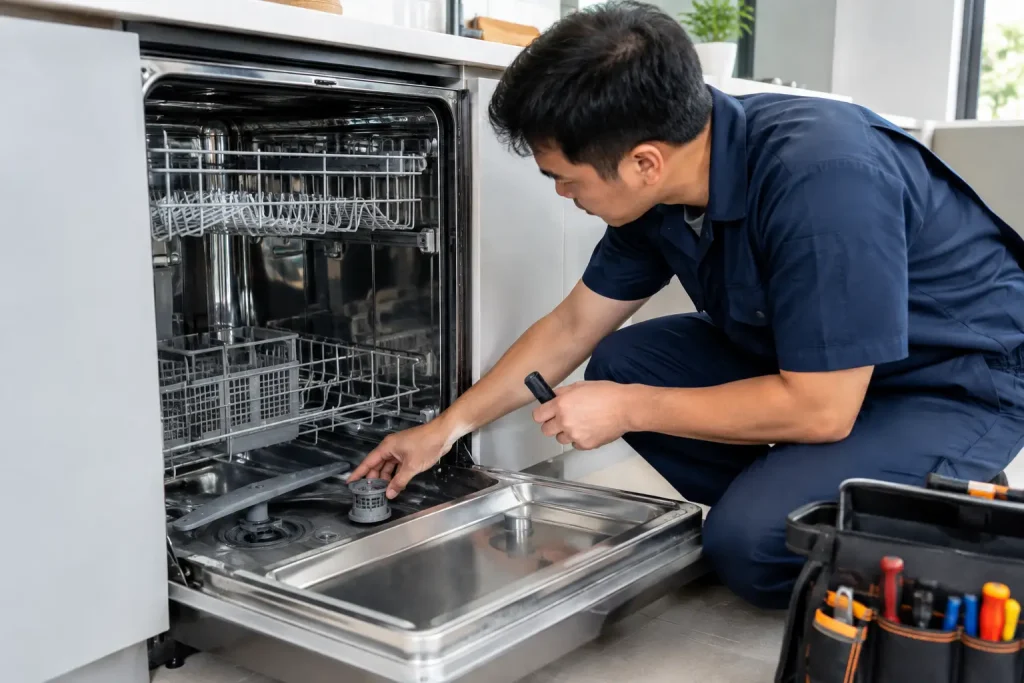
A small pool of water under the lower rack is one of the most common dishwasher complaints. If you are asking why dishwasher retains water after a completed cycle, the cause is usually a drainage restriction, an installation issue, or a faulty drain component. A few drops around the filter area can be normal. Water deep enough to cover the base of the tub is not.
Standing water can leave dishes dirty, create unpleasant odors, and put extra strain on the drain pump. The good news is that some causes are safe to check at home. Others need a technician, especially when the dishwasher is built in, showing an error code, or making unusual noises.
Why Dishwasher Retains Water After a Cycle
A dishwasher removes used water through a filter, sump area, drain pump, drain hose, and the kitchen sink drainage connection. When any part of that path is blocked, kinked, incorrectly fitted, or defective, water cannot leave the machine properly.
The timing of the problem offers a useful clue. Water remaining immediately after a wash cycle often points to a draining fault. Water appearing later, after the dishwasher has been unused for several hours, may be flowing back from the sink drain. If the machine starts a cycle with water already inside, it should be checked before further use.
Food debris blocking the filter or sump
The filter catches food particles before they reach the pump. Over time, grease, soft food residue, labels, broken glass, and small bones can collect around it. Even households that rinse dishes may experience buildup, particularly when the dishwasher is used daily.
A blocked filter slows drainage and can prevent the pump from clearing the final water from the tub. In some models, debris passes below the filter and jams the pump impeller. You may hear a low humming sound during the drain stage but see little or no water leaving.
Switch off power to the dishwasher before removing the lower rack and filter. Lift out the filter according to the model design, rinse it under warm water, and remove visible debris from the filter well. Do not force sharp tools into the sump, as this can damage the pump cover or seal.
A blocked or kinked drain hose
The drain hose carries wastewater from the dishwasher to the sink drainage connection. It may become blocked by grease or residue, crushed behind the machine during installation, or bent too sharply. This is particularly common after a dishwasher has been pulled out for cabinet work or moved during a kitchen replacement.
A hose installed too low can also allow dirty water to flow back into the appliance. It should be routed in a high loop beneath the countertop before connecting to the drain point. This loop helps prevent backflow from the sink into the dishwasher.
Because built-in dishwashers are heavy and hose access is limited, avoid pulling the appliance out without care. A damaged hose, loose connection, or pinched power cable can turn a simple drainage issue into a larger repair.
Drain pump blockage or failure
The drain pump is responsible for pushing water out at the end of the cycle. A foreign object can block its impeller, or the motor may wear out over time. Signs of a pump problem include a humming or grinding noise, repeated drain attempts, an error code, or water remaining despite a clean filter and clear sink drainage.
Some pumps fail electrically and make no sound at all. Others run but cannot generate enough pressure to empty the tub. Pump diagnosis may require access below the dishwasher and electrical testing, so this is usually a job for a qualified appliance technician.
Sink drainage is slow or blocked
The dishwasher may be working correctly, but the shared sink drain may not be accepting water fast enough. Check whether the kitchen sink drains slowly or backs up when the dishwasher tries to empty. If there is an air gap or a connection point under the sink, residue can build up there too.
Do not keep running the dishwasher if wastewater is returning into the tub. Repeated backflow can leave dirty water on dishes and may cause water to spill from the appliance when the door is opened.
Incorrect installation or a missing high loop
If the dishwasher was recently installed, relocated, or replaced, review the drain hose routing. A poor installation can cause persistent retained water even in a new machine. The drain hose must be supported at the correct height and connected securely without sharp bends.
Some models use a drain connection with a removable knockout plug. If that plug was not removed during installation, the dishwasher cannot drain into the connection at all. This issue is often discovered during the first few uses of a newly installed appliance.
Control board, sensor, or wiring faults
Modern dishwashers use sensors and electronic controls to manage filling and draining. A faulty water-level sensor may not recognize that water remains in the tub. A damaged wire, failed relay, or control board problem can stop the drain pump from receiving power.
These faults are less common than a blocked filter or hose, but they should be considered when there is no obvious blockage and the pump does not activate. Professional diagnostics can confirm whether the pump itself has failed or whether the appliance is not sending it the correct signal.
Safe Checks Before Booking a Dishwasher Repair
Start by canceling the cycle, if the control panel allows it, and select the drain or cancel-and-drain function. Listen for the pump. A normal draining sound followed by no water movement may indicate a blockage. No sound at all can indicate a pump, wiring, door-switch, or control issue.
Next, remove the lower rack and clean the filter. Wipe away visible residue from the base of the tub and check for objects such as glass fragments, plastic pieces, or paper labels. Wear gloves if there may be broken glass.
Then test the kitchen sink. If it is draining slowly, address that shared drainage issue before assuming the dishwasher needs parts. Finally, check that the drain hose visible under the sink is not bent, crushed, or disconnected. Do not dismantle pipework or remove the dishwasher from its cabinet if you are unsure how it is installed.
Avoid chemical drain cleaners inside the dishwasher. These products can damage rubber seals, hoses, and internal parts. They may also remain in the appliance and affect the next wash load. A clean filter and a suitable dishwasher cleaning cycle are safer for routine maintenance.
When Retained Water Needs Professional Attention
Book a repair when water remains after cleaning the filter and checking the sink, when the dishwasher displays an error code, or when you hear grinding, loud humming, or repeated clicking. A technician can inspect the pump, impeller, hose route, non-return components, wiring, and control system without risking damage to the appliance or cabinetry.
Prompt attention matters if the water is dirty, leaking onto the floor, or returning after every cycle. In Singapore homes, where many dishwashers are integrated into cabinets, moisture can affect surrounding panels and create avoidable damage if left unresolved.
Repair versus replacement depends on the dishwasher’s age, condition, and the part required. A hose blockage, pump obstruction, or installation correction is generally a practical repair. For an older unit with a failed control board, corroded components, and repeated faults, replacement may be the better long-term choice. An accurate diagnosis should come before making that decision.
Preventing Water From Staying in Your Dishwasher
Regular filter cleaning is the most effective preventive step. For frequent use, inspect it every one to two weeks and clean it whenever you see residue. Scrape plates well before loading them, but avoid placing items with adhesive labels or loose plastic parts in the dishwasher.
Run the dishwasher regularly rather than leaving it unused for long periods with moisture trapped inside. Check that spray arms can turn freely and use the correct detergent amount for your machine. Too much detergent can contribute to residue buildup, while poor loading can allow food particles to collect in the filter area.
If your dishwasher retains water more than once, treat it as a fault worth checking rather than an inconvenience to scoop out. Early diagnosis can often restore proper drainage before a small blockage becomes a failed pump or a leak beneath the cabinet.


