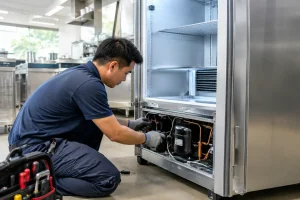

A refrigerator that is still cooling but running louder than usual presents a different problem from one that has stopped cooling altogether. That is the practical difference behind appliance servicing vs repair. One is planned care intended to keep equipment working efficiently. The other is a targeted response to a fault that is already affecting performance, safety, or daily convenience.
For homeowners and businesses in Singapore, knowing which service to arrange can prevent unnecessary expense and reduce downtime. A washing machine that takes longer to drain, an oven that heats unevenly, or a cooker hood with weak suction may not need replacement. The right diagnosis determines whether the appliance needs attention before a failure develops or a repair to restore normal operation now.
What appliance servicing and repair actually mean
Appliance servicing is routine professional maintenance. Its purpose is to check the condition of key components, remove buildup where appropriate, identify early signs of wear, and confirm that the appliance is operating as it should. It is best arranged while the appliance is still functioning, even if its performance has started to change.
For example, refrigerator servicing may involve checking door seals, airflow, drainage, cooling performance, and accumulated dust around accessible areas. Washing machine servicing may focus on drainage behavior, unusual vibration, leaks, and visible wear in connections or moving parts. For a cooker hood, grease buildup and poor extraction can be assessed before they become a larger performance issue.
Repair is different. It addresses a specific malfunction. The technician investigates the symptom, identifies the cause, and replaces or repairs the failed part where appropriate. A refrigerator that is warm, a dryer that no longer heats, or an oven that will not reach the selected temperature requires troubleshooting and repair, not a general maintenance visit.
The distinction matters because servicing does not automatically correct an existing component failure. Likewise, booking a repair visit for a small performance concern may still lead to a servicing recommendation if no failed part is found. Honest advice starts with understanding the actual condition of the appliance.
Servicing is preventive, but not a guarantee
Regular servicing can help spot issues such as worn seals, restricted drainage, loose fittings, abnormal noise, or declining performance. It may reduce the chance of a sudden breakdown, especially for appliances used heavily in homes, rental properties, cafes, offices, and restaurants.
However, appliances contain electrical, mechanical, and electronic parts that can fail without much warning. A service appointment cannot guarantee that every future fault will be avoided. Its value is early detection, better performance checks, and a clearer picture of whether an appliance is still in good working condition.
Repair restores a lost function
A repair appointment is the right choice when a normal function has been lost or clearly compromised. Common examples include a fridge that is not cold enough, a washer that will not spin, a dryer that stays cold, an oven with inconsistent heat, or a cooker hood that will not switch on.
A proper repair starts with diagnosis rather than assumptions. The visible symptom is not always the failed part. Water on the floor may come from a drainage issue, a damaged seal, or another source. A machine that will not start may have a control, power, sensor, or mechanical issue. Finding the cause first helps avoid replacing parts that do not solve the problem.
Appliance servicing vs repair: how to decide
The simplest question is whether the appliance is still completing its normal job. If it is working but showing early changes, servicing may be suitable. If it cannot perform a key function or is causing a leak, error message, burning smell, repeated tripping, or significant noise, arrange a repair assessment promptly.
Consider servicing when the appliance is operating but has become noisier, less efficient, slower, or harder to keep clean. A refrigerator with a door that does not close as firmly as before, a washing machine with mild vibration, or a coffee machine producing inconsistent results can all benefit from a condition check. These are signs to investigate before they develop into a disruptive fault.
Choose repair when the issue is immediate. Food that is not staying cold, laundry left soaking wet after a cycle, a dryer with no heat, or an oven that cannot maintain temperature affects daily operations right away. In a business setting, these problems can interrupt service, create waste, and frustrate staff or customers. Speed matters, but accurate diagnosis matters just as much.
There are also cases where the answer depends on the appliance’s age, usage level, repair history, and overall condition. A single failed part in an otherwise dependable appliance is often worth repairing. Repeated faults across several major components may justify a more careful discussion about cost and expected remaining lifespan. The right provider should explain the findings plainly rather than pressure you toward the most expensive option.
Why timing affects cost and disruption
Waiting until an appliance stops completely can make a manageable issue more disruptive. A refrigerator with weak cooling may lead to spoiled food. A washing machine with an intermittent drainage problem can become unusable at the worst possible time. A cooker hood with poor extraction can leave grease and odors building up in a kitchen.
That does not mean every small noise requires an urgent repair. Appliances make different sounds during normal operation, and some changes are minor. The concern is a sound, smell, leak, vibration, or performance change that is new, worsening, or affecting results. Reporting those details helps the technician assess the situation more efficiently.
For landlords and property managers, planned servicing can also help reduce avoidable tenant disruption. For commercial kitchens, offices, and cafes, it can support more consistent operation of frequently used equipment. The best schedule depends on the appliance type, age, and workload. Equipment used several times a day will usually need closer attention than an appliance used occasionally.
What to expect from a professional visit
Whether you book servicing or repair, the process should be clear. A technician should inspect the appliance, ask about the symptoms or usage pattern, and explain what has been found. If a repair is required, you should understand the recommended work, parts involved where applicable, and expected cost before proceeding.
Transparent pricing is especially important when a fault is not obvious. Diagnosis takes time because technicians need to test the appliance safely and rule out possible causes. A rushed guess may appear cheaper initially but can lead to repeat visits and more downtime. Quality workmanship means addressing the underlying issue, not only the symptom that first caught your attention.
At Fix It Appliance, the focus is on practical diagnosis and clear recommendations for refrigerators, washing machines, dryers, ovens, cooker hoods, and other household or business equipment. When a repair is sensible, the goal is to restore reliable use. When servicing is the more appropriate step, the goal is to help the appliance continue working without unnecessary replacement.
When a repair should not wait
Some signs call for prompt professional attention. Stop using the appliance and arrange an assessment if there is a burning smell, smoke, exposed damage, repeated electrical tripping, a major leak, or a refrigerator that is no longer keeping food at a safe temperature. These are not issues to monitor for weeks.
Also act quickly when a fault is affecting a tenant, customer-facing operation, or essential daily routine. Early repair can limit inconvenience and may prevent secondary damage, such as water affecting cabinets, flooring, or nearby equipment.
The useful approach is not to treat servicing and repair as competing choices. Servicing helps you monitor and maintain an appliance that is still working. Repair brings back an appliance that has already failed or is close to failing. A timely inspection, straightforward explanation, and properly completed work give you the information needed to make the right call with confidence.