A washer that finishes its cycle with a drum full of gray water can quickly turn a normal laundry day into a bigger problem. If you are asking, “why is washer not draining,” the cause is often a blocked drain filter, a kinked hose, or a small item trapped inside the pump. In other cases, the fault is electrical or mechanical and needs a professional diagnosis.
Do not keep restarting the machine in the hope that it will clear itself. A washer that cannot drain may stop before spinning, leave clothes soaking wet, or leak when the door is opened. Switching it off, checking the simple causes safely, and arranging repair when needed can prevent further damage.
Why Is Washer Not Draining? Start With the Water Path
Every washing machine has to move used water from the tub through a hose and out through the household drain. In most front-load washers, water passes through a debris filter and drain pump before it enters the drain hose. Top-load models may use a similar pump system, although the filter location can differ.
When any part of this route is blocked, bent, damaged, or unable to operate, water stays in the drum. The machine may show a drain-related error code, make a humming sound without removing water, or stop at the rinse or spin stage.
Before inspecting anything, turn off the washer and unplug it from the wall outlet. If there is a large amount of water inside, place towels around the base of the machine. Never force the door open on a front-load washer, as water can spill out quickly.
Common Reasons a Washer Will Not Drain
A clogged drain filter
A blocked drain filter is one of the most common washer drainage faults. Small items left in pockets can collect there, including coins, tissues, hairpins, buttons, socks, and lint. Over time, these items restrict water flow and make the drain pump work harder.
Many front-load washers have a small access panel near the bottom front of the machine. Behind it is usually a filter cap and, on some models, a small emergency drain hose. Check the user manual before opening it, as the process differs by brand and model.
Drain any remaining water into a shallow tray, then remove the filter slowly. Clean away debris and check whether the filter threads and rubber seal are intact before refitting it firmly. If the filter is clear but the washer still does not drain, the blockage may be deeper in the pump or hose.
A kinked or blocked drain hose
The drain hose can become bent when a washer is pushed too close to the wall. A sharp kink prevents water from moving through the hose, while a buildup of lint or detergent residue may create a partial blockage inside it.
Pull the washer forward carefully and inspect the full length of the hose. It should not be crushed, sharply folded, or trapped behind the machine. Also check that the hose is inserted into the drain pipe at the correct height. If it sits too low, water may siphon out during the cycle. If it is installed too high, the pump may struggle to push water upward.
A hose that is split, brittle, or leaking should be replaced rather than patched. This is a relatively straightforward repair, but the correct hose type and installation height matter.
Something stuck in the drain pump
If the washer makes a low humming or buzzing sound but no water comes out, the drain pump may be receiving power but unable to turn. A coin, bra wire, small fabric item, or broken plastic piece can jam the pump impeller.
After removing the drain filter, use a flashlight to look inside the filter housing. You may be able to see the small impeller at the back. It should move with slight resistance, not feel completely stuck. Do not reach deep into the opening with your fingers, as sharp items can be present.
A jammed pump can sometimes be cleared during a service visit. However, if the impeller is damaged, the motor has overheated, or the pump is worn out, replacement is usually the dependable solution.
Too much detergent or an unsuitable detergent
Excess detergent creates heavy foam that can interfere with the washer’s water-level sensing and drainage process. This is especially common when standard detergent is used in a high-efficiency front-load washer, or when more detergent is added because clothes appear very dirty.
Use detergent designed for your washer type and follow the dosing guide. In Singapore, soft water conditions in many homes can mean less detergent is needed than expected. If the machine is full of foam, run a rinse-and-spin cycle without adding more detergent after the drainage issue has been resolved.
An unbalanced or overloaded load
A washer may refuse to spin and drain fully if it detects an unstable load. Heavy items such as bath mats, bedding, or a single large towel can gather on one side of the drum. The machine may attempt to rebalance the load several times before stopping with wet laundry inside.
Remove some items and redistribute the remaining load evenly. Do not overload the drum, but also avoid washing one heavy item alone where possible. If the washer repeatedly reports an imbalance with ordinary loads, worn suspension parts or a control fault could be involved.
A faulty drain pump, lid lock, or control system
Not every drainage problem is caused by a visible blockage. The drain pump motor can fail after years of use, especially if it has repeatedly operated against clogged filters. A damaged pump wiring connection, faulty lid or door lock, pressure sensor problem, or electronic control board fault can also prevent the drain cycle from starting.
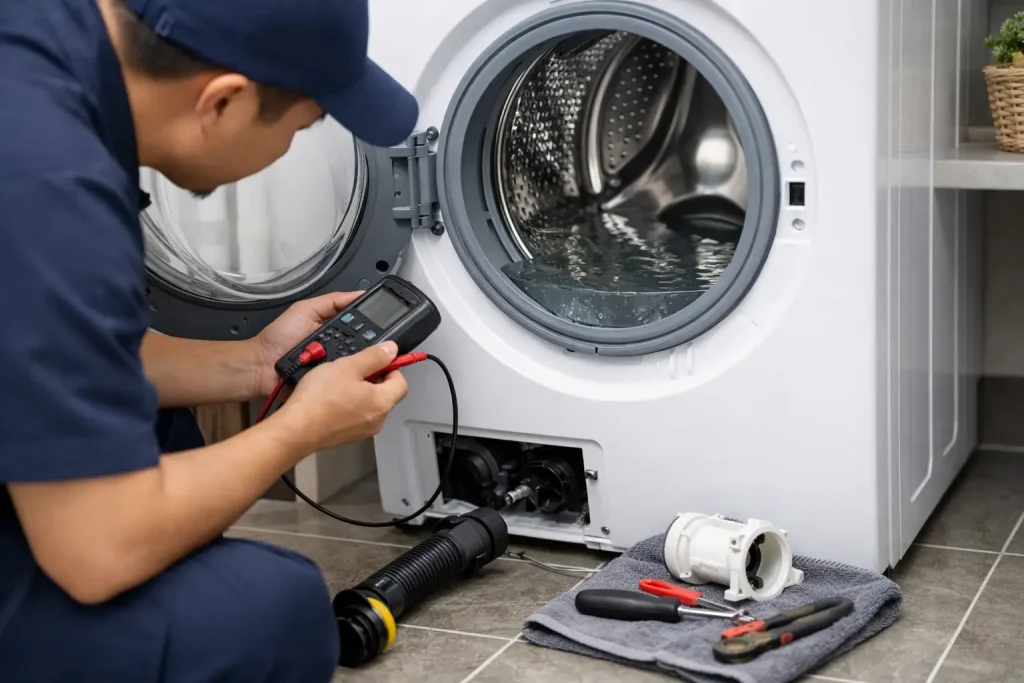
These faults are difficult to confirm without proper testing. The symptoms can look similar: water remains in the machine, the cycle pauses, or an error code appears. A technician can test the pump, wiring, sensors, and control signals to identify the failed component instead of replacing parts by guesswork.
Safe Checks Before Booking Washer Repair
A few practical checks can help narrow down the fault. First, confirm that the machine is powered on and that no error code is displayed. Next, inspect the drain hose for kinks and clean the drain filter if your model provides safe access.
Then try a drain or spin program with the drum empty. Listen closely. A running pump usually makes a steady low mechanical sound as water leaves the tub. A loud rattling noise may point to a foreign object, while silence can suggest a failed pump, lid lock issue, wiring problem, or electronic fault.
Stop using the washer if it leaks from underneath, gives off a burning smell, trips the electrical supply, or makes harsh grinding sounds. These are not faults to continue testing at home. Repeatedly forcing a cycle can turn a small pump obstruction into a larger repair.
When Professional Diagnosis Is the Better Choice
Professional washer repair is sensible when the filter and hose are clear but the washer still holds water, when the pump needs removal, or when an error code keeps returning. It is also the safer option for built-in appliances, commercial laundry machines, and washers installed in tight service yards where moving the unit can damage hoses or flooring.
During a proper diagnosis, the technician should check the drainage route, pump operation, wiring condition, door or lid lock, pressure system, and relevant electronic controls. The repair recommendation should be based on the actual failed part and the condition of the appliance, not a generic assumption.
For an older washer, repair versus replacement depends on the fault, availability of parts, and the overall condition of the machine. Replacing a blocked hose or drain pump is often worthwhile when the washer is otherwise operating well. Multiple major faults, severe corrosion, recurring leaks, or an unavailable control board may make replacement the more practical decision.
Fix It Appliance provides washer diagnostics and repair across Singapore for common drainage faults, including blocked pumps, damaged hoses, faulty drain motors, and control-related issues. A clear assessment helps you decide whether a targeted repair will bring the machine back to reliable use.
Preventing Future Drainage Problems
The simplest prevention is to check pockets before every wash. Coins, tissues, and small accessories are frequent causes of blocked filters and damaged pumps. Clean the drain filter periodically, particularly if you wash pet bedding, heavily soiled workwear, or items that shed lint.
Use the correct amount of suitable detergent, avoid consistently overloading the drum, and leave enough clearance behind the washer so the drain hose is not crushed. If you notice slower drainage, unusual pump noise, or clothes coming out wetter than usual, address it early. A small warning sign is often much easier and less costly to resolve than a complete drainage failure.