A washing machine drum should turn smoothly, sit firmly in place, and keep laundry inside the machine during every cycle. When it bangs, scrapes, wobbles, stops turning, or leaves marks on clothes, the fault is often more than an inconvenience. This washing machine drum problem guide helps Singapore households and businesses identify likely causes, carry out safe basic checks, and know when professional repair is the sensible next step.
Start by identifying the type of drum problem
Many people call the entire inner section the drum, but a front-load washing machine has two main parts: the stainless-steel inner drum that holds the laundry and the outer tub that holds water. Top-load models use a similar drum or basket arrangement, although the drive system differs. The sound, movement, and point in the wash cycle where the issue happens can narrow down the fault.
A loud knocking during spin is usually different from a scraping noise while the drum is turned by hand. A drum that does not move at all may have a belt, motor, control, or door-lock issue rather than a damaged drum. If the machine is leaking from below, worn bearings or a damaged tub seal may be involved, but hoses and the drain pump should also be checked.
Before inspecting anything, switch the appliance off at the wall and unplug it. Turn off the water supply if there is a leak. Do not remove panels or attempt to force a stuck drum while the machine is connected to power.
Common washing machine drum faults and what they mean
The drum is loose, drops, or hits the door seal
Open the door and lift the inner drum gently from the top edge. A very small amount of movement can be normal, but obvious up-and-down play, a sagging drum, or metal rubbing against the door gasket points to a mechanical problem.
On a front-load machine, this can be caused by worn drum bearings, a damaged drum spider, or failed suspension components. The spider is the metal support behind the drum. It can corrode over time, especially where detergent residue and moisture collect. A broken spider may cause severe knocking, uneven spinning, and a drum that sits noticeably off-center.
This is not a fault to ignore. Continuing to run a loose drum can damage the door seal, outer tub, heater, or motor components. Stop using the machine until it is assessed.
Rumbling or roaring noise during spin
A low rumble that becomes louder as the spin speed increases is a classic sign of worn bearings. You may also hear a rough grinding sound when turning the empty drum by hand. In some cases, rusty water marks, grease stains, or a metallic smell may appear near the rear of the machine.
Bearings support the drum shaft as it rotates. Once water passes a failing seal and reaches them, they deteriorate quickly. Bearing replacement is a labor-intensive repair because the machine must be dismantled and the tub may need to be split. Some newer models use sealed tubs, which can make repair less economical than on a model designed with replaceable bearings.
Scraping, clinking, or rattling from inside the drum
Coins, bra wires, screws, hairpins, and small objects can slip through drum holes or become trapped between the inner drum and outer tub. The noise may happen only when the drum turns in one direction. A bra wire often makes a repetitive metallic scrape and can eventually puncture a hose or damage the heater.
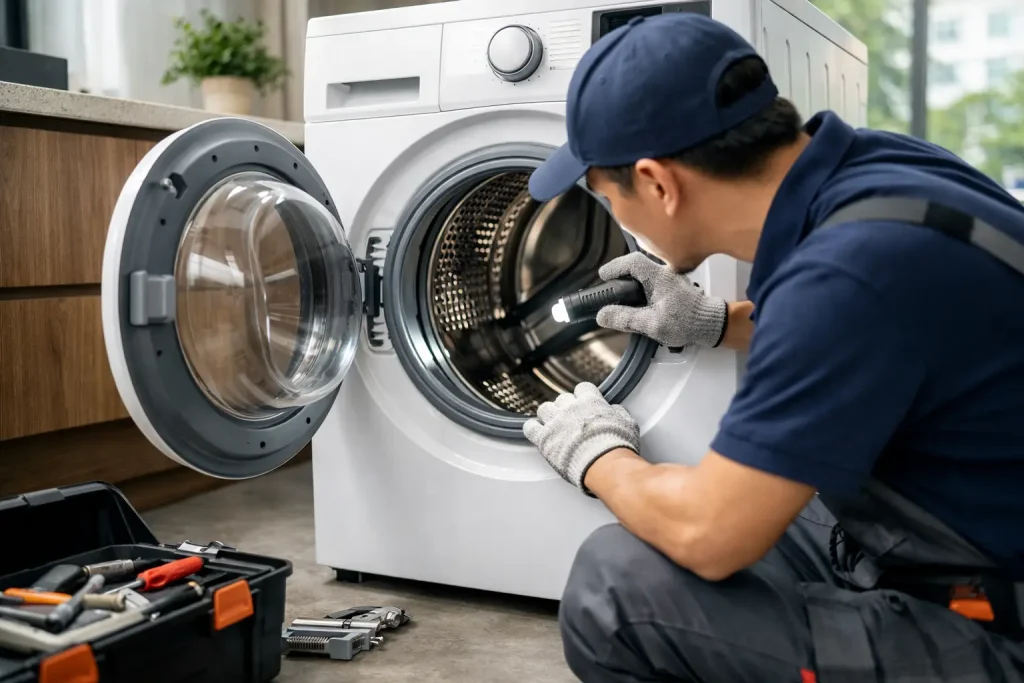
First, check the drum carefully with a flashlight and inspect pockets before future loads. If the item is visible and easy to remove without force, take it out. If it has fallen below the drum, avoid using the machine repeatedly. A technician may need to access it through the heater opening, sump hose, or another service point.
The drum will not spin or turns slowly
If the machine fills and drains but the drum remains still, a broken or slipped drive belt is possible on belt-driven models. A worn belt may also produce a burning-rubber smell or allow the drum to turn only under light loads. Direct-drive machines do not use a belt, so the fault may instead involve the motor, motor sensor, wiring, control board, or another component.
An overloaded load can also prevent proper spinning. Remove some items, redistribute the remaining laundry, and try a spin cycle once. Heavy items such as towels, bedding, or uniforms should not be washed as one uneven bundle. However, if the drum still will not turn when empty, the machine needs diagnosis rather than repeated resets.
Violent banging and walking during spin
Not every spin problem means the drum is damaged. An unbalanced load, uneven flooring, or poorly adjusted feet can make a washing machine shake strongly. Check that all four feet are firmly on the floor and that the machine does not rock when pushed gently from corner to corner.
For front-load machines, failed shock absorbers can allow the tub to bounce excessively. For top-load models, worn suspension rods or springs are common causes. Transport bolts left in place after installation can also cause dramatic vibration, although this is usually noticed early in the machine’s life.
If the machine suddenly begins banging after years of normal use, suspension wear or a loose drum should be considered. Do not keep trying high-speed spin cycles, as the appliance can damage nearby cabinets, flooring, and its own internal parts.
Safe checks before arranging a repair
A few observations can make a service visit faster and more accurate. With the appliance unplugged, turn the empty drum slowly by hand. Notice whether it feels smooth, catches at one point, or makes a grinding noise. Check for excessive vertical movement by lifting the drum edge gently.
Then inspect the door seal for tears, trapped items, black marks, or signs that the drum has been rubbing against it. Look under and behind the machine for water, rust-colored residue, or a loose drive belt if it is visible from an accessible rear panel. Do not dismantle sealed tubs, remove motors, or handle internal wiring unless you are trained to do so.
It also helps to note when the problem occurs: during wash, drain, or high-speed spin. Record any error code and, if safe, take a short video of the noise or vibration. These details help distinguish a drum issue from a pump, motor, or drainage fault.
When a drum repair is worth it
The right decision depends on the appliance’s age, brand, condition, and the parts required. Replacing a drive belt, shock absorber, suspension rod, or trapped foreign object is often a practical repair. Bearing work may still be worthwhile on a quality machine in otherwise good condition, particularly where replacement parts are available and the tub can be serviced.
A cracked outer tub, badly corroded drum spider, or sealed-tub bearing failure can be more expensive because of the labor and major parts involved. If the washer already has repeated leaks, electrical faults, or poor wash performance, replacement may offer better value. A proper diagnosis should come before deciding, because the same loud noise can have very different repair costs.
For landlords, property managers, and commercial users, downtime matters too. A prompt assessment can prevent a minor belt or suspension issue from becoming a larger tub and motor repair. Keep the model number available, as parts compatibility varies even within the same brand.
Prevent future washing machine drum problems
Use the correct detergent amount, especially with concentrated formulas. Excess detergent creates residue that can affect seals and leave deposits around the drum. Leave the door or lid open after use when practical so moisture can dry, and run an appropriate maintenance cycle according to the manufacturer’s instructions.
Most importantly, check pockets and fasten loose items before every wash. Wash bras, small garments, and items with metal fittings in a laundry bag. Avoid consistently overloading the machine, as excessive weight puts added stress on bearings, belts, suspension parts, and the drum support.
A noisy or loose drum rarely fixes itself. If your machine is grinding, rubbing, leaking, or shaking beyond normal vibration, stop the cycle and arrange a professional inspection. Fix It Appliance provides reliable washing machine diagnostics and repair across Singapore, helping identify the actual fault before unnecessary parts are replaced.