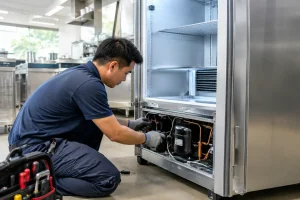

A washer that stops mid-cycle, leaves clothes soaking wet, or starts making a grinding noise usually feels like a sudden failure. In practice, how washing machine troubleshooting works is much more systematic than most people expect. A good diagnosis follows a clear process – confirm the symptom, rule out the simple causes, test the key components, and identify whether repair is worthwhile.
That matters because many washing machine problems can look the same from the outside. A machine that will not spin could have a drainage issue, a door lock fault, an overloaded drum, a worn motor component, or an electronic control problem. Replacing the wrong part wastes time and money. Accurate troubleshooting is what separates a proper repair from guesswork.
How washing machine troubleshooting works in real service calls
Professional troubleshooting starts with the complaint, not with assumptions. If the customer says the washer is leaking, the first question is where and when the leak happens. Water on the floor at the start of the cycle points to different causes than water appearing only during drain or spin. The timing of the fault helps narrow the diagnosis quickly.
Technicians also look at the machine’s basic operating conditions. Power supply, water supply, drainage setup, door closure, leveling, and load condition all affect performance. A washer can display symptoms that seem serious when the actual issue is external or operational. That does not mean the problem is minor, only that a good diagnosis checks the full system before moving to internal parts.
From there, troubleshooting becomes a process of elimination. The technician observes how the machine behaves during filling, washing, draining, and spinning. If the machine fills but does not agitate, that suggests one group of faults. If it agitates but does not drain, that points elsewhere. If it drains but will not enter high-speed spin, the issue may involve balance detection, motor control, or door safety systems.
This step-by-step approach keeps the repair honest. Instead of recommending parts based on the most common failure, the technician identifies the failed part based on actual evidence.
The main systems a technician checks
A washing machine is not one single mechanism. It is a group of systems working together. Troubleshooting usually focuses on the system connected to the symptom.
Power and control
If the washer is completely unresponsive, diagnosis often starts with incoming power, the power board, display board, wiring connections, and the main control. Some machines still light up but fail to start a cycle, which can indicate a lock mechanism issue, a control board fault, or a communication error between components.
Electronic faults can be straightforward or time-consuming. A visible burnt component or stored error code helps. Intermittent faults are harder because the machine may behave normally during inspection and fail later.
Water inlet and filling
When a washer does not fill properly, technicians check the water supply, inlet valves, filters, pressure switch behavior, and related wiring. Slow filling can trigger cycle delays or error codes. Overfilling suggests a different path, often involving water level sensing or a valve that is not closing correctly.
Water issues are a good example of why symptoms can overlap. A customer may think the washer is “not washing,” but the real problem is that it never received enough water to run the cycle properly.
Drainage system
If water remains in the drum, the drainage side becomes the focus. That includes the drain pump, hose routing, blockages, impeller condition, and electrical supply to the pump. Poor drainage often causes secondary complaints such as no spin, foul odor, or clothes coming out too wet.
This is one of the most common fault categories because a machine cannot move cleanly into spin if it still detects water inside. The no-spin complaint is often really a no-drain problem.
Motor and drive components
When the drum does not rotate correctly, troubleshooting turns to the motor, belt in belt-driven models, carbon brushes in certain units, capacitor in relevant designs, stator and rotor systems in inverter machines, and the control board that manages drum movement.
Not every drum problem means the motor has failed. Sometimes the machine tries to turn but struggles under load. Sometimes it rotates slowly in wash mode but fails at spin speed. Those details matter because they point to different failures.
Door lock and safety circuits
Modern washers rely on safety interlocks. If the machine does not detect a secure door or lid, it may refuse to start, spin, or unlock at the end of a cycle. A faulty door lock can imitate a more serious electronic issue, especially when the display remains active but the cycle will not proceed.
Bearings, suspension, and mechanical wear
Loud rumbling, banging, or excessive shaking usually shifts the diagnosis toward mechanical parts. Technicians check drum bearings, shock absorbers, suspension rods, counterweights, spider assemblies, and the condition of the drum support structure.
Here, the repair decision often depends on cost versus machine age. A minor imbalance issue is one thing. Major bearing or drum support failure can be a much larger repair.
Why one symptom can have several causes
The biggest misconception about washer repair is that every symptom has one obvious fix. Real troubleshooting does not work that way.
Take a machine that will not spin. If the drain pump is weak, the washer may cancel spin because it still senses water. If the load is badly unbalanced, the machine may protect itself and stop. If the door lock is faulty, high-speed spin may be blocked for safety. If the motor control board is failing, the drum may turn slowly but never ramp up. If the suspension is worn, the machine may abort spin repeatedly.
That is why replacing a part based on symptom alone is risky. The same complaint can come from electrical failure, mechanical wear, drainage issues, or control logic.
What error codes do and do not tell you
Error codes are helpful, but they are not a complete diagnosis. They point technicians toward the affected circuit or function. For example, a drainage-related code suggests checking the pump and drain path, but it does not automatically confirm the pump is defective.
A code can be triggered by wiring damage, a blocked hose, a failing sensor, or a board that is reading the system incorrectly. Some machines also store old faults that are no longer active. That is why a proper visit includes both code reading and live testing.
In other words, error codes guide the process. They do not replace it.
How technicians decide whether repair makes sense
Troubleshooting is not only about finding the fault. It is also about deciding the most sensible next step. A reliable diagnosis should answer three questions clearly: what failed, what is required to fix it, and whether the repair is cost-effective.
If the issue is a drain pump, door lock, inlet valve, or similar service part, repair is often straightforward. If the fault involves a major control board, severe corrosion, drum bearing damage, or multiple worn components, the decision may be less simple. Age, brand, condition, and part availability all affect the recommendation.
For homeowners, tenants, landlords, and businesses, this clarity matters. You want to know whether the machine can be restored reliably, not just whether it can be made to run for the moment.
How washing machine troubleshooting works when speed matters
In busy homes and commercial settings, the value of troubleshooting is speed with accuracy. A rushed diagnosis can lead to repeat breakdowns, extra labor, and unnecessary parts. A careful diagnosis that takes a little longer upfront often shortens the overall repair timeline because the right issue is addressed the first time.
That is especially true when laundry equipment supports daily operations. Delays affect households, tenants, and staff routines quickly. In Singapore, where many customers need prompt on-site assessment, the practical goal is simple: identify the fault clearly, explain the repair honestly, and restore normal use as soon as possible.
This is also where transparent service matters. Customers are not just paying for a part. They are paying for experienced fault-finding, a clear explanation, and confidence that the repair recommendation is based on evidence.
What a good troubleshooting process should feel like
From the customer side, professional troubleshooting should be straightforward. The problem is reviewed carefully, the symptoms are tested, the likely cause is explained in plain language, and the repair options are presented clearly. There should be no pressure, no vague diagnosis, and no inflated list of possible parts without proof.
That practical, honest approach is what reduces stress when a washer breaks down. You do not need technical jargon. You need a technician who can pinpoint the issue, explain the trade-offs, and tell you whether the machine is worth repairing.
A washing machine fault rarely fixes itself, and it rarely becomes cheaper by waiting. The right next step is a proper diagnosis that turns a messy symptom into a clear answer.