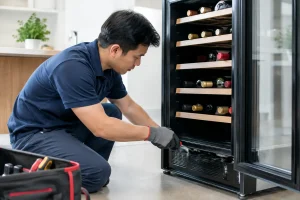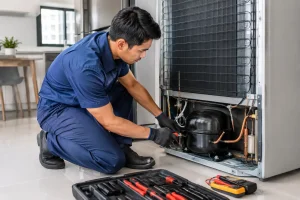
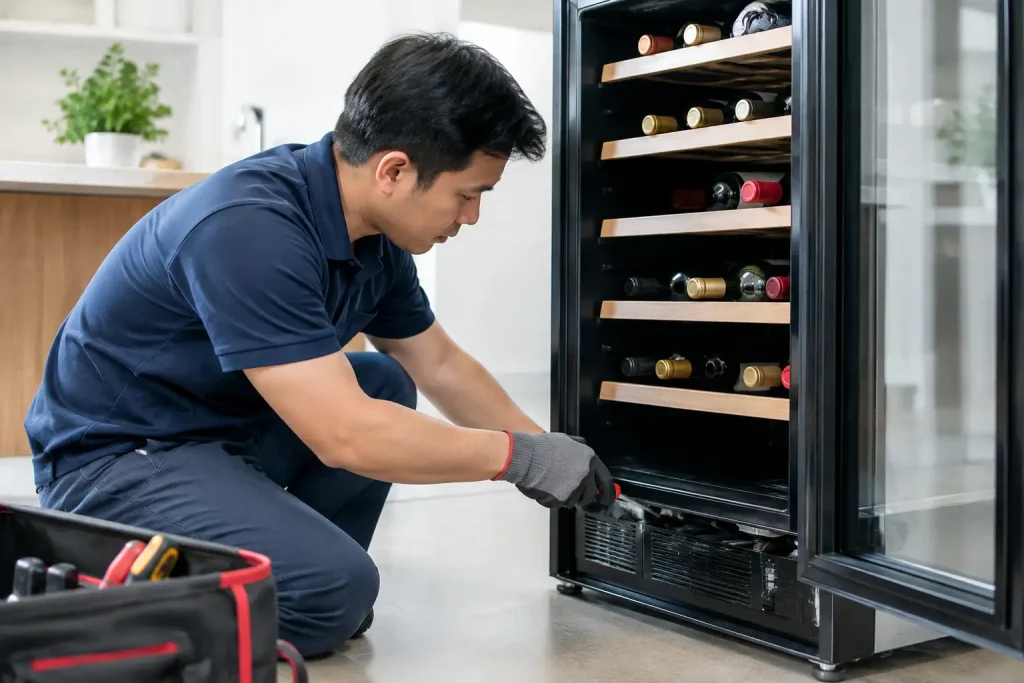
A wine cooler that suddenly feels warm can put an entire collection at risk, especially in Singapore’s heat and humidity. Whether it is a compact unit at home or a larger wine chiller in a business setting, temperature instability, leaks, alarms, and unusual noise should be checked early. Some faults have a simple cause, while others need professional diagnosis before they damage the compressor or cooling system.
Start With the Fault You Can See
Before assuming the appliance has failed, check the basics. Confirm that the wine cooler is switched on, the socket has power, and the temperature setting has not been changed accidentally. If it has just been installed, moved, or heavily loaded, give it time to stabilize. A compressor-based model may need several hours to reach its set temperature.
Also check the door. A bottle, shelf, or loose seal can prevent it from closing fully. Even a small gap lets warm, moist air enter the cabinet, forcing the unit to work harder and causing condensation. In Singapore, this problem can become obvious quickly because of the high humidity.
If the display is working but the cabinet is not cold, avoid repeatedly switching the appliance off and on. This does not solve a cooling fault and can place additional strain on the compressor. Record the temperature shown on the display, how long the unit has been running, and any unusual sounds. These details help make diagnosis faster.
Common Wine Cooler Problems
Wine cooler is not cooling
A wine cooler that is completely warm may have a power supply issue, faulty thermostat or temperature sensor, defective control board, failed fan, compressor fault, or a refrigerant system problem. Thermoelectric wine coolers have different components from compressor models, so the repair approach depends on the unit type.
First, make sure there is enough clearance around the appliance. Heat must escape from the rear or side vents. When a freestanding unit is pushed tightly into a cabinet, placed beside a heat-producing appliance, or surrounded by stored items, the temperature may rise even though the unit is still operating.
If ventilation is clear and the cabinet remains warm after several hours, professional testing is usually needed. A technician can check whether the fan is running, whether the compressor is starting properly, and whether the cooling system is operating within normal conditions.
Wine cooler is cooling too much or freezing bottles
Freezing is often linked to a faulty temperature sensor, thermostat, electronic control board, or poor airflow inside the cabinet. A damaged sensor may send the wrong reading to the controls, causing the compressor to run longer than necessary.
Do not ignore freezing simply because the appliance is cold. Extremely low temperatures can damage labels, affect storage conditions, and may indicate a control issue that will worsen over time. Check that bottles are not blocking internal air vents and confirm that the set temperature is appropriate for the unit’s cooling range. If the display temperature does not match the actual cabinet temperature, arrange a diagnosis.
Excessive noise or constant running
Most compressor wine chillers make a low hum and may click as the cooling cycle starts and stops. Fans can also create a gentle airflow sound. Loud rattling, repeated clicking without cooling, grinding, or continuous running are not normal signs to overlook.
Rattling may come from an uneven floor, loose shelves, bottles touching one another, or a vibrating rear panel. Place the appliance on a firm, level surface and leave a small gap between bottles. If the noise continues, the issue may involve a condenser fan, evaporator fan, compressor relay, or compressor itself.
Constant running can also mean the unit is fighting heat. Dirty condenser coils, blocked vents, worn door gaskets, and frequent door opening all make the system work harder. In a commercial setting, repeated door use can be part of the problem, but the cabinet should still recover to its target temperature within a reasonable period.
Water inside or around the unit
A small amount of condensation can occur, particularly when the door is opened often. Pools of water, dripping, or heavy moisture on the inner glass need attention. Common causes include a blocked drain path, damaged door gasket, poor door alignment, or warm air entering the cabinet.
Unplug the appliance before inspecting accessible areas. Wipe up standing water, check whether the door seal is split or dirty, and make sure the unit is level. Do not poke sharp objects into drain openings or panels. If water returns after basic checks, a technician can inspect the drainage arrangement and internal components safely.
Display errors, alarms, or flashing lights
An error code is the appliance’s way of reporting an abnormal condition, not necessarily proof that a major part has failed. It may relate to a temperature sensor, fan, communication fault, door switch, or control board. Note the exact code and model number before arranging service.
Avoid replacing electronic parts based only on an online error-code list. The same code can point to different causes across brands and models. Proper testing prevents unnecessary parts replacement.
Safe Checks Before Calling for Repair
There are a few useful checks that do not involve dismantling the appliance. Verify the power supply, inspect the door gasket for tears or debris, make sure vents are open, and confirm that the cooler is not overloaded. Clean dust from accessible external ventilation grilles with a soft brush or vacuum attachment after unplugging the unit.
If the appliance was transported on its side, allow it to stand upright before turning it on. Oil in the compressor needs time to settle. The recommended standing time varies by manufacturer, so follow the product manual where available.
Do not remove sealed cooling pipes, cut wires, bypass thermostats, or attempt to refill refrigerant. Refrigerant faults and compressor electrical faults require specialized tools and handling. A do-it-yourself attempt can turn a repairable issue into a replacement decision.
Repair or Replace Your Wine Cooler?
The right choice depends on the appliance’s age, condition, fault type, and availability of spare parts. A relatively new unit with a failed fan motor, thermostat, sensor, door seal, or starting component is often worth repairing. These faults can usually be diagnosed clearly and addressed without replacing the whole appliance.
Replacement may be more sensible when an older unit has a failed compressor, a major refrigerant leak, severe corrosion, repeated electronic failures, or unavailable parts. This is particularly true for smaller entry-level wine coolers, where the cost of major sealed-system repair can approach the cost of a new appliance.
For businesses, downtime matters as much as repair cost. If a wine chiller is essential to daily operations, a prompt assessment helps determine whether a reliable repair is possible or whether replacement should be planned. Do not base the decision on the symptom alone. A unit that “does not cool” may need a minor fan repair, while another with the same symptom may have a costly compressor issue.
Preventive Maintenance for Singapore Conditions
Wine coolers work best when they can release heat efficiently. Leave the manufacturer-recommended ventilation space around the unit, particularly at the rear and sides. Do not enclose a freestanding model in tight cabinetry unless it is designed for built-in use.
Keep the door gasket clean with a soft cloth, and avoid leaving the door open while loading bottles. Check that the appliance is level so the door closes correctly and any condensate can drain as intended. For models with accessible condenser areas, remove dust periodically after disconnecting power.
Avoid overpacking the cabinet. Air needs space to circulate around bottles and shelves. If your model has separate temperature zones, use each zone within its stated temperature range rather than setting extreme temperatures that the unit may struggle to maintain in a warm room.
When Professional Diagnosis Is the Best Next Step
Call for wine chiller repair when the cabinet stays warm, repeatedly trips power, leaks persistently, shows error codes, freezes contents, or makes loud mechanical noise. These signs can involve electrical controls, fans, sealed cooling components, or worn mechanical parts that cannot be confirmed through visual checks alone.
A professional assessment should identify the likely fault, test the affected components, and explain whether repair is practical before parts are replaced. Fix It Appliance provides wine cooler and appliance diagnostics across Singapore for homeowners and businesses that need a clear answer and reliable repair.
A wine cooler does not need to be completely dead before it deserves attention. Acting when temperatures first become unstable can protect what is stored inside and may prevent a smaller fault from becoming a more expensive repair.