
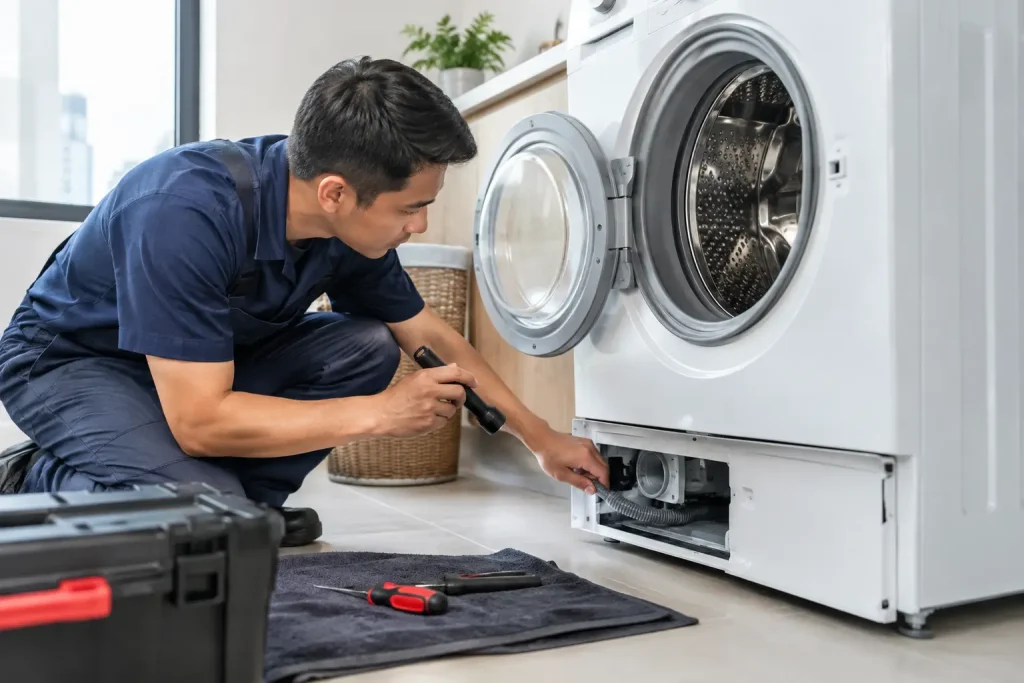
A washer that finishes with water sitting in the drum can stop a household routine quickly. Effective washer drainage troubleshooting starts by separating a simple blockage from a failed component, rather than repeatedly restarting the cycle and hoping the water clears.
Most drainage faults fall into one of four areas: a kinked or blocked drain hose, a clogged pump filter, a jammed or failed drain pump, or a restriction where the appliance discharges water. The symptoms matter. A washer that drains slowly needs a different diagnosis from one that hums, shows an error code, and leaves the drum completely full.
Start Safely Before Checking the Washer
Do not tip, dismantle, or run the washer again while water is pooled on the floor. Switch off the appliance, unplug it from the power outlet, and close the water supply taps if you need to move the machine. Keep towels and a shallow tray ready, especially with front-load washers where opening the filter access can release several liters of water.
Before arranging a repair, note the model, the error code if one appears, and when the problem occurs. Does the washer fail to drain only at the end of a wash? Does it drain but refuse to spin? Is there a grinding sound from the lower front of the machine? These details help narrow down the cause and prevent unnecessary parts replacement.
Common Signs of a Washer Drainage Fault
A drainage problem does not always look the same. Water remaining in the drum is the most obvious sign, but other symptoms can point to the same system.
A front-load washer may stop before the spin cycle because it cannot confirm that water has been pumped out. A top-load washer may spin weakly, pause for a long time, or leave clothes excessively wet. Some machines display a drain-related error code, while older models may simply keep humming without clearing the water.
Watch for these patterns:
- Water drains very slowly or not at all.
- The washer makes a humming, buzzing, rattling, or grinding sound during draining.
- The machine completes washing but will not enter the spin cycle.
- Water backs up from the discharge point when the washer empties.
- The problem happens only with bulky loads, such as bedding or bath towels.
A single overloaded wash can sometimes cause an imbalance that interrupts spinning, but it should not repeatedly leave a full drum. Recurrent drainage trouble needs a proper check.
Check the Drain Hose First
The drain hose is the easiest place to start. Pull the washer forward carefully and inspect the hose from the back of the machine to its discharge point. Look for sharp bends, crushing behind the appliance, loose connections, or visible damage.
A hose that is pushed too far down into the drain opening can also cause poor draining or water returning to the washer. The hose needs an air gap and should be installed at the height specified for that model. Installation requirements vary between manufacturers, so avoid changing the setup based only on a generic measurement found online.
If the hose is visibly kinked, straighten it and test the washer on a drain or spin cycle once the area is dry. If you suspect an internal blockage, do not force a wire or sharp object through it. This can puncture the hose or push debris deeper into the system. A technician can remove and flush the hose safely if required.
Clean the Pump Filter if Your Model Has One
Many front-load washers have a drain pump filter behind a small access panel near the bottom front of the appliance. This filter catches coins, hairpins, lint, fabric fibers, buttons, and other small items before they reach the pump.
Not every machine has a user-accessible filter. Check the operating manual before opening any panel. If your model does have one, place towels and a shallow container below the access area. Some washers include a small emergency drain tube that allows water to be released slowly before the filter is removed.
Turn the filter cap gradually. Expect water to come out even if the drum appears nearly empty. Remove visible debris, rinse the filter, and inspect the filter housing for foreign objects. Do not use excessive force if the cap is stuck. A damaged filter cap or seal can cause a leak after reassembly.
Once the filter is clean, refit it securely and run a short drain cycle. If water now clears normally, the blockage was likely the cause. If the washer still hums without draining, the pump impeller or pump motor may be faulty.
What a Jammed Pump Sounds Like
A low hum with no water movement often means the drain pump is receiving power but cannot turn. Small objects such as bra wires, coins, clips, or fragments of plastic can jam the impeller. In some cases, the impeller turns but the motor has worn out and no longer produces enough force to discharge water.
After removing the filter, you may be able to see the impeller deeper inside the opening. It should move with slight resistance. Do not reach deeply into the housing or use metal tools, as sharp objects may be present and the impeller can be damaged. If an item is not easily removable, professional service is the safer option.
When the Problem Is Not Inside the Washer
If the pump sounds normal and the washer discharges water initially but then backs up, the restriction may be beyond the appliance. This is especially likely when water rises at the drain opening during the discharge cycle.
A shared or partially restricted waste line can prevent water from leaving fast enough. This may affect a washing machine even when other fixtures appear to drain normally, because the washer releases a large volume of water in a short period. The washer itself may be working correctly, so replacing its pump would not solve the underlying issue.
For tenants, notify the landlord or property manager where the discharge connection is part of the property setup. For businesses such as laundries, cafés, hotels, and offices, stop using the affected machine until the cause is confirmed. Repeated overflow can damage flooring, cabinets, and nearby appliances.
Why a Washer May Not Spin After a Drain Issue
Modern washers use sensors to confirm that water has drained before they allow high-speed spinning. This is a safety feature. If the pressure sensor still detects water, or the pump has not emptied the drum within the expected time, the control system may cancel the spin cycle.
That means wet clothes do not automatically indicate a motor or belt fault. Start with the drainage system first. However, if the washer drains fully and still will not spin, the issue may involve an unbalanced load, door lock, motor, drive system, sensor, or control board. These faults need a broader diagnosis.
Washer Drainage Troubleshooting: When to Call for Repair
Basic checks are worthwhile when the issue is clearly accessible, such as a kinked hose or debris in a user-serviceable filter. Stop troubleshooting and arrange service if the washer repeatedly shows a drain error, the pump makes grinding noises, there is leaking from underneath, or the filter cannot be opened safely.
Professional diagnosis is also recommended when a machine has no accessible filter, the drain pump needs removal, or there is uncertainty about whether the fault is within the washer or at the discharge connection. A technician can test the pump, inspect the hose path, check for obstructions, and determine whether a replacement pump, hose, filter cap, or another part is necessary.
For older washers, repair versus replacement depends on the appliance condition, availability of spare parts, and whether there are additional faults. Replacing a blocked or failed drain pump is often a practical repair when the washer is otherwise working well. Multiple major issues, severe corrosion, or repeated breakdowns may change that calculation.
Prevent Future Drainage Problems
Small habits reduce the chance of another blockage. Check pockets before loading clothes, use laundry bags for delicate items with hooks or wires, and avoid using more detergent than recommended. Excess detergent can create heavy suds that interfere with draining and leave residue in the hose and pump area.
Clean the pump filter periodically if your model allows it, particularly in households with pets, heavily soiled workwear, or frequent washing. Do not overload the drum, as tightly packed loads can shed more lint and prevent the washer from spinning efficiently.
A washer should drain with a steady flow and move into spinning without long pauses, loud pump noises, or standing water. If yours does not, acting early can turn a minor blockage into a straightforward repair instead of a flooded laundry area or a damaged pump.


