A refrigerator that suddenly stops cooling can put a week’s groceries at risk. A washing machine that will not drain can disrupt an entire household or laundry operation. In many cases, these are among the best appliance issues worth repairing – especially when the appliance is otherwise reliable and the fault is limited to one serviceable part.
The right decision is not simply based on whether an appliance is old. It depends on the type of fault, the availability and cost of spare parts, the condition of the appliance, and whether a repair will restore dependable daily use. For homeowners, landlords, and businesses in Singapore, a proper diagnosis usually prevents unnecessary replacement costs.
How to Decide if an Appliance Is Worth Repairing
Start with the appliance’s overall condition. A machine with a single failed pump, thermostat, heating element, door seal, or fan motor can often be repaired effectively. These parts wear out through normal use and do not always mean the entire appliance has reached the end of its service life.
Repair is generally the sensible choice when the appliance is still performing well apart from one clear fault, replacement parts are available, and there is no serious damage to the main cabinet, sealed cooling system, drum, or electronic control system. Built-in appliances also deserve closer consideration because replacing them may involve matching dimensions, removing cabinetry, or arranging a new installation.
Replacement may make more sense when repairs are repeated, essential parts are discontinued, corrosion or structural damage is extensive, or several major systems have failed at the same time. A technician’s diagnosis should identify the failed component and explain whether further issues are likely.
Refrigerator and Freezer Cooling Faults
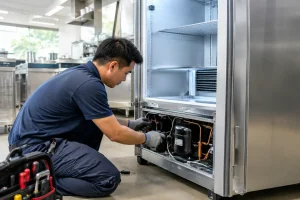
Refrigerators and freezers are usually worth repairing when they are not cooling properly but the cabinet, door structure, and compressor system remain in reasonable condition. Common repairable faults include a faulty thermostat, temperature sensor, evaporator fan motor, condenser fan motor, start relay, defrost heater, defrost sensor, or damaged door gasket.
For example, a refrigerator that feels warm while the freezer still works may have an airflow or defrost problem. Ice can build up around the evaporator, blocking cold air from reaching the refrigerator section. Replacing a failed defrost component and clearing the ice buildup can restore normal operation without replacing the appliance.
A freezer that runs continuously may have a worn door seal, dirty condenser area, faulty sensor, or fan issue. These faults should be checked promptly. Continuous running increases energy use and places extra strain on the compressor.
The exception is a major sealed-system fault, such as a compressor failure combined with a refrigerant leak. These repairs can be more costly and are not always economical on an older unit. Still, premium refrigerators, built-in models, wine chillers, and commercial refrigeration equipment may justify a more detailed repair assessment because replacement is significantly more expensive.
Wine Chillers Are Often Worth Diagnosing First
Wine chillers frequently develop cooling issues caused by fans, control boards, sensors, door seals, or blocked ventilation. These are often repairable. Replacing a built-in or under-counter wine chiller can be inconvenient if the replacement size does not match the existing space, so diagnosis should come before a replacement decision.
Washing Machine Drainage, Spinning, and Filling Problems
Washing machines are among the best appliance issues worth repairing because many common faults involve components designed to be replaced. A machine that does not drain may have a blocked filter, trapped object, jammed pump, damaged drain hose, or failed drain pump. A machine that will not spin may have an unbalanced load, worn suspension parts, a lid-lock issue, motor fault, or control problem.
If the washer fills slowly or does not fill at all, the cause may be a clogged inlet filter, faulty inlet valve, pressure sensor, or door lock. These repairs are usually far more practical than replacing a machine that is otherwise in good working order.
Front-load washers can also develop leaks from a damaged door gasket, loose hose connection, worn dispenser hose, or drain pump seal. Do not keep using a leaking machine. Water can damage flooring and surrounding cabinetry, and a small leak may become worse during a high-speed spin cycle.
For commercial laundry use, early repair is especially valuable. A drainage or spinning fault can quickly affect daily operations, and prompt spare-parts replacement may reduce downtime.
Dryer Heating and Drum Problems
A dryer that tumbles but does not heat often has a repairable fault. Heating elements, thermal fuses, thermostats, sensors, belts, rollers, and drive motors can all wear out over time. A noisy dryer may have worn drum rollers, a loose belt, or an idler pulley issue rather than a major failure.
Poor drying performance does not always mean a part has failed. Restricted airflow, a full lint filter, or a blocked vent path can cause clothes to remain damp and force the dryer to run longer. A technician can check both the appliance and its ventilation arrangement before recommending parts.
Stop using the dryer if there is a burning smell, repeated tripping, visible sparking, or excessive heat around the unit. These symptoms require professional inspection rather than repeated restart attempts.
Dishwasher Faults That Usually Have a Good Repair Outcome
Dishwashers can appear more complicated than they are. When a dishwasher will not drain, leaves water in the base, fails to clean properly, or leaks from the door, the cause is often a blocked filter, drain-pump issue, faulty inlet valve, worn door seal, spray-arm blockage, or circulation-pump fault.
A dishwasher that leaves dishes wet may have a heating, fan, sensor, or rinse-aid dispensing problem. These are worth investigating, particularly for integrated dishwashers. Replacing an integrated unit can involve removing panels and ensuring the new model fits the existing cabinet opening.
If the appliance is leaking heavily, turn it off and avoid running another cycle. Water near electrical connections creates a safety risk, and continued use can cause further damage to the appliance base and nearby fixtures.
Oven, Cooktop, and Cooker Hood Issues
Ovens, built-in ovens, microwave ovens, and cooktops often remain worth repairing when the fault is isolated. A conventional oven that heats unevenly may need a new heating element, temperature sensor, thermostat, fan motor, or selector switch. An oven door that does not close properly may only require hinge, seal, or latch work.
Induction cooktops and ceramic hobs can develop touch-control, power-module, cooling-fan, or heating-zone faults. Gas hobs may have ignition, burner, flame-sensing, or control-knob problems. These appliances should always be assessed by a qualified appliance technician, particularly when heat, gas, or electrical components are involved.
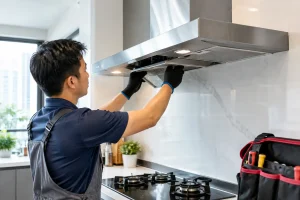
Cooker hoods are commonly repaired for weak extraction, unusual noise, failed lighting, switch faults, or motor problems. Sometimes the issue is simply grease buildup in the filters or a blocked duct path. Regular filter care helps reduce strain on the motor.
Microwave repairs need extra caution. Do not remove the casing or attempt internal repairs. Even when unplugged, internal components can retain dangerous electrical charge. A professional can determine whether a door-switch, turntable, control-panel, or heating-system repair is appropriate.
Coffee Machines and Ice Makers: Small Faults, Big Disruption
For offices, cafés, and hospitality settings, a coffee machine or ice maker failure can interrupt routine service immediately. Fortunately, many issues are repairable. Coffee machines may suffer from clogged lines, worn pumps, faulty solenoids, heater faults, leaking seals, or grinder problems. Ice makers may have water-inlet, sensor, pump, fan, thermostat, or ice-ejection faults.
Preventive maintenance matters for both appliances. Scale buildup, blocked filters, and neglected seals can lead to avoidable breakdowns. Addressing poor water flow, slow ice production, unusual noise, or inconsistent heating early is usually less disruptive than waiting for a complete shutdown.
When Not to Repair an Appliance
There are times when replacement is the more honest recommendation. Consider it when the appliance has severe rust, cabinet damage, repeated control-board failures, an unavailable major part, or multiple expensive faults. A refrigerator with a confirmed major refrigerant leak and compressor problem, for example, needs a cost comparison before work begins.
Age matters, but it is not the only factor. A well-maintained older built-in oven may be a better repair candidate than a newer appliance with extensive electronic damage. Likewise, a newer machine with a simple pump or sensor fault should not be replaced just because a warning code appears.
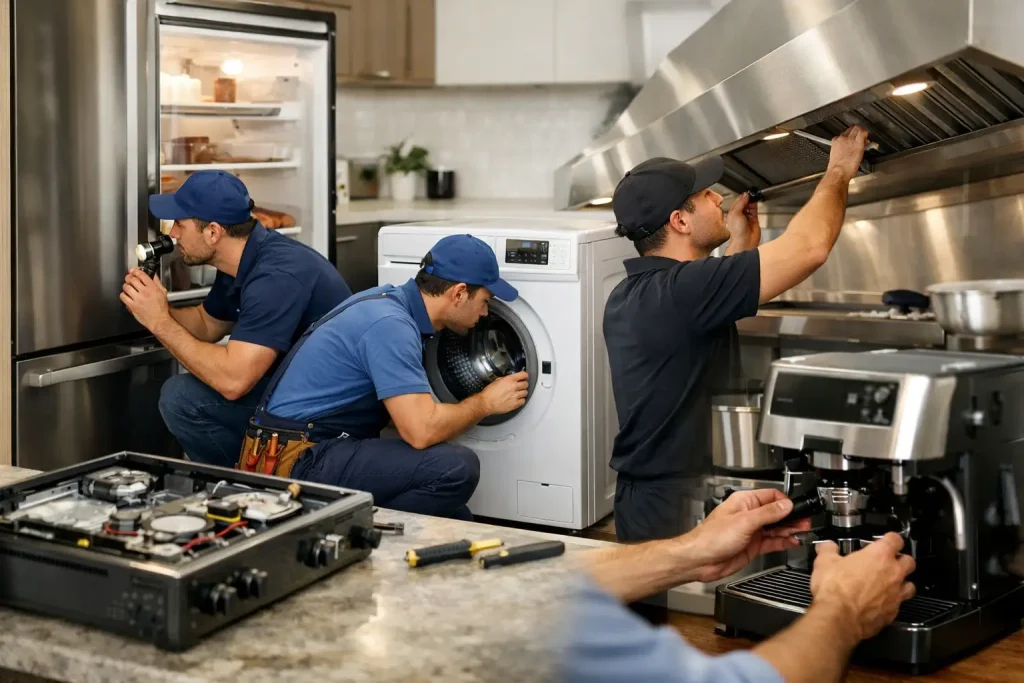
The practical next step is a professional diagnosis that separates a small replaceable part from a major system failure. Fix It Appliance helps homeowners and businesses across Singapore identify the fault, source suitable spare parts, and make a clear repair-versus-replacement decision. A timely repair can often bring a dependable appliance back to life and prevent a small problem from becoming a costly disruption.