
A freezer that stops holding temperature can turn into an urgent problem quickly. Frozen food starts softening, ice builds up where it should not, and businesses may face stock loss. The choice between a new freezer versus repair is not only about the repair bill. In Singapore, the right answer depends on the appliance’s age, fault, condition, replacement parts, and how reliably it must operate every day.
A professional diagnosis should come before a replacement decision. Many freezer problems look serious but are caused by a failed thermostat, door seal, fan motor, defrost component, or blocked drainage system. These faults can often be repaired at a sensible cost. On the other hand, a major sealed-system fault in an older unit may make replacement the more practical option.
Start With the Fault, Not the Frustration
A freezer that is warm, noisy, leaking, or constantly running does not automatically need to be replaced. Some symptoms have straightforward causes. For example, poor cooling may result from a damaged door gasket that lets warm, humid air enter the cabinet. Excess frost may be caused by a defrost heater, sensor, or timer fault. A freezer that runs loudly may have a worn evaporator fan motor or condenser fan motor.
These are repairable issues when compatible parts are available. Repair is especially worth considering if the freezer cabinet, shelves, door hinges, and compressor are otherwise in good condition.
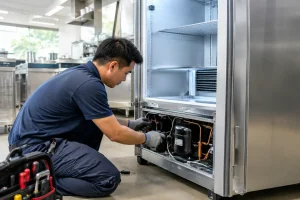
A technician should check the actual temperature, airflow, frost pattern, electrical components, compressor behavior, and condition of the refrigerant system. This separates a replaceable component fault from a larger cooling-system problem. Guessing based on one symptom can lead to spending money on a new appliance when a reliable repair was possible.
Faults that often make repair worthwhile
Repair is commonly the better choice for a freezer with a faulty thermostat, temperature sensor, fan motor, door seal, start relay, defrost part, drain blockage, control board, or damaged hinge. The final decision still depends on the part cost and model, but these repairs generally preserve an appliance with useful service life remaining.
Chest freezers can also develop issues related to lid seals, interior light switches, thermostats, and compressor starting components. Because many chest freezers have a simple design and durable cabinet, a targeted repair can be good value when the cooling system is healthy.
Faults that require a closer cost comparison
Compressor failure, refrigerant leaks, damaged evaporator coils, and severe corrosion require more careful consideration. These repairs may involve specialized work, multiple parts, and more labor. If the freezer is old or has already needed repeated cooling repairs, putting more money into it may only delay replacement.
A repair can still be justified for a premium built-in freezer, a commercial unit, or a model that fits a specific cabinet space. Replacing these appliances may involve installation constraints, downtime, and changes to the surrounding setup. The repair quote should be compared with the full replacement cost, not just the price of a new unit alone.
New Freezer Versus Repair: Use the 50% Rule Carefully
A common guideline is to replace a freezer when the repair cost is more than half the cost of a comparable new model. It is a useful starting point, but it is not a fixed rule.
For a newer freezer with several years of expected life left, a repair slightly above that threshold may still make sense. This is particularly true when the problem is isolated and the appliance has been dependable until now. A replacement may cost more once delivery, disposal, installation, and potential modifications are included.
For an older freezer with a history of faults, even a lower-cost repair can be difficult to justify. If a fan motor failed last month, the door seal is worn, and the compressor is now struggling, the issue is not one part. It is the overall condition of the appliance.
Consider these four questions before approving a repair:
- How old is the freezer, and has it needed repairs before?
- Is the current fault isolated or connected to a larger cooling-system issue?
- Are genuine or quality compatible spare parts available?
- What will replacement cost after delivery, installation, and disposal?
The best decision is usually the one with the lowest likely cost over the next few years, not simply the lowest amount paid today.
Age Matters, but Maintenance Matters Too
A well-maintained freezer may operate reliably for many years. However, as appliances age, plastic liners can crack, seals harden, fan motors wear, and electrical components become less dependable. Spare parts for discontinued models may also be difficult to source.
Age alone should not decide the outcome. A seven-year-old freezer with one failed sensor can be a better repair candidate than a three-year-old freezer with a damaged sealed system caused by a refrigerant leak. Look at the condition of the whole appliance.
Check for recurring ice buildup, water leaks, rust around the base, loose hinges, broken drawers, cracked inner liners, and doors that no longer close squarely. These signs affect insulation, temperature stability, and future repair prospects.
For landlords and property managers, consistency matters as much as appliance age. If a freezer repeatedly causes tenant complaints or food-storage problems, replacement may reduce disruption. For offices, cafés, hotels, and other businesses, downtime and stock risk should carry significant weight in the decision.
Energy Use Is a Real Factor in Singapore
An older freezer can use more electricity than a newer efficient model, particularly if its door seal leaks or its compressor runs for long periods. Singapore’s warm, humid conditions also place additional demand on cooling appliances, especially when they are positioned near heat sources or opened frequently.
Still, energy savings should be viewed realistically. Replacing a functioning freezer solely for lower electricity use may not pay back quickly. The case for replacement becomes stronger when an old unit has poor temperature control, runs almost continuously, produces excessive frost, or needs a costly repair at the same time.
Before assuming high energy use is normal, check the basics. Keep ventilation space around the appliance, avoid overpacking air vents, clean accessible condenser areas where appropriate, and make sure the door gasket seals tightly. A simple gasket problem can cause longer run times and rising electrical consumption.
When Food Safety and Reliability Change the Decision
A freezer must hold a stable temperature. If food has thawed, refrozen, or been exposed to unreliable temperatures, do not focus only on whether the appliance can be made to start again. The cause of the failure must be identified first.
For homes, a temporary cooler or another freezer may reduce immediate pressure while a technician assesses the unit. For businesses storing frozen inventory, a rapid diagnosis is particularly valuable. It helps determine whether the problem can be corrected quickly or whether replacement is needed to avoid repeated interruptions.
Do not continue using a freezer that trips power, smells burnt, has damaged wiring, or makes repeated clicking sounds without cooling. Switch it off when it is safe to do so and arrange professional assessment. Repeatedly restarting a struggling compressor can make the fault worse.
Compare the Full Cost of Replacement
The sticker price of a new freezer is only one part of the calculation. A replacement may involve delivery timing, removal of the old appliance, installation, and possible access issues for larger units. Built-in and commercial freezers may also need measurements checked carefully before purchase.
Capacity is another consideration. Replacing a compact freezer with a larger model may seem useful, but a unit that is too large for the available ventilation space can overheat and perform poorly. Measure the installation area, doorways, and access route before ordering.
If you replace the freezer, keep the new appliance running efficiently from the start. Allow adequate airflow, avoid placing it directly beside a heat-producing appliance, clean spills around the door seal, and avoid leaving the door open while loading items. These small habits reduce strain on the compressor.
Make the Decision After a Proper Diagnosis
The practical choice between repair and replacement should be based on evidence: the confirmed fault, the repair estimate, appliance age, parts availability, and the cost of downtime. Fix It Appliance can assess freezers and chest freezers across Singapore, explain the fault clearly, and advise when a repair is likely to be worthwhile.
If your freezer has been reliable and the issue is a replaceable part, repair may bring it back to life for far less than a new unit. If it has major cooling-system damage, repeated faults, or declining overall condition, replacement can prevent further wasted time and expense. A clear diagnosis gives you the confidence to choose the option that keeps your food storage dependable.