
A freezer usually fails at the worst possible time – after a grocery run, before a holiday, or in the middle of a busy workweek. When that happens, freezer repair becomes less about convenience and more about protecting food, avoiding waste, and getting your routine back on track fast.
A lot of freezer problems start quietly. Ice cream turns soft. Frozen meat feels slightly flexible. You notice more frost than usual, or the motor seems to run longer than it used to. These early signs matter because a small issue, caught early, is often less disruptive and less expensive than a full breakdown.
Why freezer repair matters early
When a freezer is not holding temperature properly, the problem rarely stays contained. Food quality drops first. Energy use often rises next, especially if the compressor is overworking or cold air is escaping. Then the risk of spoiled inventory becomes real, which is especially serious for households that bulk buy and for businesses that depend on cold storage.
Fast action also helps prevent misdiagnosis. Many people assume a freezer has completely failed when the actual issue is a worn door seal, a faulty thermostat, a blocked airflow path, or a defrost system problem. Those are very different situations from a compressor failure, and the right diagnosis changes both the timeline and the cost.
Common signs you need freezer repair
Some warning signs are obvious, but others are easy to dismiss until the appliance stops working altogether. If your freezer is warming up, developing heavy frost, making unusual noises, leaking water, or cycling on and off irregularly, it needs attention.
Temperature instability is one of the clearest red flags. A freezer should hold a steady freezing temperature. If items thaw and refreeze, or if some sections stay colder than others, there may be a problem with airflow, sensors, the thermostat, or the evaporator system.
Excess frost is another common issue. A light coating can happen with normal use, but thick frost on the walls, shelves, or around the door usually points to a sealing or defrost problem. That buildup reduces usable space and can interfere with performance.
Noise changes also matter. Freezers are not silent, but grinding, clicking, buzzing, or constant running can signal trouble. Sometimes the cause is minor. Sometimes it suggests the unit is straining to maintain temperature.
What usually causes freezer problems
Freezer failures can come from several parts working poorly together, not just one dramatic breakdown. That is why proper troubleshooting matters.
Door seal and airflow issues
A damaged or loose gasket allows warm air into the cabinet. That creates frost, forces the system to run longer, and makes cooling less reliable. In busy homes, offices, cafes, and shared spaces, door-related wear is common simply because the freezer is opened more often.
Airflow can also be restricted inside the unit. If cold air cannot circulate properly, certain areas warm up while others overfreeze. What looks like a major cooling failure may actually be uneven air distribution.
Thermostat and sensor faults
If the thermostat or temperature sensor is inaccurate, the freezer may cool too much, too little, or cycle at the wrong times. This can lead to inconsistent food storage conditions and unnecessary strain on the system.
These faults are easy to misunderstand because the freezer may still appear to be running. The light may work. The fan may operate. But the temperature control itself may no longer be responding correctly.
Defrost system problems
A failing defrost heater, timer, or control component can lead to ice buildup around the evaporator coils. Once that happens, the freezer may lose cooling efficiency because airflow across the coils is blocked.
This issue often develops gradually. At first, the unit seems a little weaker. Then frost becomes more visible. Eventually, cooling drops enough to threaten stored food.
Compressor or start component failure
The compressor is central to cooling performance. If it struggles to start, overheats, or stops working properly, the freezer may not cool at all. In some cases, the issue is the compressor itself. In others, it is a related electrical component that prevents normal operation.
This is where honest diagnosis matters most. Recommending replacement without confirming the actual fault can cost customers more than necessary. On the other hand, forcing a repair on an appliance with poor long-term value is not helpful either.
Freezer repair or replacement?
This is usually the first practical question people ask, and the answer depends on age, condition, and the nature of the fault.
If the freezer is relatively modern, in otherwise good condition, and the problem involves a seal, thermostat, fan, or defrost component, repair often makes financial sense. These issues are usually far less costly than replacing the entire unit, especially if the appliance matches existing kitchen or business equipment.
If the freezer has repeated cooling problems, major compressor issues, or clear signs of long-term wear, replacement may be the better option. That is particularly true when repair costs approach the value of the appliance or when reliability is critical for daily operations.
For landlords and property managers, the decision often comes down to downtime and repeat callouts. For restaurants, cafes, and food businesses, it is more about storage security and operational continuity. For homeowners, the biggest factor is usually whether the repair will restore dependable performance without becoming a recurring expense.
What to expect from a professional freezer repair visit
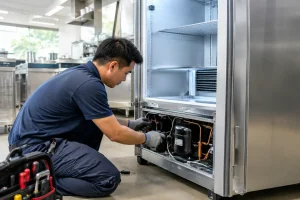
A professional repair visit should start with diagnosis, not guesswork. That means checking temperature behavior, electrical components, door sealing, fan operation, frost patterns, and the overall condition of the appliance before recommending any repair.
Transparent pricing matters here. Customers should know what the issue is, what part may need replacement, and whether the repair is a sensible investment. Clear advice builds trust, especially when people are already dealing with spoiled food risk or business disruption.
On-site service is especially valuable for larger freezers and commercial-use units in offices, cafes, and rental properties. It saves time, reduces handling risk, and gets the problem assessed where it actually occurs. In Singapore, where quick turnaround can make a real difference in busy households and commercial spaces, responsiveness is part of good service, not an extra.
How timing affects repair success
Waiting too long can turn a manageable repair into a bigger one. A unit that is running continuously may overwork key components. A freezer with sealing issues may develop more serious frost and airflow problems. A business that delays service may end up losing more in stock than the repair itself would have cost.
That does not mean every symptom is an emergency. But if the freezer is no longer holding a safe temperature, is making unusual sounds, or is showing clear signs of ice buildup or electrical irregularity, it is worth getting it checked before the failure becomes complete.
Choosing a freezer repair service
The right service is not just about speed, although speed matters. It is also about whether the company gives honest recommendations, explains the issue clearly, and focuses on restoring reliable performance instead of pushing unnecessary work.
Look for practical signs of professionalism. Clear communication. Real troubleshooting. Transparent pricing. Experience across both residential and commercial appliance issues. Those basics matter more than sales language.
Fix It Appliance serves customers across Singapore with that approach in mind – straightforward diagnosis, reliable repairs, and advice that makes sense for the condition of the appliance. For customers dealing with a failing freezer, that clarity can be just as valuable as the repair itself.
Freezer repair is about more than the appliance
When a freezer stops working, the problem spreads quickly. It affects meal planning, grocery budgets, tenant satisfaction, kitchen operations, and day-to-day routines. That is why good freezer repair is not only about replacing a part. It is about restoring reliability with as little disruption as possible.
If your freezer is showing early warning signs, getting a proper diagnosis now can save food, time, and unnecessary replacement costs. The best time to deal with a freezer problem is before it turns into a full loss.