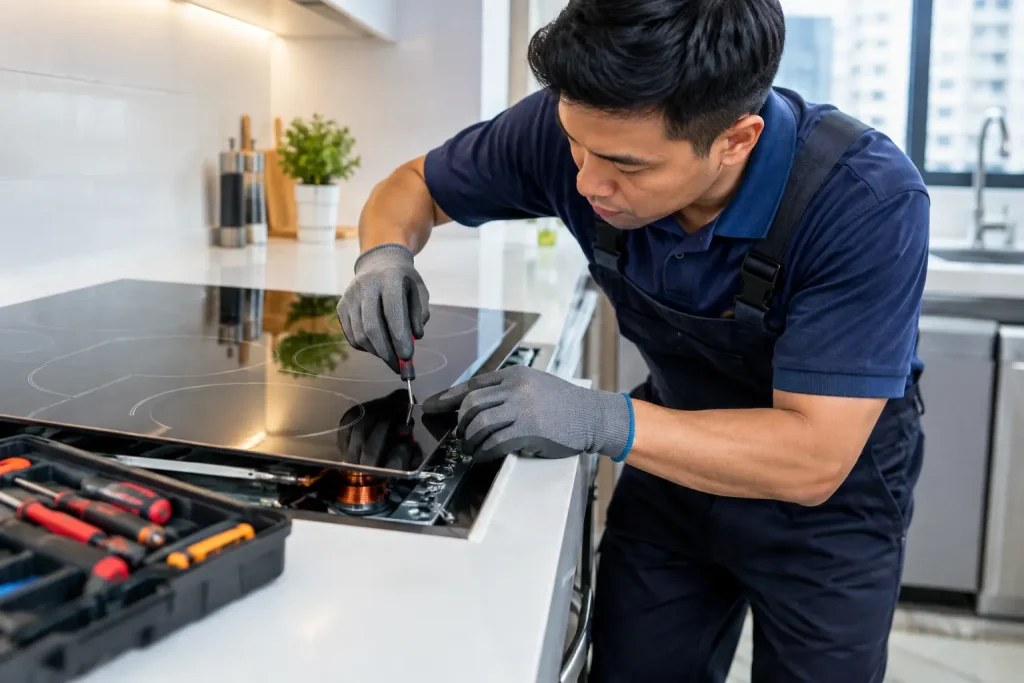
A cooktop that suddenly will not detect a pan, flashes an error code, or shuts off halfway through use can disrupt a busy household or commercial kitchen. Professional induction cooktop repair starts with identifying whether the problem lies with the cookware, power supply, cooling system, touch controls, or internal electronics. Because these appliances operate with high-voltage components, a correct diagnosis matters as much as the replacement part.
How an Induction Cooktop Works
Unlike a conventional electric hob, an induction cooktop creates a magnetic field beneath the glass surface. When compatible cookware is placed on an active cooking zone, the base of the pan heats directly. The glass itself becomes warm mainly from heat transferred by the pan.
This design is fast and efficient, but it also means an induction cooktop relies on several electronic parts working together. These include the power board, induction coil, cooling fan, temperature sensors, touch control panel, and wiring connections. A fault in one area can cause symptoms that appear unrelated, such as a working display with no heat, or a cooking zone that stops after a few minutes.
Common Induction Cooktop Problems and What They Mean
The cooktop will not turn on
Start with the simple checks. Confirm that the cooktop has power at its isolator switch or circuit breaker and that the child lock is not activated. Some built-in units may appear completely dead after a power interruption until the controls are reset.
If power is present but there is no display, beep, or response from the panel, the issue may be an internal fuse, damaged wiring, failed power board, or faulty touch control module. These components should be tested by a trained technician. Removing the glass panel without the right tools can damage the cooktop or expose live electrical parts.
A cooking zone does not recognize the pan
Induction cooking requires cookware with a magnetic base. A quick check is to hold a magnet against the bottom of the pan. If it does not stick, the pan is not suitable for induction. Aluminum, copper, glass, and some stainless-steel cookware may not work unless they have a magnetic induction base.
If a known compatible pan works on one zone but not another, the problem is more likely with the affected zone. Possible causes include a faulty induction coil, pan sensor, control board, or loose internal connection. Pan size also matters. A very small pan may not be detected by a large cooking zone.
The cooktop turns off during cooking
An induction cooktop is designed to protect itself from overheating. It may reduce power or shut down when the cooling fan is blocked, the internal temperature becomes too high, or airflow around the built-in unit is inadequate.
Check that the vents are clear and that nothing has been stored in a way that blocks ventilation below the cooktop. In Singapore’s warm conditions, a failed cooling fan can become noticeable sooner, especially when several zones are used at high power. If the fan is noisy, does not run, or the cooktop repeatedly stops even after cooling down, arrange a diagnosis.
Error codes appear on the display
Error codes vary by brand and model. Some indicate a simple issue, such as unsuitable cookware or an overheated zone. Others point to communication faults between boards, sensor errors, or a cooling fan failure.
Take a photo of the code before switching the unit off. The code, model number, and symptoms help a technician narrow down the fault and check whether the required spare part is available. Do not assume that clearing an error by turning power off has fixed the underlying problem. If the same code returns, the cooktop needs attention.
Cracked glass or damaged touch controls
A cracked ceramic glass surface is more than a cosmetic concern. Moisture and food spills can reach components below the surface, creating a risk of further damage. Stop using the cooktop if the crack is deep, spreading, or located near a cooking zone or control area.
A touch panel that responds intermittently may be affected by moisture, heat damage, a worn control board, or residue on the surface. Clean the panel only when the cooktop is cool, using a soft cloth and a suitable cooktop cleaner. Avoid flooding the edges with liquid or using abrasive pads that can scratch the glass.
Safe Checks Before Booking Induction Cooktop Repair
A few basic checks can save time, but they should not involve opening the appliance. Switch the cooktop off and allow it to cool before inspecting it. Then confirm that compatible cookware is being used, test a different pan, and check whether the problem affects one zone or all zones.
You can also clean and dry the control area, make sure no object is resting on the touch buttons, and check for a tripped circuit breaker. If the appliance has an error code, record it along with the brand and model number.
Do not continue using a cooktop that trips power repeatedly, gives off a burning smell, makes unusual buzzing or popping sounds, has a cracked surface, or shows signs of liquid entering the controls. These symptoms require professional assessment rather than repeated resets.
What Happens During Professional Induction Cooktop Repair
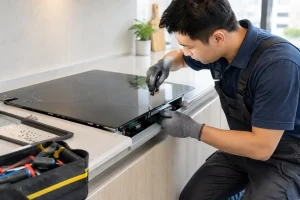
A reliable repair visit should begin with diagnosis, not immediate part replacement. The technician will inspect the cooktop’s operation, confirm the reported fault, and test relevant components safely. Depending on the symptom, this may include checking the power supply, cooling fan, induction coil, thermal sensors, wiring, touch controls, and electronic boards.
The best repair option depends on the model, age, condition, and availability of compatible spare parts. A failed fan, sensor, fuse, or control module can often be replaced when the rest of the cooktop is in good condition. A damaged glass top may also be replaceable, though the cost can be significant for certain models.
Main power boards and induction modules tend to be more expensive repairs. For an older cooktop with multiple faults, damaged glass, or discontinued parts, replacement may be more practical. A technician should explain the fault clearly and provide an honest recommendation before work proceeds.
Fix It Appliance provides induction cooktop diagnostics and repair across Singapore for residential and commercial customers. Bringing the model details and fault symptoms to the service request helps speed up the assessment.
Repair or Replace: How to Decide
There is no single age at which every induction cooktop should be replaced. A relatively new unit with one identifiable fault is usually worth repairing, particularly when the glass surface and other cooking zones are in good condition. Repair can also make sense for built-in models, where replacement involves matching the existing cutout size and installation requirements.
Replacement deserves consideration when repair costs are high compared with a suitable new unit, when spare parts are no longer available, or when failures keep returning. A cooktop that has suffered liquid damage, a severe impact, or repeated board failures may have hidden issues that make further repairs less predictable.
For landlords, property managers, and business operators, downtime matters too. Ask about part availability and expected repair time, then weigh that against the cost and disruption of replacing the appliance. The goal is not simply the cheapest short-term choice, but a dependable cooktop that can return to regular use.
Preventing Future Cooktop Faults
Induction cooktops need little day-to-day maintenance, but a few habits can extend their service life. Use flat-bottomed, induction-compatible cookware and avoid dragging heavy pans across the glass. Wipe spills promptly after the surface cools, especially sugary spills that can mark the glass if left to burn on.
Keep the ventilation areas clear and do not line them with paper, foil, or stored items. Avoid placing hot pan lids or wet cloths over the control panel. If the cooktop is installed above drawers, make sure items in the drawer do not obstruct airflow beneath the appliance.
Power surges can affect sensitive electronic boards. If a cooktop behaves strangely after a power outage, switch it off at the isolator briefly, then restart it. If the fault continues, arrange a proper inspection rather than repeatedly switching the unit on and off.
A prompt diagnosis is often the simplest way to prevent a minor cooktop fault from becoming a larger repair. When the appliance is giving consistent warning signs, stop using the affected zone and get clear advice on the safest next step.