A cooker hood usually gets ignored until the kitchen starts smelling like last night’s frying oil for hours. Then the fan sounds louder than usual, the lights stop working, or grease starts building up faster than it should. If you are looking for cooker hood repair Singapore service, you are usually dealing with more than a minor inconvenience. Poor extraction affects comfort, cleanliness, and in busy kitchens, day-to-day operations.
A faulty cooker hood can make cooking feel harder than it needs to be. Smoke lingers, heat builds up, and grease spreads onto cabinets and walls. For homeowners, that means more cleaning and less comfort. For landlords, restaurants, cafes, and office pantries, it can quickly turn into a maintenance issue that affects tenants, staff, or customers.
Why cooker hood problems should not be ignored
A cooker hood is not just there to remove odor. It helps pull out airborne grease, smoke, steam, and heat produced during cooking. When it starts underperforming, the problem often shows up gradually. Many people only notice it once the kitchen remains smoky after simple meals or the unit becomes unusually noisy.
That delay matters. A struggling motor can worsen over time. Electrical faults can affect lights, switches, or fan speed controls. Blocked or saturated filters can reduce airflow and force the unit to work harder than it should. What starts as weak suction may lead to a complete breakdown if left unattended.
There is also the practical side. Replacing a cooker hood is not always the cheapest or fastest answer. Built-in models, chimney hoods, and concealed units may require matching sizes, cabinet adjustments, or rewiring. In many cases, repair is the more sensible option when the core structure of the appliance is still sound.
Common issues seen in cooker hood repair Singapore jobs
Most cooker hood faults fall into a few familiar categories. The first is poor suction. This can come from clogged filters, fan motor wear, blocked airflow, or internal component failure. If the hood is running but not clearing smoke well, the issue is often mechanical rather than cosmetic.
The second common problem is noise. A cooker hood that rattles, hums loudly, or vibrates more than usual may have a worn motor, loose internal parts, or fan imbalance. Some noise changes are subtle at first. Others become obvious overnight.
Lighting faults are also common. Sometimes it is just the lamp assembly. Sometimes the issue sits deeper in the control board, switch, or internal wiring. When the light and fan fail together, that usually points to a broader electrical problem.
Buttons that stop responding, fan speeds that no longer change, and hoods that cut out during operation are also typical service calls. On some units, grease and heat exposure over time affect the controls. On others, age simply catches up with the electronics.
For commercial users such as cafes or small food businesses, constant heavy use puts more strain on motors and switches. A hood that works fine in a low-use residential kitchen may wear out much faster in a high-volume setting.
When repair makes more sense than replacement
Not every cooker hood should be repaired, but many should. The decision usually comes down to age, condition, parts availability, and the cost gap between repair and replacement.
If the hood is relatively modern, the body is still in good condition, and the issue is limited to the motor, switch, capacitor, light assembly, or controls, repair is often worthwhile. This is especially true when the appliance is built into cabinetry or matched with the kitchen design. Replacing the entire unit may involve extra labor, fitting issues, and added disruption.
If the hood has multiple failures, severe corrosion, heavy long-term grease damage, or obsolete parts, replacement may be the better call. Honest diagnosis matters here. A good technician should not push a repair that does not make financial sense.
That is why clear assessment is important from the start. Customers do not just want a working hood. They want to know whether the repair is practical, how much it will cost, and how long the solution is likely to last.
What a professional repair visit usually involves
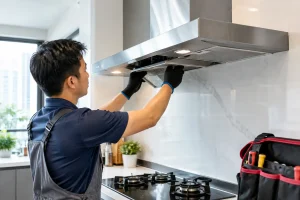
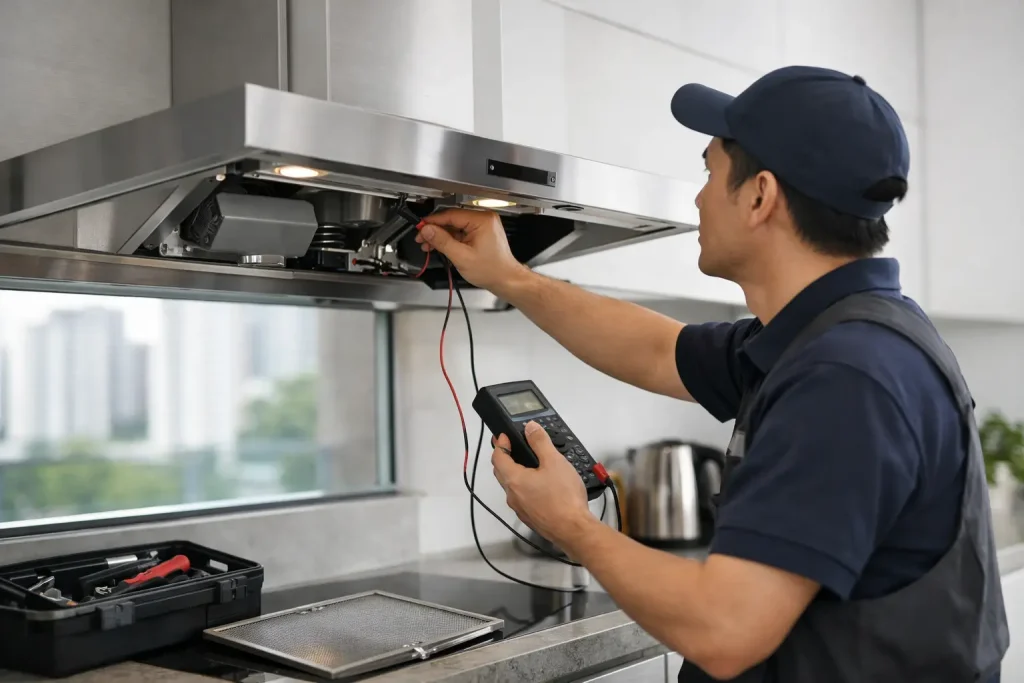
A proper service call should begin with diagnosis, not guessing. The technician checks the power supply, switch response, motor function, fan operation, light circuit, and visible condition of filters and internal components. If the unit powers on but performs poorly, airflow-related checks also matter.
Once the fault is identified, the next step is straightforward advice. If the issue is repairable, the explanation should be simple and specific. If replacement is the better option, that should be said clearly. Customers appreciate direct answers, especially when an appliance breakdown has already disrupted the kitchen.
For many households and businesses in Singapore, speed matters just as much as technical skill. A nonworking cooker hood may not stop cooking entirely, but it makes the space harder to use. In smaller apartments, the impact is immediate. In food businesses, downtime can quickly become an operational problem.
How pricing usually works
One of the biggest concerns around cooker hood repair is cost. Most customers are not just asking, “Can it be fixed?” They are asking, “Is it worth fixing?” That is a fair question.
Pricing typically depends on the fault, brand, model, and parts required. A simple switch or light-related repair will usually cost less than replacing a motor or control board. Accessibility also plays a role. Some hoods are easy to open and service. Others are integrated into tight cabinetry and take more time.
Transparent pricing matters because appliance repair is easiest to trust when there are no surprises. Clear labor charges, clear parts costs, and clear recommendations reduce stress and help customers make a practical decision. For landlords and property managers, this is even more important because repair decisions often need to balance budget, tenant convenience, and turnaround time.
Signs you should book service soon
Some cooker hood faults are obvious, but others build up slowly. If you notice that cooking smells linger longer than before, suction feels weak, fan speeds do not change properly, or the unit is becoming unusually loud, it is worth having it checked.
Lights flickering or failing repeatedly can also point to more than just a bulb issue. A hood that turns on inconsistently, stops mid-use, or feels hot around the controls should not be ignored. In commercial settings, slower response is rarely a good idea because minor faults tend to become bigger interruptions under frequent use.
Another common sign is visible grease accumulation despite regular cleaning. When extraction drops, more residue settles around the kitchen. That extra mess is often the first clue that the hood is no longer doing its job properly.
Choosing a cooker hood repair Singapore service
Not all repair services approach cooker hood problems the same way. What matters most is not flashy language. It is whether the technician can diagnose the issue accurately, explain the problem clearly, and recommend repair only when it makes sense.
Look for a service that understands both residential and light commercial usage, since the wear patterns are different. Fast response helps, but so does honesty. A rushed visit that ends in vague advice is not helpful. Customers need practical answers, realistic timelines, and workmanship they can rely on.
This is where an experienced local repair company adds value. A service team that handles appliance faults every day understands how to troubleshoot efficiently, source suitable parts, and minimize disruption. For customers in areas such as Tampines, Woodlands, Jurong, or Queenstown, that local responsiveness can make a real difference when the kitchen is already affected.
Fix It Appliance approaches cooker hood repairs the same way it handles every service call – honest diagnosis, transparent pricing, and repairs focused on restoring daily convenience without unnecessary replacement.
The real goal is getting your kitchen back to normal
People rarely book cooker hood repair because they are interested in the appliance itself. They book because the kitchen no longer feels right. It is smokier, noisier, hotter, or harder to keep clean. Businesses book because equipment problems slow down service and create avoidable disruption.
A good repair solves more than the fault on paper. It brings back normal cooking conditions, better airflow, and one less problem to manage. If your cooker hood has started acting up, the best next step is a clear diagnosis from a professional who will tell you plainly whether repair is the right move. That kind of advice saves time, controls costs, and helps you get on with using the kitchen the way you should be able to.