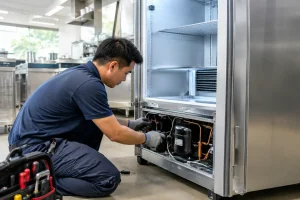
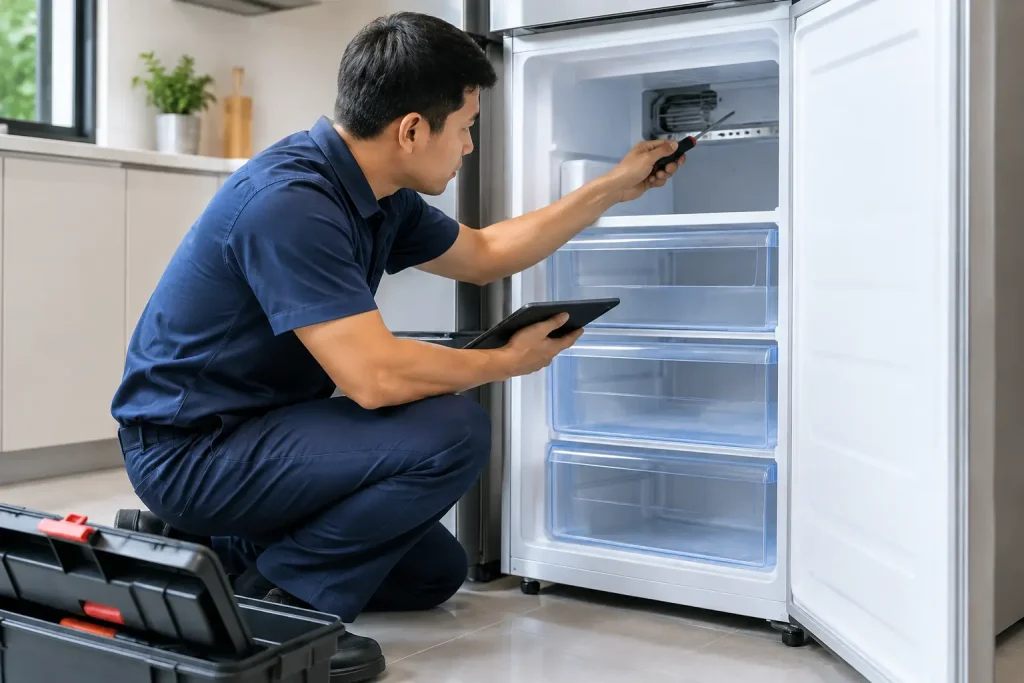
A freezer that suddenly feels warm can put a full week of groceries, business stock, or temperature-sensitive items at risk. This freezer troubleshooting guide helps you check the most common faults safely, rule out simple causes, and recognize when a professional repair is the sensible next step.
Before touching the appliance, check whether food is still safely frozen. If items are softening, transfer them to another working freezer or use insulated coolers with ice packs while you investigate. Avoid repeatedly opening the door – every opening lets warm, humid air inside and makes recovery slower.
Start Your Freezer Troubleshooting Guide With the Basics
Many freezer callouts begin with a simple issue rather than a failed major part. Check that the appliance is switched on at the wall socket and that the plug is fully inserted. If the freezer has no display, interior light, fan sound, or compressor sound, test the socket with another suitable appliance. Do not use a damaged extension cord or overloaded power strip for a freezer.
Next, check the temperature setting. For most household freezers, the target temperature is 0°F or -18°C. Settings can be changed accidentally when cleaning, moving items, or using a control panel. After adjusting the temperature, allow the freezer several hours to stabilize. A fully stocked freezer generally holds temperature better than an almost empty one, but tightly packing it can block air circulation.
Also look at the surrounding space. In Singapore, warm rooms, enclosed kitchens, and poor ventilation can place extra strain on a freezer. Built-in models need the clearances specified by the manufacturer, while freestanding units need room around the back and sides for heat to escape. If the exterior is very hot and the compressor runs constantly, restricted airflow may be contributing to the problem.
Freezer Is Running but Not Freezing Properly
If the freezer has power but food is thawing, start by checking the door seal. Close the door on a sheet of paper and gently pull it. If the paper slides out easily at several points, the gasket may be dirty, warped, torn, or no longer sealing correctly. Wipe the gasket with a soft damp cloth, remove crumbs or packaging caught around the edge, and check that drawers and food containers are not stopping the door from closing.
A poor seal allows humid air in. This can lead to frost buildup, longer running times, and weak cooling. It may look like a cooling fault when the underlying issue is simply that the freezer cannot keep warm air out.
If the door seal looks good, check the internal vents. Frost-free freezers rely on fans to move cold air through the cabinet. Large food boxes, bags, or containers pressed against air vents can prevent cold air from reaching the shelves. Rearrange the contents, leaving space around vents and avoiding overfilling.
Heavy ice on the back panel is another useful clue. In a frost-free freezer, this often points to a defrost system problem. The evaporator may be iced over, preventing air from flowing through the appliance. Possible causes include a failed defrost heater, sensor, thermal fuse, timer, control board, or fan motor. Switching the freezer off to let it defrost can provide temporary relief, but recurring ice usually requires diagnosis and replacement of the faulty part.
A freezer that runs continuously but stays too warm may have a more serious issue, such as a weak compressor, refrigerant leak, blocked system, faulty sensor, or control board fault. These are not DIY repairs. Refrigeration work requires the right equipment and should be handled by a trained appliance technician.
Check for Condenser Dust and Poor Ventilation
For freestanding units with accessible condenser coils or a rear ventilation area, dust buildup can reduce cooling performance. Unplug the appliance before checking. Use a vacuum with a brush attachment carefully around accessible dust, without bending coils or damaging wiring.
Not every freezer has exposed coils, and built-in appliances should not be pulled out carelessly. If access is limited or the unit is integrated into cabinetry, professional servicing is safer. Forced movement can damage water lines, electrical cables, flooring, or cabinet panels.
Frost, Ice, and Water Inside the Freezer
A light layer of frost can occur if the door has been opened frequently or left slightly ajar. Thick frost, ice sheets, or ice around drawers are different. They usually indicate moist air entering through a poor seal, a blocked defrost drain, or a defrost system failure.
Never use a knife, screwdriver, hair dryer, or sharp object to chip ice away. It is easy to puncture an internal panel or refrigerant line, turning a manageable repair into a costly replacement decision. If manual defrosting is appropriate for your model, switch it off, remove food, place towels around the base, and allow ice to melt naturally. Check the user manual for model-specific instructions.
Water pooling under a freezer can come from melted ice after a door was left open, a blocked drain, or a damaged drip tray. For fridge-freezer combinations, water may also originate from the refrigerator compartment and travel downward. If water returns after cleaning and defrosting, arrange a diagnosis before it damages flooring or causes slipping hazards.
Strange Noises: What Is Normal and What Is Not?
Some noise is normal. A compressor may hum, a fan may whir, and the cabinet may click as parts expand and contract during cooling cycles. Ice makers can also make brief filling or harvesting sounds.
Loud rattling, repeated clicking, grinding, scraping, or squealing deserves attention. First, make sure the freezer is level and not touching a wall, cabinet, or loose object. A vibrating tray or item on top can sound more serious than it is.
A scraping or grinding noise from inside the freezer may mean the evaporator fan is hitting ice. A clicking sound every few minutes, combined with weak cooling, can suggest that the compressor is struggling to start. A noisy fan motor, compressor, or relay should be checked by a technician, especially when the appliance is no longer holding temperature.
When the Freezer Has No Power or Keeps Tripping
If the freezer is completely dead, inspect the power cord for visible damage and confirm the outlet is working. Do not attempt to bypass a fuse, alter the plug, or repeatedly reset a circuit that trips as soon as the freezer starts. An electrical fault in the compressor, wiring, defrost heater, or control board may be present.
For commercial freezers, avoid waiting to see if the unit recovers overnight. Temperature loss can affect stock quickly, particularly in busy kitchens, cafés, offices, and hospitality settings. Record the display temperature if available, minimize door opening, and arrange prompt service.
When to Repair and When to Replace
Repair is often worthwhile when the freezer is relatively new, structurally sound, and the fault involves a replaceable component such as a door gasket, thermostat, fan motor, relay, sensor, or defrost part. A professional diagnosis identifies the failed part and confirms whether other issues are contributing.
Replacement may be more practical when an older freezer has a failed compressor, a refrigerant system leak, extensive cabinet damage, or repeated faults after previous repairs. The decision depends on the appliance age, brand, parts availability, repair cost, capacity needs, and whether the unit has been reliable until now. For built-in and commercial equipment, replacement can also involve installation constraints, so an accurate repair assessment is valuable before making a decision.
Safety Checks Before Calling for Freezer Repair
Have the model number ready, usually found on an interior side wall or rear label. Note when the fault started, whether the freezer is running, any error code shown, and whether frost, leaks, or unusual noises are present. These details help a technician narrow down likely causes and bring suitable spare parts when possible.
If your freezer is warm, leaking, repeatedly tripping power, or making persistent mechanical noises, do not wait for a complete breakdown. Fix It Appliance provides freezer diagnostics and repair across Singapore, helping homeowners and businesses identify the fault and restore dependable cooling. Acting early can protect your stored items and prevent a smaller freezer problem from becoming a larger repair.