A dishwasher that stops mid-cycle, leaves cloudy dishes, or leaks onto the kitchen floor creates an immediate question: is it a minor fix or an expensive breakdown? Dishwasher repair costs in Singapore vary because the same symptom can have very different causes. A poor wash result may come from a blocked spray arm, while a failure to start may involve the door lock, control board, or power supply.
The most useful way to assess the cost is to identify the fault, confirm whether replacement parts are needed, and compare the repair value with the dishwasher’s age and condition. A professional diagnosis prevents money being spent on the wrong part and helps homeowners, landlords, and businesses make a practical decision.
What Affects Dishwasher Repair Costs?
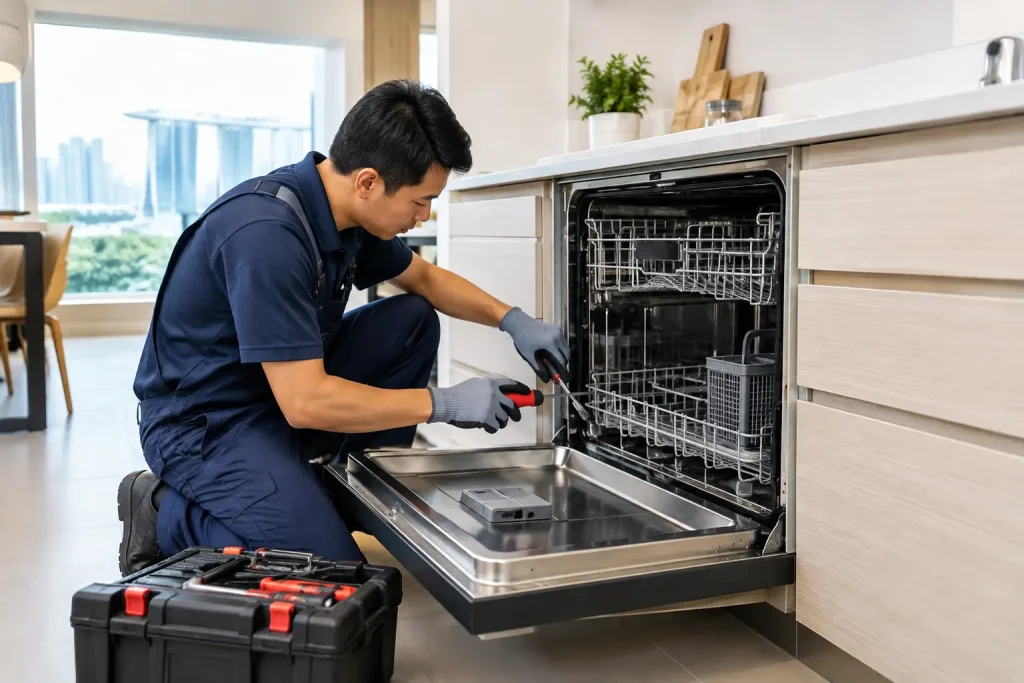
A repair invoice usually includes diagnosis, labor, replacement parts, and any transport or access requirements. Built-in dishwashers can take longer to inspect and remove than freestanding models, particularly when cabinetry must be handled carefully. Commercial dishwashers may also require more specialized parts and a faster response because downtime affects daily operations.
The appliance brand and model matter as well. Common parts for widely used models are often easier to source, while older, premium, or discontinued units may need specially ordered components. Genuine parts can cost more than compatible alternatives, but they may be the better choice for critical components where fit, safety, and long-term reliability matter.
The final cost also depends on the condition found during testing. For example, a dishwasher that is not draining may only need a blockage cleared. If water has been left standing for a long period, however, the drain pump, hoses, or sensors may also require attention.
Typical Dishwasher Repair Costs in Singapore
The figures below are general working ranges, not fixed quotations. A proper quote should follow an inspection of the specific appliance and fault. Prices can vary by brand, part availability, and whether the dishwasher is built in or commercial.
A diagnostic visit commonly starts from about S$50 to S$100. This covers fault checking and helps determine whether repair is viable. Some service providers may apply the diagnostic fee toward the repair when work proceeds, so it is sensible to ask before booking.
Minor issues, such as clearing a blocked filter, correcting a loose hose connection, replacing a simple seal, or adjusting a door latch, may fall around S$80 to S$180 including labor and basic materials. These are often worthwhile repairs, especially on a dishwasher that has otherwise performed reliably.
Repairs involving a drain pump, inlet valve, circulation pump, heating element, door lock assembly, or control module commonly range from about S$180 to S$500 or more. The part itself is often the largest variable. A pump or electronic board for one model may be readily available, while another may be costly or no longer stocked.
If several major parts have failed at once, the total can exceed S$500. At that point, the technician should explain which parts are necessary, which are optional, and whether replacement may be the more sensible route. Honest service means giving you that choice rather than pushing a repair that offers poor value.
Common Faults and Likely Cost Levels
A dishwasher that leaks may need a door gasket, hose, clamp, inlet valve, or pump seal. A worn gasket is generally a lower-cost repair, while a leaking pump assembly may cost more because of the part and the time needed to access it.
Dishwashers that do not drain are often affected by food debris in the filter area, a blocked drain hose, or a damaged drain pump. Clearing an accessible blockage is usually less costly than replacing a pump, but the root cause should still be checked so the issue does not return.
When dishes come out dirty or cold, the problem may involve spray arms, a circulation pump, detergent dispenser, temperature sensor, or heater. Spray arm and filter issues are often straightforward. Heating and circulation faults generally require more testing and can involve higher parts costs.
A dishwasher that will not turn on may have a faulty door latch, wiring issue, control panel, or electronic control board. Electronics should not be guessed at. Replacing a board without confirming the fault can be an expensive mistake.
When Is Dishwasher Repair Worth It?
Repair is usually a good option when the dishwasher is under about eight years old, the fault is isolated, and the appliance has not had repeated breakdowns. It is also often worthwhile when a built-in model fits custom kitchen cabinetry, because replacing it can involve finding the right dimensions and handling installation work.
Replacement deserves consideration when the machine is near the end of its expected service life, has rust or serious water damage, needs multiple costly parts, or has a control board that is unavailable. Recurring leaks or electrical faults should be treated seriously, particularly in apartments, offices, cafes, and other spaces where water damage can disrupt operations.
A simple rule can help: if the repair is a relatively small portion of the cost of a comparable replacement and the dishwasher is otherwise in good condition, repair is often reasonable. If the repair approaches half the cost of a suitable replacement and other components are already worn, replacing it may offer better value.
How to Avoid Unnecessary Repair Bills
Most dishwasher faults do not appear without warning. Slow draining, unusual grinding noises, a musty smell, reduced cleaning performance, and water around the base are all signs worth checking early. Continuing to run the dishwasher may turn a small blockage or seal issue into a damaged pump or a more serious leak.
A few routine habits can reduce avoidable problems:
- Remove large food scraps before loading dishes, even if the dishwasher is designed to handle residue.
- Clean the filter regularly according to the appliance manual, especially in busy households and commercial settings.
- Check spray arm holes for trapped debris when dishes are not being cleaned evenly.
- Use the correct dishwasher detergent and avoid overfilling the dispenser.
- Inspect the door seal for cracks, food buildup, or areas where it no longer sits flat.
- Run a maintenance cycle using a suitable dishwasher cleaner when grease, odor, or mineral buildup is present.
Do not force a stuck door, repeatedly reset a tripping appliance, or keep running a dishwasher that is actively leaking. Switch it off, isolate the water supply if it is safe to do so, and arrange an inspection. These steps can limit further damage before a technician arrives.
Questions to Ask Before Approving a Repair
Before approving work, ask what fault was found, whether the quote includes labor and parts, and whether the replacement part is genuine or compatible. It is also reasonable to ask about the expected turnaround time, especially if a household or business relies on the appliance daily.
For higher-cost repairs, request a clear explanation of the alternatives. Can the existing part be repaired rather than replaced? Is the part likely to restore reliable operation? Are there signs that another major component may fail soon? A professional technician should be able to explain this in plain language.
Fix It Appliance provides dishwasher diagnostics, troubleshooting, spare parts replacement, and repair support across Singapore. Clear fault findings and upfront repair options help customers decide with confidence, whether the dishwasher serves a family kitchen, office pantry, or commercial workspace.
A dishwasher repair should not feel like a gamble. Addressing early symptoms, getting an accurate diagnosis, and approving work only after understanding the costs puts you in control of the decision.