An oven that switches on but never reaches cooking temperature is more than an inconvenience. It can interrupt a busy household, delay a commercial kitchen, and leave you unsure whether the fault is minor or expensive. The best reasons ovens stop heating usually involve the heating system, temperature controls, power supply, or safety components. A few checks can narrow down the problem, but internal oven repairs should be handled carefully.
Best Reasons Ovens Stop Heating
1. A failed bake or broil heating element
In an electric oven, the bake element at the bottom of the cavity supplies most of the heat for normal oven use. The broil element at the top helps heat the oven quickly and is used for grilling. If either element has burned out, the oven may heat very slowly, heat unevenly, or remain cold.
A damaged element may show visible blistering, cracks, burn marks, or a section that has separated. However, some elements fail internally and look normal from the outside. If the oven light and display work but there is no heat, a faulty element is a common cause.
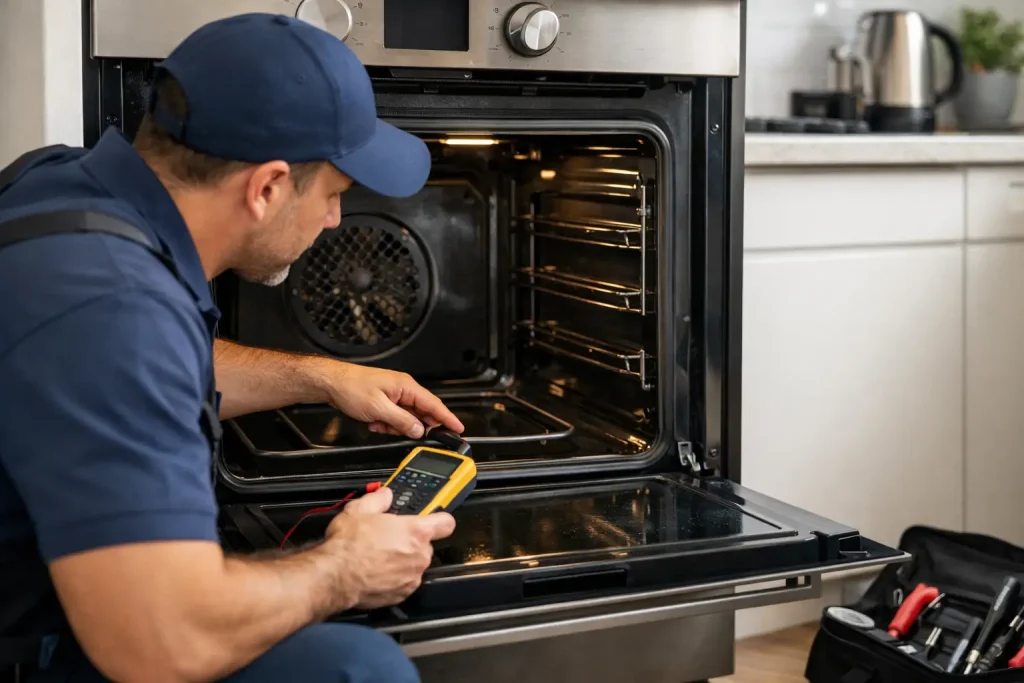
Do not touch, remove, or test an element while the appliance is connected to power. An oven technician can test continuity and check whether the element is receiving the correct voltage before replacing the part.
2. The oven temperature sensor is inaccurate or faulty
Most modern electric and built-in ovens use a temperature sensor inside the cavity. It monitors internal heat and tells the control system when to turn the elements on and off. When this sensor fails or becomes inaccurate, the oven may stop heating too soon, overheat, or display an error code.
A useful sign is an oven that appears to heat but takes far longer than expected. You may also notice inconsistent browning or food that is undercooked even after following familiar timing. Before assuming the sensor is at fault, check that the oven door closes properly and that large trays are not blocking airflow around the sensor.
Sensor replacement is usually more straightforward than replacing an electronic control board, but the diagnosis matters. A wiring fault or control issue can create the same symptoms.
3. A defective thermostat or electronic control board
Older ovens often use a mechanical thermostat to regulate temperature. Newer models generally use an electronic control board, sometimes called an oven control module. Both parts decide when the heating elements, igniter, or gas valve should operate.
A faulty thermostat can cause a temperature mismatch. For example, an oven set to 350°F may only reach a much lower temperature. A faulty control board may prevent heating altogether, cycle the elements incorrectly, cause random shutoffs, or show an error message.
Control-board repairs need a measured diagnosis. Replacing the board without confirming the heating elements, sensor, wiring, and power supply can result in unnecessary cost. In some older ovens, the board may be discontinued, which is when a repair-versus-replacement discussion becomes more relevant.
4. A gas oven has a weak or failed igniter
For gas ovens, a weak bake igniter is one of the most frequent reasons the oven will not heat. The igniter must become hot enough to open the gas valve. When it weakens with age, it may glow but still fail to draw enough current to release gas. That is why a glowing igniter does not always mean it is working correctly.
Typical symptoms include an oven that takes a long time to start heating, no heat despite the display operating normally, or a faint clicking or humming without ignition. You may also smell gas briefly during startup. If there is a strong or persistent gas smell, switch the oven off, avoid flames or switches nearby, ventilate the area if safe to do so, and arrange professional assistance immediately.
Gas oven faults should not be treated as a DIY repair. The igniter, gas valve, burner, and safety controls must all be checked correctly before the oven is returned to use.
5. A tripped breaker or incomplete power supply
An oven can have enough power for its clock, interior light, and display while still lacking the full supply needed for heating. This is particularly common with electric ovens that use a higher-voltage circuit. A tripped breaker, loose connection, damaged terminal block, or power-supply issue can leave the controls working but prevent the elements from heating.
Start with the simple external checks. Confirm that the oven is switched on at its designated isolator, if fitted, and check whether the relevant circuit breaker has tripped. If it trips again after being reset, stop using the oven. Repeated tripping can point to a shorted heating element, damaged wiring, or another internal fault.
Do not remove panels or attempt to tighten internal electrical connections yourself. Ovens retain potentially dangerous electrical components even when they appear inactive.
6. A door latch or door switch problem is interrupting heating
Self-cleaning ovens and some built-in models use door switches, latches, and safety interlocks. If the appliance believes the door is open, unlocked, or still in a cleaning cycle, it may restrict heating or refuse to start.
This problem can occur after a self-clean cycle, a power interruption, or wear in the latch mechanism. The display may show a lock symbol, door error, or cleaning-related message. In other cases, the oven door may look closed but not press the switch fully.
Avoid forcing a locked oven door. A technician can inspect the latch assembly, switch, wiring, and control signals without damaging the door or surrounding cabinetry. This is especially useful for built-in ovens, where access and installation clearances make repairs more involved.
7. Damaged wiring, fuses, or thermal safety devices
Ovens operate at high temperatures, so they include thermal fuses and high-limit safety thermostats to prevent overheating. If one of these devices opens, the oven may stop heating as a protective measure. Burned wiring, loose terminals, or heat damage can also interrupt power to an element or igniter.
These faults are more likely if the oven has previously overheated, had ventilation blocked, experienced a power surge, or developed an internal component failure. A burning smell, visible scorch marks, buzzing, or intermittent heat are warning signs to stop using the appliance.
Replacing only the blown safety device is not always enough. The underlying cause of overheating or electrical stress must be found first. Otherwise, the replacement part may fail again.
What You Can Check Before Booking Oven Repair
Start by confirming whether the issue affects every function. Try bake, broil, fan mode, and preheat separately, following the appliance instructions. If broil works but bake does not, the lower heating element or its circuit may be the issue. If neither function heats, the fault may be related to power, controls, wiring, or a thermal safety part.
Check the display for error codes and take a photo before resetting the oven. Also note whether the fan runs, whether the oven light works, whether heat begins and then stops, and whether the fault started after a self-clean cycle or power outage. These details help make diagnosis faster and more accurate.
You can check the circuit breaker and ensure the oven door is fully closed. Beyond that, avoid dismantling the appliance. Built-in ovens are heavy, and their wiring, insulation, sharp metal edges, and high-voltage connections create unnecessary risk.
Repair or Replace: How to Decide
Many no-heat faults are repairable, particularly failed elements, sensors, igniters, switches, and thermal fuses. These parts are commonly replaced when the rest of the appliance is in good condition. A professional diagnosis gives you a clearer picture of the fault, spare-part availability, and total repair cost before work begins.
Replacement may make more sense when an older oven has multiple failures, extensive heat damage, unavailable parts, or a costly control-board issue. For landlords, property managers, and businesses, downtime matters too. A repair that restores reliable operation quickly may be the better choice even when the appliance is not new.
For Singapore households and commercial premises, Fix It Appliance can diagnose oven heating faults and advise on the most practical repair option. The goal is not simply to replace a part, but to identify why the oven stopped heating and restore safe, dependable performance.
If your oven has stopped heating, avoid repeated resets or continued attempts to run it. Record the symptoms, switch it off if there are warning signs, and arrange a proper diagnosis so the fault can be resolved safely.