
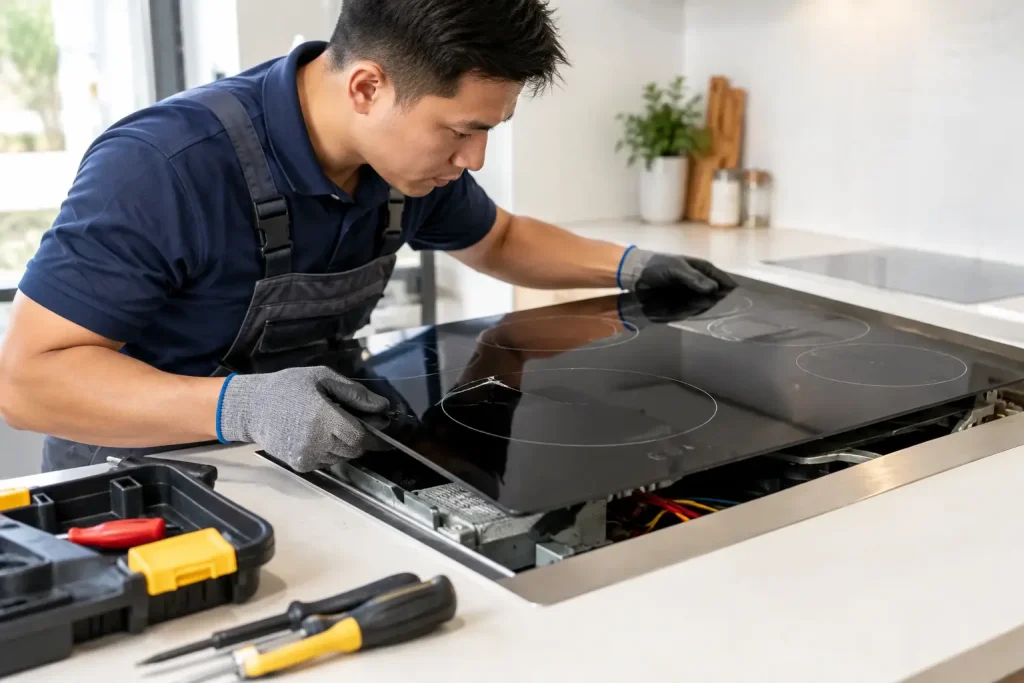
A cracked cooktop, burner that will not ignite, or induction zone that suddenly stops heating can disrupt a busy household or commercial kitchen. So, can a damaged hob be repaired? In many cases, yes. The answer depends on what is damaged, the hob type, whether safe replacement parts are available, and whether the repair makes practical sense compared with replacement.
For Singapore homes and businesses, a professional diagnosis is the safest starting point. A hob combines heat, gas or high-voltage electrical components, glass surfaces, controls, and safety devices. What looks like a simple fault may have more than one cause.
Can a Damaged Hob Be Repaired Safely?
A damaged hob can often be repaired when the fault is limited to a replaceable component. Common repairable issues include faulty ignition switches on gas hobs, worn burner caps, damaged heating elements in ceramic hobs, failed induction coils, control boards, temperature sensors, and touch-control panels.
A technician will first confirm whether the fault is mechanical, electrical, or related to the gas supply. This matters because a hob may show one symptom while the underlying problem is elsewhere. For example, an induction hob that does not heat may have an incompatible pan, a failed cooling fan, or a fault in its power module.
Repair is less advisable when the ceramic or glass surface has a deep crack, the hob has severe heat damage, or a key replacement part is discontinued. A cracked surface can allow moisture and spills to reach internal electrical parts. On a gas hob, damaged gas valves, burner assemblies, or connections also need prompt professional assessment rather than repeated use.
The Type of Hob Makes a Difference
Gas hobs
Gas hobs are often repairable because many components are separate and can be replaced individually. Typical faults include burners that click continuously, weak or uneven flames, igniters that do not spark, flame failure devices that shut off too quickly, and knobs that are hard to turn.
Sometimes the solution is straightforward, such as reseating a burner cap after cleaning or replacing a worn ignition electrode. However, do not try to dismantle gas pipes, valves, or internal fittings yourself. If you smell gas, turn off the gas supply if it is safe to do so, open windows, avoid flames and electrical switches, and arrange for urgent professional help.
Ceramic hobs
Ceramic hobs use heating elements below a smooth glass-ceramic surface. They may develop problems such as a zone that will not heat, a zone that overheats, flashing error codes, broken touch controls, or residual heat indicators that stay on.
Heating elements, thermostats, sensors, and control modules can usually be replaced if the glass surface remains intact. Light scratches are generally cosmetic, but chips and cracks require closer attention. Even a small crack can expand with heat and create an electrical safety risk.
Induction hobs
Induction hobs heat magnetic cookware through electromagnetic coils. They are efficient and responsive, but their internal electronics are more complex than those of many gas or ceramic models.
Common repairable faults include a defective cooling fan, failed induction coil, faulty power board, damaged touch panel, or sensor error. A technician also checks the cookware and ventilation around the unit before recommending parts replacement. An induction hob may stop during use simply because it has overheated due to blocked airflow beneath the appliance.
Signs Your Hob Needs Immediate Attention
Stop using the hob and arrange an inspection if you notice a cracked glass surface, burning smell, smoke, repeated tripping of the circuit breaker, visible sparks, loose controls, or electric shocks when touching the appliance. These are not faults to monitor over time.
For gas hobs, yellow or unstable flames, soot around cookware, ignition clicking that continues after the burner is lit, or any gas smell should also be treated seriously. A normal gas flame is usually steady and predominantly blue. Yellow flames may be caused by blocked burner ports or incorrect air and gas mixing, but the cause should be checked properly.
Do not continue cooking on a damaged hob just because one zone or burner still works. Heat, moisture, and grease can worsen internal damage and turn a repairable fault into a more expensive replacement job.
What a Hob Repair Technician Will Check
A proper hob diagnosis goes beyond replacing the part that appears faulty. The technician will inspect the appliance model, installation condition, visible damage, wiring connections, controls, and safety functions. For a gas hob, this includes burner ignition, flame stability, valve operation, and flame failure protection where fitted.
For ceramic and induction hobs, testing may include heating zones, sensors, control boards, cooling fans, wiring terminals, and error codes. The technician also checks whether the appliance is receiving the correct power supply and whether heat has damaged nearby internal components.
This approach helps prevent unnecessary parts replacement. A non-working touch panel, for example, may be caused by a control board fault rather than the panel itself. Likewise, a single failed induction zone does not always mean the entire hob needs replacing.
Repair or Replace: How to Make the Right Call
The age and condition of the hob are important, but they are not the only factors. A relatively old hob can still be worth repairing if the fault is isolated and the appliance is otherwise reliable. A newer hob with a cracked glass top or multiple failed electronic boards may be harder to justify repairing.
Consider repair when the damage is limited to one replaceable component, genuine or suitable spare parts are available, and the remaining burners or zones are in good condition. Repair can also be a sensible choice when the hob is built into a countertop and replacement would involve matching dimensions, reconnecting the appliance, and possible changes to the surrounding setup.
Replacement may be more practical when the glass is badly cracked, several major components have failed, parts are obsolete, or faults keep returning after previous repairs. For commercial kitchens, downtime is another consideration. A repair that restores reliable operation quickly can be more valuable than waiting for a new unit, but repeated breakdowns can disrupt operations and should be assessed honestly.
Avoid These DIY Hob Repairs
Homeowners can safely clean burner caps, remove food debris from accessible areas, check that induction cookware is compatible, and make sure ventilation openings are not blocked. Beyond these basic checks, hob repairs should be left to a qualified appliance technician.
Avoid using glue, tape, sealant, or a temporary cover on cracked ceramic or induction glass. Do not bypass safety switches, force stiff gas knobs, insert objects into burner ports, or open the underside of an induction hob. These actions can create shock, fire, gas leakage, or further component damage.
If a hob trips the circuit breaker, do not keep resetting it to continue cooking. The trip may be protecting you from a short circuit, moisture intrusion, or failing heating component.
How to Prevent Further Hob Damage
Good daily care reduces wear and makes faults easier to spot early. Let the hob cool before cleaning, use cookware with flat bases, wipe up spills promptly, and avoid dragging heavy pots across glass surfaces. On gas hobs, keep burner caps correctly positioned and clear food residue from the burner openings after the appliance has cooled.
For induction hobs, do not block the cooling vents with drawers, liners, or stored items. Use cookware that matches the recommended size for the cooking zone, and avoid placing hot pans or heavy objects on the touch-control area.
If your hob has started showing intermittent faults, error messages, weak heating, or ignition problems, arrange a diagnosis before it fails completely. Fix It Appliance provides professional hob troubleshooting and repair across Singapore, helping homeowners and businesses understand the fault before deciding whether repair or replacement is the better option.
A damaged hob does not automatically mean you need a new one. The safest next step is to stop using it when there are signs of electrical, glass, or gas-related damage, then get a clear assessment of the fault, available parts, and likely repair outcome.


