
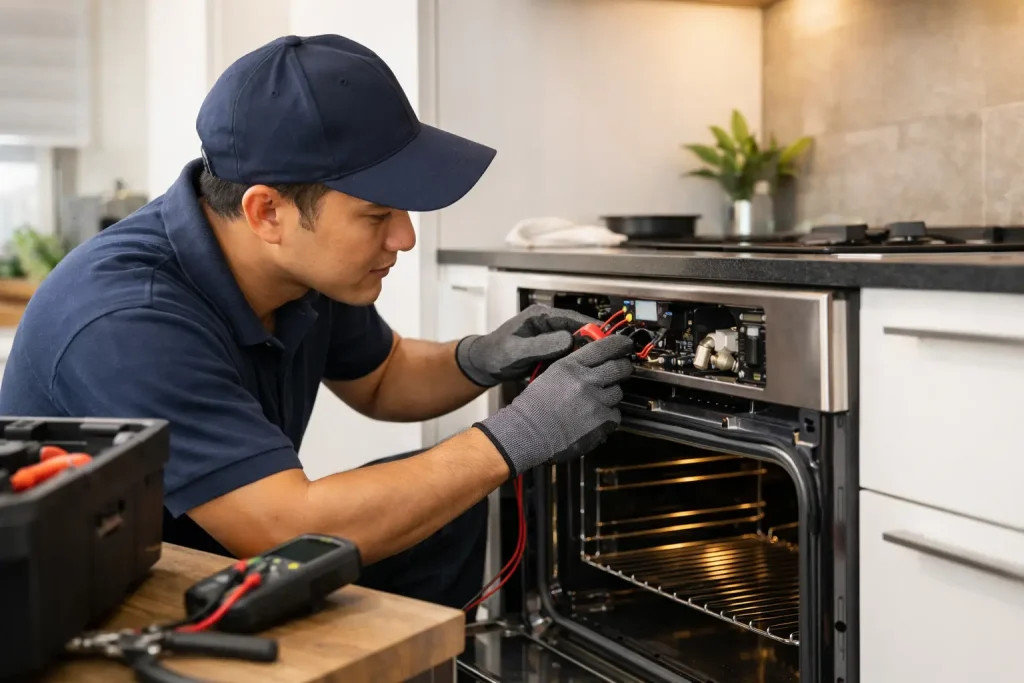
When a built-in oven stops heating properly, trips the power, or cooks unevenly right before dinner service or a family meal, you do not need guesswork. A built in oven repair review should answer one practical question – is this worth repairing, and what should you expect from the service?
For most homeowners, landlords, and small businesses, the answer depends on the fault, the age of the unit, and whether the diagnosis is clear from the start. Built-in ovens are not cheap to replace, and because they are integrated into cabinetry, replacement often means more disruption than people expect. That is why a proper review of oven repair should focus less on hype and more on results, pricing clarity, and whether the repair actually restores safe, reliable use.
What a built in oven repair review should actually cover
A useful built in oven repair review is not just about whether a technician arrived on time. It should look at the full service experience: how the problem was diagnosed, whether the explanation was clear, whether the quoted repair matched the fault, and how well the oven performed after the job was done.
That matters because built-in oven problems are often misread by customers at first. An oven that does not heat may have a failed heating element, a thermostat issue, a faulty selector switch, a damaged control board, or a power supply problem. The symptoms can look similar, but the repair path and cost can be very different. Honest service starts with narrowing down the real cause instead of replacing parts blindly.
A strong review should also mention whether the technician checked related components rather than fixing only the obvious symptom. If the oven fan is weak, the temperature sensor is inaccurate, or wiring has heat damage, a partial repair may not solve the underlying issue for long. Good workmanship means looking at the condition of the appliance as a whole.
Common built-in oven faults and how they affect repair value
Some built-in oven repairs are straightforward and cost-effective. Others need a more careful decision.
Heating element failures are among the more worthwhile repairs. If the oven turns on but does not reach temperature, cooks slowly, or browns unevenly, the element may be the issue. In many cases, replacing it restores normal performance without major downtime.
Thermostat or temperature sensor faults also tend to be repairable at a reasonable cost. These problems usually show up as undercooked food, overheating, or unstable temperatures. For anyone who relies on consistent cooking results, especially in a rental property or food business, this kind of repair can make an old oven usable again.
Control board faults are more mixed. If the electronic controls fail, display errors appear, or the oven starts behaving unpredictably, repair can still make sense, but it depends on parts availability and the overall age of the appliance. On a newer premium oven, replacing a board may be worthwhile. On an older unit with multiple wear issues, the value becomes less clear.
Door hinge, seal, and latch problems are often overlooked in a built in oven repair review, but they matter. A poor door seal causes heat loss, longer cooking times, and added strain on internal components. These repairs are usually not the most expensive, yet they can noticeably improve performance.
Power-related faults need more caution. If the oven trips the breaker, cuts out mid-use, or shows signs of burning smell, the issue may involve wiring, internal shorting, or damaged components. In those cases, accurate diagnosis is more important than speed alone. A rushed repair on an electrical fault is not a good repair.
Repair versus replacement – what makes sense
This is where many reviews become too simplistic. Saying repair is always cheaper is not enough. Sometimes it is. Sometimes it is only cheaper in the short term.
Repair usually makes sense when the oven is otherwise in solid condition, the fault is isolated, and replacement would involve cabinet adjustments, delivery delays, or loss of a matching kitchen setup. For built-in units, installation complexity changes the equation. Replacing a freestanding appliance is one thing. Replacing an integrated oven can involve measurements, fitting, and compatibility checks that increase total cost.
Age still matters, though. If a built-in oven is older and already has weak heating, failing switches, worn seals, and inconsistent performance, one repair may not be the end of the expense. In that situation, a trustworthy technician should say so. Honest diagnosis is part of good service, even when the customer may not like the answer.
For landlords and property managers, the decision often comes down to downtime and reliability. A repair that gets the oven back in service quickly is valuable, but only if it is likely to last. Temporary fixes create repeat callouts and unhappy tenants. For restaurants, cafes, and commercial kitchens using built-in cooking equipment in prep areas, speed matters even more, but so does confidence that the same fault will not return during peak hours.
What good oven repair service looks like
A proper repair experience should feel clear from the first call. You should know whether on-site diagnosis is available, whether the technician works on built-in models, and whether common parts can be sourced without long delays.
Transparency is a big part of any built in oven repair review. Customers want to know what the fault is, what needs replacement, and what the total cost is likely to be before work starts. Vague pricing frustrates people because oven repair already happens at inconvenient times. Clear communication reduces that stress.
Speed also matters, but not in a careless way. Fast response is useful when the oven is needed daily in a household or business, yet the repair still needs to be methodical. The best service is responsive, direct, and grounded in real troubleshooting rather than assumptions.
Workmanship should show up in the details. Panels should be refitted properly. The oven should be tested after repair. Temperature performance and function settings should be checked. If a part is replaced, the explanation should be simple and specific. Customers do not need a technical lecture. They need confidence that the problem was identified correctly and fixed properly.
Cost expectations in a built in oven repair review
Cost is one of the main reasons people search for reviews, and fair enough. Most customers are trying to avoid paying too much or being pushed toward replacement too early.
The realistic answer is that pricing depends on the fault, the brand, the age of the oven, and the parts required. A minor component replacement will usually be far more affordable than a major electronic issue. Imported or less common brands can also increase repair cost if parts are harder to source.
What matters more than finding the lowest number is knowing whether the quote is justified. If the diagnosis is clear, the repair addresses the root fault, and the appliance has good remaining life, a reasonable repair bill is often better value than the cost and hassle of replacing a built-in oven entirely.
In Singapore, this is especially relevant for homes and businesses that want to avoid unnecessary disruption. A professional on-site diagnosis can save time because it confirms quickly whether the problem is economical to repair or whether replacement should be considered instead.
Who benefits most from professional built-in oven repair
Homeowners benefit when the oven is central to daily use and the fault can be resolved without major delay. Tenants and landlords benefit when a reliable repair prevents a small appliance issue from becoming a larger tenancy problem. Property managers benefit from faster decision-making because a proper diagnosis helps avoid back-and-forth with owners and residents.
Businesses benefit from consistency. If an oven is part of food prep, staff operations, or customer service, even a short breakdown creates pressure. Reliable repairs matter because they restore normal workflow quickly and reduce the risk of repeated interruptions.
This is where a service-driven company stands out. A dependable repair team does not just replace parts. It helps customers make a practical decision based on condition, cost, and expected outcome. That is the standard Fix It Appliance is built around – honest advice, transparent pricing, and repair work focused on restoring safe, dependable use.
The real takeaway from any built in oven repair review
The best review is not the one that promises every oven can be saved. It is the one that tells you whether the service was honest, efficient, and worth the money.
For most built-in oven faults, repair is a sensible first step when the diagnosis is accurate and the appliance still has good service life left. For older units with multiple issues, the right review should make that clear too. Good repair service is not about selling hope. It is about giving customers a straight answer and getting the appliance back to working condition when it makes sense.
If your built-in oven has stopped performing the way it should, the smartest next step is not to assume the worst. Get a clear diagnosis, ask direct questions, and judge the repair by the result – safe operation, stable performance, and fewer disruptions in the days ahead.


