A refrigerator door can look fully closed while cold air is quietly escaping around the edges. That is why refrigerator seals fail is a question worth addressing early: a worn or dirty door gasket can make the compressor run longer, cause uneven cooling, create condensation, and raise electricity use.
The seal, also called a gasket, is the flexible strip around the refrigerator or freezer door. Most gaskets contain a magnetic insert that pulls the door snugly against the cabinet frame. When that contact is incomplete, warm and humid air enters the compartment every time the refrigerator cycles. In Singapore’s humid climate, the effects can show up quickly as water droplets, frost buildup, or a refrigerator that never seems to rest.
Why Refrigerator Seals Fail
Door seals do not usually fail all at once. They gradually lose their shape, become contaminated, or stop lining up correctly with the refrigerator cabinet. The cause matters because cleaning a gasket will not solve a sagging door, while replacing a gasket may not help if the cabinet itself is not level.
Dirt and grease prevent a proper seal
Food spills, cooking grease, dust, and sticky residue can collect in the folds of the gasket and on the cabinet contact surface. Even a thin layer of residue can leave small gaps around the door. This is common around the lower edge of the door, where spills run down and where the gasket is most likely to collect debris.
The gasket may still feel magnetic, but it cannot make full contact with the frame. A regular wipe with a soft cloth, mild soap, and water can often restore a lightly affected seal. Avoid harsh solvents, abrasive pads, or sharp tools, as these can dry out, tear, or puncture the rubber.
The rubber hardens, cracks, or loses its shape
Refrigerator gaskets are designed to flex thousands of times, but rubber and plastic materials age. Heat from nearby cooking appliances, constant sunlight, and normal wear can make the gasket stiff. Over time, corners may curl inward, folds can flatten, and small cracks may appear.
A deformed gasket is especially likely to leak at the top corners or along the hinge side of the door. Sometimes a gasket that has been compressed for a long period will not spring back into position. Gentle warming with a hair dryer on low heat can occasionally help reshape a minor warp, but excessive heat can damage the gasket or surrounding plastic. If the seal remains distorted, replacement is usually the more reliable repair.
A misaligned or sagging door creates gaps
A refrigerator door must sit squarely against the cabinet for the gasket to work. Loose hinges, worn hinge bushings, overloaded door shelves, or a refrigerator that is not level can pull the door out of alignment. The gap may be too small to notice at first, but it is enough to let warm air in.
Look at the spacing around the closed door. If one corner sits lower than the other, if the door rubs against the cabinet, or if it needs to be lifted before it closes, the issue may be mechanical rather than the gasket itself. Hinge adjustment or replacement may be needed before fitting a new seal.
The refrigerator is overfilled or blocked
Large containers, protruding shelves, or items stored in the door can prevent it from closing fully. In some models, a drawer that is not pushed in all the way will also keep the door slightly open. The door may appear shut, yet the gasket will be under uneven pressure.
This is an easy issue to miss in busy households, offices, and commercial pantries. Check that nothing is touching the inner door panel and that shelves, bins, and drawers are correctly seated. Do not overload door bins with heavy bottles if the door already feels loose or drops when opened.
Frequent opening and humidity add stress
Every door opening lets humid air into the refrigerator. In Singapore, that moisture can create condensation around a weak seal and make existing gasket problems more obvious. High-use refrigerators in shared homes, cafés, offices, and other commercial settings also experience more wear because the door is opened repeatedly throughout the day.
Frequent use alone does not mean the gasket is defective. However, it makes proper alignment and routine cleaning more important. A seal that works adequately in a lightly used refrigerator may struggle when the appliance is opened constantly.
Signs Your Refrigerator Door Seal Is Leaking
A simple paper test can help. Close the refrigerator door on a strip of paper and gently pull it out. You should feel noticeable resistance. Test several spots around the top, sides, and bottom. If the paper slides out easily in one area, inspect that section for dirt, damage, or poor door alignment.
Other warning signs include condensation on the door frame, frost in the freezer, warm spots inside the refrigerator, a compressor that runs for long periods, and water droplets on packaged items. These symptoms can also be caused by thermostat, fan, defrost, or airflow faults, so a leaking gasket should not be assumed to be the only problem.
Pay close attention to freezer doors. A small leak can draw in moist air that turns into frost, eventually affecting drawers, vents, and door operation. If the freezer has heavy ice buildup, do not force the door shut. The gasket can tear, and the door hinges can become damaged.
When Cleaning Is Enough and When Replacement Is Needed
Cleaning is often enough when the gasket is intact, soft, and evenly shaped but has visible residue. Clean the gasket folds and the cabinet surface, dry both completely, then check the paper test again. Also inspect for hidden crumbs or hardened deposits along the lower edge.
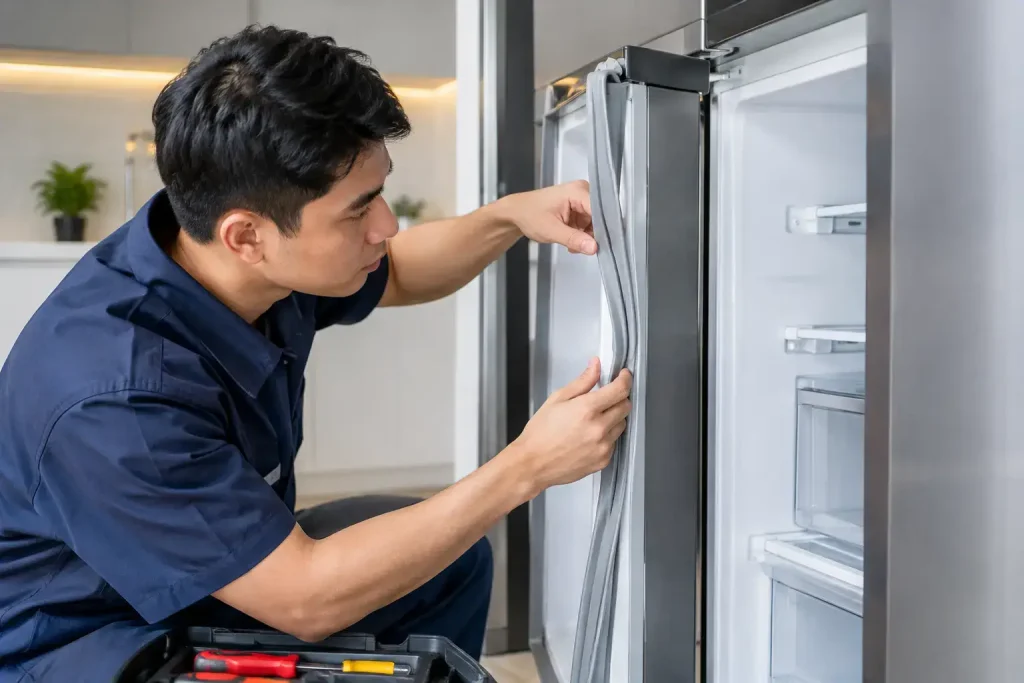
Replacement is more likely when the gasket is torn, cracked, permanently flattened, loose from its retaining channel, or no longer magnetic. A new gasket should match the refrigerator’s exact model and door configuration. Similar-looking seals can differ in size, corner shape, mounting style, and magnet position.
Door alignment should be checked before ordering a gasket. If the door has dropped due to a worn hinge or loose mounting point, a replacement seal may still show gaps after installation. For built-in refrigerators and commercial units, access and panel weight can make hinge repairs more involved, so professional diagnosis is often the safer option.
Practical Steps to Protect Refrigerator Seals
Keep the gasket clean and dry, particularly after spills. Once a month, run a cloth through the gasket folds and check the cabinet contact surface. Make sure the refrigerator is stable and level, and avoid slamming the door or hanging excessive weight on door shelves.
If the gasket is slightly misshapen after cleaning, close the door for several hours and reassess it. Do not cut, stretch, glue, or tape the gasket as a long-term fix. Temporary patches rarely restore an airtight seal and can make future replacement harder.
A refrigerator that continues running excessively after the seal has been cleaned may have another fault. Poor cooling can involve the compressor, condenser fan, evaporator fan, defrost system, temperature sensor, or control board. A proper inspection prevents unnecessary parts replacement.
When to Arrange Refrigerator Seal Repair
Arrange a service check if the gasket is visibly damaged, the door will not align, frost keeps returning, or the refrigerator is not maintaining a stable temperature. This is particularly useful for businesses where a refrigerator or freezer is opened frequently and downtime affects daily operations.
Fix It Appliance can assess whether the problem is limited to the gasket, hinges, or a wider cooling fault, then advise on the practical repair option. Addressing a weak seal early is usually simpler than waiting for frost, strained components, and poor cooling performance to develop into a larger repair.