
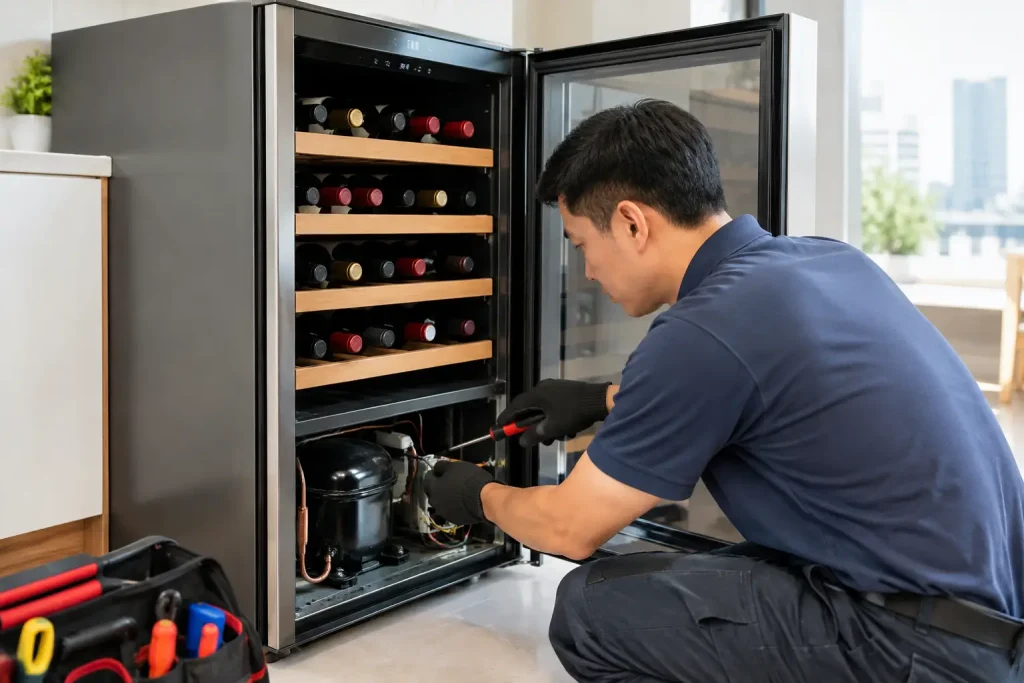
A wine chiller that suddenly feels warm, runs constantly, or develops water inside can put an entire collection at risk. The top wine chiller faults are often linked to airflow, door sealing, temperature controls, or cooling-system parts. Some issues can be checked safely at home, while others need prompt professional diagnosis to prevent further damage to the appliance or stored bottles.
Top wine chiller faults homeowners should recognize
1. The wine chiller is not cooling properly
Poor cooling is one of the most common wine chiller problems. You may notice that the display shows a normal temperature, but the cabinet feels warmer than it should, or bottles are no longer consistently cool.
Start with the simple checks. Confirm that the power plug is secure, the temperature setting has not been changed, and the door is fully closed. A unit placed tightly against a wall or enclosed inside a cabinet may not be able to release heat properly. Most wine chillers need clear space around their ventilation openings.
In Singapore, warm room temperatures and humidity can make an already restricted chiller work harder. Dust buildup on the condenser area, where accessible, can also reduce heat transfer. If airflow is clear but the appliance stays warm, the fault may involve the fan motor, thermostat, temperature sensor, compressor, control board, or sealed cooling system. These parts should be tested by a technician rather than replaced by guesswork.
2. The chiller runs all the time
A quiet hum during cooling is normal. Continuous running without reaching the selected temperature is not. The compressor may be struggling because warm air is entering through a damaged door gasket, ventilation is blocked, or the room is too hot for the appliance’s installation conditions.
Run a visual check around the door seal. Look for gaps, splits, hardened rubber, or areas that no longer sit flat against the frame. Close the door on a thin sheet of paper in several positions. If the paper pulls out with almost no resistance, the gasket may not be sealing well.
A continuously running unit can also indicate a failing fan, faulty sensor, refrigerant leak, or weak compressor. Leaving it operating for days in this condition can increase wear and may cause temperatures to rise further. Arrange a diagnosis if basic airflow and door checks do not solve the problem.
3. Frost or ice is forming inside
A small amount of moisture can occur, especially when the door is opened frequently. Heavy frost on the rear panel, shelves, or bottles points to a problem. Common causes include a door that is not closing properly, a worn gasket, frequent opening in humid conditions, or a fault in the defrost system.
Do not chip ice away with a knife or screwdriver. This can puncture internal panels or cooling lines, turning a repairable fault into a major one. Switch off the unit, remove the bottles, and allow it to defrost naturally with towels placed beneath it to catch water.
If frost returns soon after defrosting, a technician should inspect the door seal, sensor, evaporator fan, and defrost components. Dual-zone wine chillers may have separate sensors or fans, so one zone can develop frost while the other still appears to work normally.
4. Water is leaking from the chiller
Water beneath or inside a wine chiller is unsettling, but it is not always a major leak. Condensation can collect if the door seal is weak, the door is frequently opened, or the appliance is operating in a humid space. A blocked or misaligned condensate drain can also cause water to pool inside the cabinet.
First, check whether the unit is level. A wine chiller that leans too far forward or backward may affect door closure and drainage. Clean any accessible drain opening only according to the appliance manual, using a soft method that will not damage internal tubing.
If the water is oily, has an unusual smell, appears after the unit has been moved, or is accompanied by poor cooling, stop using the chiller and arrange inspection. The source needs to be identified before electrical parts or flooring are affected.
5. The wine chiller is unusually noisy
Wine chillers are not silent. You may hear a low compressor hum, a fan sound, occasional clicks, or a brief gurgling noise as refrigerant moves through the system. These are generally normal operating sounds.
New rattling, grinding, loud buzzing, repeated clicking, or vibration that shakes the cabinet should be checked. Make sure the chiller stands level and is not touching a wall, shelf, or nearby appliance. Loose bottles, shelves, or items placed on top can also create vibration noise.
A persistent grinding sound may come from a worn fan motor. Repeated clicking with no cooling can be related to the compressor start device, control board, or compressor itself. Do not keep restarting the appliance at the wall switch in an attempt to force it to run. Repeated power cycling can place more stress on cooling components.
6. The display is blank, inaccurate, or showing an error code
A blank control panel may be caused by a power supply issue, tripped socket, damaged power cord, or electronic control fault. Check the socket with another suitable appliance if it is safe to do so. If the socket is working but the wine chiller remains dead, unplug it and arrange service.
An inaccurate display can be harder to spot. The panel may read 55°F while the actual cabinet temperature is significantly warmer or colder. Use a separate thermometer designed for refrigerator use and leave it inside long enough to stabilize before comparing readings.
Error codes vary by brand and model. Record the exact code, model number, and symptoms before booking a repair. This gives the technician a better starting point and may help identify whether a sensor, fan, or electronic board is involved.
7. One zone works but the other does not
Dual-zone units are useful when different bottles require different storage temperatures, but they have more components than a single-zone model. If the upper zone cools but the lower zone does not, or the difference between zones is far greater than the setting, do not assume the entire appliance has failed.
The issue may be a zone sensor, damper, fan, control board, or airflow obstruction. Check that shelves are not packed so tightly that they block internal vents. Also confirm that both zones are set within the appliance’s stated operating range. Some units cannot maintain very low temperatures in both zones at the same time, particularly in a warm room.
What you can check before calling for wine chiller repair
A few careful checks can rule out simple installation or usage problems. Confirm the power supply, temperature setting, door closure, clearance around vents, and whether the cabinet is level. Remove items blocking air channels, and clean visible dust from external vents with the appliance unplugged.
Avoid removing rear panels, handling wiring, or attempting to refill refrigerant. These tasks require the right tools and testing equipment. They also carry a risk of electrical injury or further damage to the sealed cooling system.
If you have recently transported or tilted the chiller, let it stand upright for several hours before switching it on. Oil in the compressor needs time to settle. If the unit was moved and now makes unusual noises or does not cool, professional inspection is still the safer option.
Repair or replace: how to make the decision
Repair is often worthwhile when the wine chiller is in otherwise good condition and the fault is limited to a fan, thermostat, sensor, gasket, switch, or control-related component. These issues can often be resolved with the correct replacement part and testing.
Replacement may make more sense when an older unit has a major compressor or sealed-system failure, especially if parts are discontinued or the cabinet has recurring problems. The best decision depends on the chiller’s age, brand, storage capacity, repair cost, and the condition of the door, shelves, and internal lining.
For commercial settings, downtime matters as much as the repair bill. A business with valuable stock may benefit from a fast diagnosis before deciding, rather than replacing a unit that has a manageable fault. Fix It Appliance can assess the cause, explain the practical repair options, and help you decide based on the condition of the appliance.
A wine chiller should hold a stable temperature without constant noise, frost, or water buildup. Acting when the first signs appear gives you the best chance of protecting your bottles and bringing the appliance back to reliable operation.


