
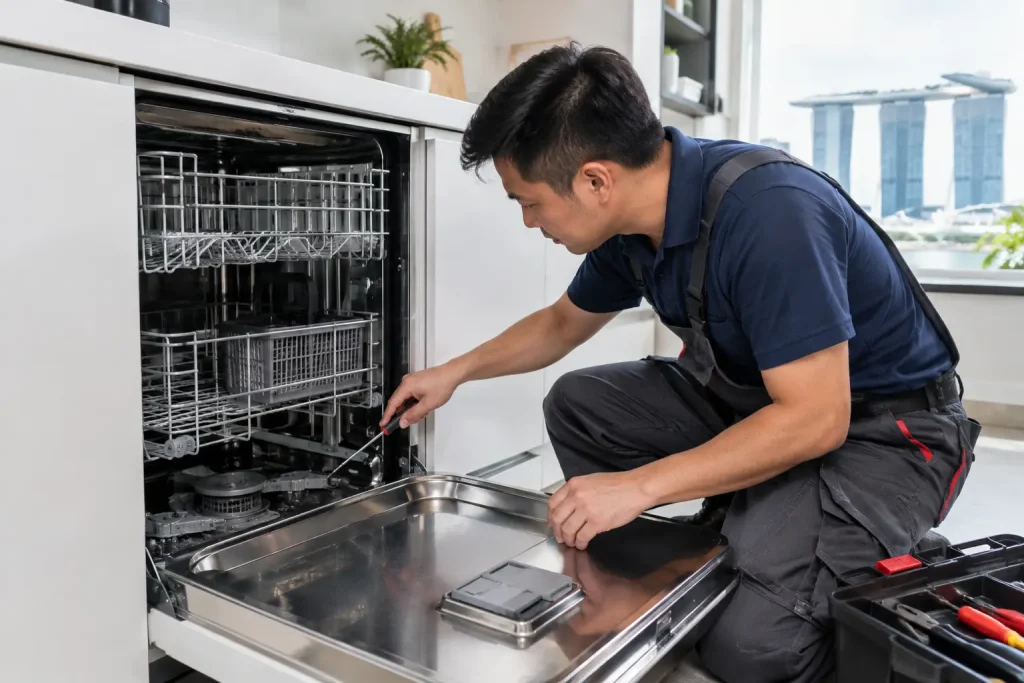
A dishwasher that stops mid-cycle, leaves cloudy glasses, or leaks onto the kitchen floor creates a problem quickly. For homes, offices, cafés, and other busy premises, dishwasher repair is often more practical than replacing a machine that may only need a worn part, a proper diagnosis, or a thorough clean.
The key is knowing what you can check safely and when to stop. A dishwasher combines water, heat, drainage, pumps, electronics, and door safety components. Guessing at the fault can turn a manageable repair into water damage or a more expensive breakdown.
Common Dishwasher Repair Problems
Most dishwasher faults show clear symptoms. The symptom does not always identify the exact failed part, but it gives a technician a useful starting point and helps you decide how urgent the problem is.
Dishwasher will not start
If the control panel lights up but the cycle will not begin, first make sure the door closes firmly. The door latch and its switch must engage before the dishwasher can fill or wash. A misaligned rack, swollen door seal, or utensil caught near the door can prevent this.
Also check whether a child lock, delay-start setting, or interrupted program has been selected. Turn the dishwasher off, wait a few minutes, and try a reset according to the appliance manual. If it still will not start, the fault may involve the door lock, control board, wiring, or power supply. These parts should be tested by a qualified appliance technician.
Dishwasher fills but does not wash
A dishwasher that takes in water but stays quiet, or makes a low humming sound without spraying, may have a circulation pump problem. The spray arms may also be blocked or unable to turn because of large cookware, loose labels, or food particles in their jets.
Remove the lower rack and inspect the spray arms. They should rotate freely. Rinse visible debris from the holes without forcing sharp objects into them. If the arms are clear and the machine still does not wash, the circulation pump, motor capacitor, or electronic control may need attention.
Water remains at the bottom
Standing water after a cycle is one of the most common calls for dishwasher repair. Start with the filter, usually located beneath the lower spray arm. Remove it carefully, clear trapped food waste, and rinse it under running water. Check the sump area for broken glass, bones, labels, or other debris that may obstruct drainage.
A blocked or kinked drain hose can also cause slow draining. However, do not force tools down the hose or remove panels while the appliance is connected. If the filter is clean but water remains, the drain pump, drain hose route, check valve, or control system may be at fault.
Dishes come out dirty or gritty
Poor cleaning results are not always a mechanical failure. Overloading the racks, placing large pans in front of the spray arms, or using too much detergent can leave residue on dishes. Detergent tablets may also fail to dissolve properly if the dispenser door is blocked by cookware.
Clean the filters and spray arms, then run a normal cycle with the dishwasher loaded correctly. If the problem continues, the dishwasher may not be heating water sufficiently, filling to the correct level, or circulating water with enough pressure. A technician can test these functions rather than replacing parts based on guesswork.
Dishwasher leaks from the door or underneath
A small leak should not be ignored. Water can affect cabinets, flooring, and nearby electrical connections. If water appears around the door, inspect the rubber door gasket for food debris, tears, flattening, or sections pulling away from the frame. Wipe the gasket clean with a soft cloth and check that nothing is preventing the door from closing evenly.
Leaks from beneath the appliance can have several causes, including a loose internal hose, cracked pump housing, faulty inlet valve, or damaged door seal. Turn off the dishwasher, stop its water supply if accessible, and arrange professional inspection. Repeatedly running a leaking dishwasher is rarely worth the risk.
Dishwasher trips power or shows an error code
If the appliance trips the circuit breaker, has a burning smell, or displays an unfamiliar error code, stop using it. Do not keep resetting the breaker to finish a cycle. The cause can range from moisture reaching an electrical component to a failed heater, pump, or control board.
Take a photo of the error code and note when it appears: during filling, washing, heating, or draining. This information can shorten the diagnostic process and help ensure the correct spare part is brought for the repair.
Safe Checks Before Booking Dishwasher Repair
A few simple checks can rule out everyday issues, but safety comes first. Switch the dishwasher off before cleaning filters or inspecting the inside. Let it cool fully if it has recently completed a hot cycle.
Check that the water supply valve is open, the door closes securely, the racks are not obstructing the spray arms, and the filter is clean. Look for obvious kinks in the visible drain hose, but do not pull built-in dishwashers out of cabinetry without care. Their water, drainage, and electrical connections may be tight or concealed.
Avoid dismantling the door, bypassing safety switches, or attempting to repair electrical parts yourself. These repairs require proper testing equipment. A dishwasher may appear simple from the outside, but an incorrect installation or loose connection can create a leak or recurring fault.
What A Professional Dishwasher Diagnosis Should Include
Reliable dishwasher repair begins with diagnosis, not immediate parts replacement. A technician should inspect the reported symptom, test the relevant functions, and identify whether the fault is mechanical, electrical, or related to maintenance.
For example, a dishwasher that does not drain may need only a cleared obstruction, but it could also have a weak drain pump or a damaged wire connection. Likewise, poor drying may be related to the selected program, rinse aid settings, a heating issue, or a failed fan on certain models.
The diagnosis should also consider the appliance’s age, model, condition, and availability of compatible spare parts. Built-in dishwashers can require extra care because access is more limited and the door panel, mounting brackets, and surrounding cabinetry must be handled correctly.
Dishwasher Repair Cost: What Affects the Price?
There is no single price for dishwasher repair because the final cost depends on the fault and the machine. A basic service for a blocked filter or minor adjustment is different from replacing a circulation pump, heating component, electronic control board, or door assembly.
Cost can be affected by the brand and model, whether original or compatible spare parts are available, the amount of dismantling required, and whether more than one worn component is found. Commercial dishwashers may also need faster attention because downtime affects daily operations.
Before approving a major repair, ask for a clear explanation of the diagnosed fault, the recommended part, and whether the repair is likely to restore normal operation. Honest service means explaining the trade-off, not pushing a repair that makes little sense for an appliance near the end of its useful life.
Should You Repair or Replace Your Dishwasher?
Repair is usually worth considering when the dishwasher is otherwise in good condition, the fault is isolated, and suitable parts are available. Replacing a pump, inlet valve, latch, seal, or drain component can extend the appliance’s working life significantly.
Replacement may be the better choice when the machine has repeated faults, severe internal corrosion, major electronic failure, or costly parts that are no longer readily available. Age alone should not make the decision. A well-maintained dishwasher with a straightforward fault may still be a sensible repair, while a newer machine with multiple unresolved issues deserves a closer assessment.
For landlords and property managers, consider reliability between tenancies and the risk of a repeat callout. For businesses, factor in operational downtime as well as the repair cost. The best decision is the one that gives dependable service without spending beyond the appliance’s realistic value.
Simple Maintenance That Prevents Breakdowns
Dishwasher maintenance takes only a few minutes and can prevent many drainage and cleaning issues. Clear food scraps from dishes before loading them, but there is no need to rinse every item completely. Clean the filter regularly, especially in households that use the dishwasher daily or in commercial settings with heavier use.
Inspect the spray arms every few months and remove any debris from their jets. Wipe the door gasket so grease and food residue do not build up along the seal. Run an appropriate dishwasher cleaner periodically, following the product and appliance instructions. Use the correct detergent quantity and keep rinse aid topped up if your model uses it.
If your dishwasher begins making new noises, draining slowly, or leaving dishes dirty after routine cleaning, arrange an inspection before the fault develops into a leak or complete failure. Fix It Appliance provides professional dishwasher diagnostics and repairs across Singapore, with practical advice on whether repair is the right next step.
A dishwasher should make daily cleanup easier, not create uncertainty after every cycle. Acting when the first symptoms appear gives you the best chance of a smaller, faster repair and a machine you can rely on again.


