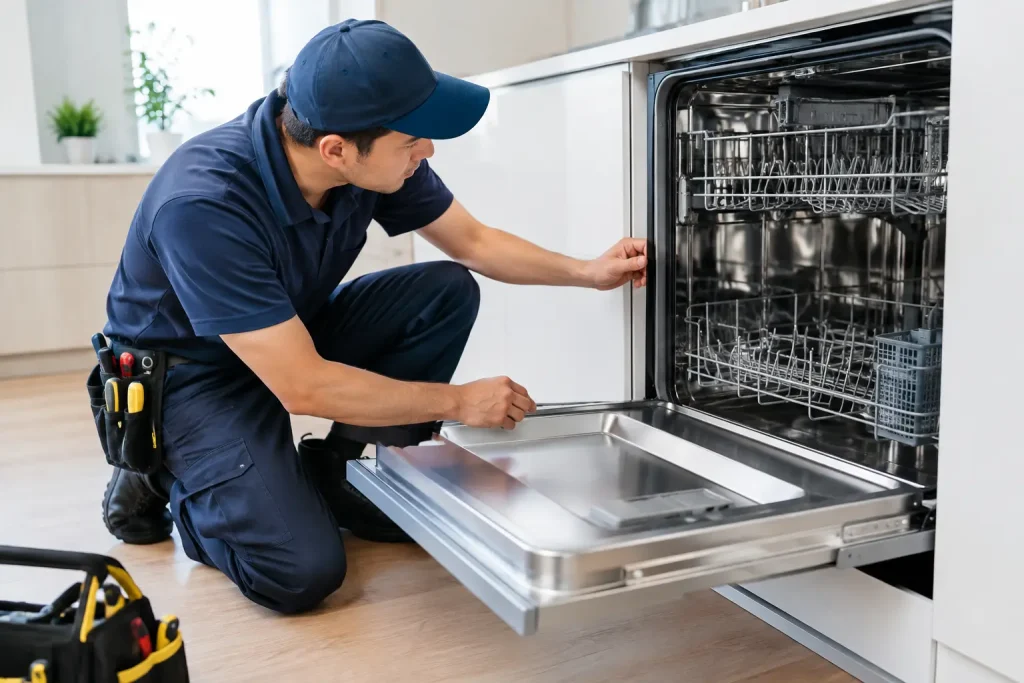
A wet patch directly below the dishwasher door is not a fault to ignore. If you searched for “stop dishwasher door leaking,” start by pausing the cycle, switching off the appliance at the wall, and drying the area. A door leak can be caused by something as simple as excess detergent or a dirty seal, but it can also point to a worn gasket, misaligned door, or internal spray problem that needs professional repair.
Dishwashers use pressurized water during a wash cycle. When water escapes from the front, it can spread under nearby cabinets or flooring before you notice it. The useful clue is when the leak appears and exactly where the water is coming from.
First, confirm the water is coming from the door
Before replacing parts, make sure the door is truly the source. Water at the front of a dishwasher can run forward from a loose inlet connection, a drain issue, or water spilled while loading. Dry the floor completely, then run a short cycle while watching from a safe distance.
A door-related leak usually appears along the bottom edge, from one lower corner, or down the sides of the door during washing. If water only appears after the cycle has ended, check whether dishes or containers are holding and spilling water when the door is opened. If water is visible beneath the appliance rather than at the door edge, stop using it and arrange a diagnosis.
Check the dishwasher door seal for dirt or damage
The door gasket is the flexible rubber seal around the dishwasher opening. It creates a barrier when the door closes. Food residue, grease, detergent buildup, or a small piece of packaging trapped against it can prevent a proper seal.
With the dishwasher off and cool, open the door and inspect the gasket closely. Wipe it with a soft damp cloth, particularly around the lower corners and the section near the bottom of the opening. Do not pull or stretch the rubber unnecessarily. Check for cracks, flat spots, splits, loose sections, or areas that feel hard and brittle.
A slightly dirty gasket may only need cleaning. A torn, misshapen, or hardened gasket should be replaced. In Singapore’s warm, humid conditions, rubber parts can deteriorate over time, especially on older machines or appliances that are used heavily in homes, offices, cafés, and staff pantries.
Make sure the lower door seal is in place
Some dishwasher models have an additional lower door seal or deflector. This component directs wash water back into the tub. If it has come loose, warped, or worn away, water may escape from the center or corners of the bottom of the door even when the main gasket looks fine.
The exact part and fitting method vary by brand and model. Avoid forcing a universal strip into place. An incorrectly fitted seal can create a larger gap and make the leak worse.
Look for loading problems that force water toward the door
A dishwasher may leak even with a good door seal if the lower spray arm cannot rotate freely. A large plate, tall utensil, or pan handle can block the arm. The spray then repeatedly directs water at the front of the door rather than distributing it evenly around the tub.
Pull out the lower rack and rotate the lower spray arm by hand. It should move without striking dishes or the rack. Also look at the spray arm holes. If they are blocked by food particles or mineral deposits, water can jet out in an unusual direction and overwhelm the door seal.
Load large items toward the sides or rear where possible. Keep baking trays, chopping boards, and tall cookware away from the lower spray arm path. This is a quick check, but it is often missed when a dishwasher begins leaking after a change in the usual load.
Use the correct detergent and avoid oversudsing
Foam is a common reason a dishwasher leaks from the door. Dishwashers are designed for low-suds dishwasher detergent. Using hand-washing liquid, dish soap, or too much detergent can create excessive foam that pushes past the door seal.
If you see suds or bubbles coming out around the door, cancel the cycle. Remove as much foam as possible with a towel and run a rinse cycle only after the suds have settled. Do not keep starting wash cycles in the hope that the foam will clear on its own.
Even dishwasher detergent can cause problems when too much is used, especially with soft water, concentrated tablets, or a short cycle. Follow the detergent manufacturer’s dosage guidance and use the dispenser correctly. If you recently changed detergent, that change is worth investigating before assuming a major part has failed.
Check whether the dishwasher is level
A dishwasher that tilts forward can allow water to collect against the front door during washing. A small amount of water movement is normal, but a machine that has shifted after installation, moving, or cabinet work may be more likely to leak.
Open the door and gently check whether the appliance feels stable. It should not rock from side to side. A spirit level can help confirm whether it is sitting level, following the installation guidance for that model. Built-in dishwashers may have adjustable feet behind the lower kick plate, but access and adjustment can be difficult without removing panels.
Do not pull a built-in appliance forward aggressively. The water hose, drain hose, and power connection may be under tension. For integrated units, it is generally safer to have a technician check leveling, mounting, and door alignment together.
Inspect the door latch, hinges, and alignment
A dishwasher door must close evenly and firmly. If the latch is loose, the hinges are worn, or the door has dropped slightly, the gasket may not be compressed evenly. You may notice that the door needs extra force to shut, springs open slightly, sits unevenly, or leaks consistently from one side.
Check for obvious damage around the latch area and confirm that no utensil or rack is stopping the door from closing. Do not try to bend hinges or force the latch into position. Door springs and hinge assemblies are under tension, and an incorrect adjustment can affect the door balance or cause further damage.
A technician can determine whether the issue is the latch catch, hinge, spring, mounting position, or a distorted inner door panel. This is especially relevant for commercial dishwashers and frequently used household machines, where repeated opening and closing places more wear on moving parts.
When a dishwasher door leak needs professional repair
Cleaning the seal, correcting a loading issue, and changing detergent are reasonable first steps. Book a professional dishwasher repair if the gasket is damaged, the door is misaligned, the spray arm is cracked, or water continues to escape after these checks.
You should also stop using the dishwasher if water reaches the wall outlet area, if the leak is heavy, if the machine trips power, or if you cannot identify the source. Continued use can damage internal components and the surrounding kitchen area.
A proper diagnosis should include checking the door gasket and lower seal, spray arms, latch, hinges, tub edge, dispenser, leveling, and wash-water behavior. This matters because fitting a new gasket will not solve a leak caused by oversudsing, a blocked spray arm, or a door that is not closing squarely.
Prevent future leaks with simple habits
Wipe the door gasket regularly and remove food debris from the bottom edge of the tub. Check that the spray arms spin before starting a full load, and use only dishwasher-safe detergent at the recommended amount. When loading, keep items clear of the door and avoid forcing the racks into place.
If your dishwasher is older or used daily, preventive maintenance can identify worn seals and alignment issues before a small drip becomes a bigger repair. Reliable repairs start with finding the actual cause, not simply replacing the most visible part.