A freezer that is still powered on but no longer freezes properly often points to a freezer compressor fault. The compressor is the part that circulates refrigerant through the cooling system. When it cannot start, runs inefficiently, or overheats, temperatures rise quickly and food or business stock can be lost. Acting early can sometimes prevent a smaller fault from turning into a major repair.
Before assuming the compressor has failed, check the temperature setting, door seal, airflow around the appliance, and power supply. Several faults can produce similar symptoms. A proper diagnosis matters because replacing a compressor is more involved and costly than replacing a relay, thermostat, fan, or door gasket.
Signs of a freezer compressor fault
A compressor does not always fail completely at once. In many cases, it gives warning signs that the cooling system is under strain. The most obvious sign is a freezer that feels cool but cannot maintain freezing temperatures, even when set to its coldest setting.
Listen to the appliance as well. A normal compressor usually makes a low hum and switches off after reaching the set temperature. Repeated clicking every few minutes, followed by silence, often means the compressor is trying but failing to start. This can be caused by a faulty start relay or overload protector, although a worn compressor can create the same pattern.
A compressor that runs almost continuously is another concern. It may be struggling to remove heat because of a refrigerant leak, dirty condenser coils, poor ventilation, a weak door seal, or internal compressor wear. Continuous running raises electricity use and puts more stress on the motor.
Other warning signs include an unusually hot area around the compressor compartment, a burning smell, loud knocking sounds, or a circuit breaker that trips when the freezer starts. If you notice a burning smell, smoke, sparking, or repeated electrical tripping, switch off the freezer at the power point and arrange professional inspection. Do not keep restarting it in the hope that it will recover.
What causes a freezer compressor fault?
The compressor itself is a sealed motor, so it is not normally a part that can be repaired internally on site. However, some faults around it are replaceable and may restore normal operation without a compressor replacement.
Failed start relay or overload protector
The start relay gives the compressor the extra electrical boost needed to begin running. The overload protector cuts power if the compressor gets too hot. When either part fails, you may hear clicking but no sustained humming. This is one of the more common causes of a freezer that appears to have a compressor problem, and it should be tested before more expensive work is considered.
Compressor overheating
Freezers need space around the rear and sides to release heat. A freezer pushed tightly into a cabinet, placed in a hot utility area, or surrounded by stored items may overheat. Dust on the condenser coils and poor airflow around the compressor compartment can make the problem worse.
Singapore’s warm, humid conditions can expose ventilation problems quickly, particularly for chest freezers in storerooms, cafés, offices, or commercial kitchens. Improving clearance and cleaning accessible dust may help, but it will not fix a compressor that has already been damaged by prolonged overheating.
Refrigerant leak or restriction
A refrigerant leak means there is not enough refrigerant circulating to carry heat out of the freezer. The compressor may keep running while the cabinet remains too warm. A blockage in the sealed system can produce a similar result.
These are not DIY repairs. Refrigerant work requires correct equipment, leak testing, evacuation, and recharging to the appliance manufacturer’s specifications. Simply adding refrigerant without locating the leak is not a reliable solution.
Electrical or control faults
A damaged power cord, loose connection, faulty thermostat, temperature sensor, electronic control board, or defrost-related fault can stop a freezer from cooling properly. In frost-free models, heavy ice buildup around the evaporator can block airflow and make the freezer seem weak, even when the compressor is working.
This is why a technician should test the full cooling system rather than diagnosing a compressor failure based on temperature alone.
Checks to make before calling for repair
You can carry out a few safe checks without dismantling the freezer. First, confirm the socket is working by testing it with another suitable appliance. Check that the plug and power cord are not damaged, and make sure the temperature control has not been turned up accidentally.
Next, inspect the door gasket. Close the door on a sheet of paper and gently pull it. If the paper slides out easily at several points, the seal may be allowing warm air into the cabinet. Also check whether food packages are preventing the door from closing fully.
Make sure air vents inside the freezer are not blocked by tightly packed items or thick ice. For chest freezers, avoid filling the cabinet so tightly that air cannot circulate around the contents. If there is heavy frost, follow the manufacturer’s defrost instructions after moving frozen items to suitable temporary storage.
Finally, check ventilation outside the appliance. Leave appropriate clearance around the freezer and remove dust from areas that are safely accessible. Do not remove electrical covers, touch wiring, pierce panels, or attempt to recharge refrigerant. Those steps can damage the appliance and create safety risks.
How a technician confirms the problem
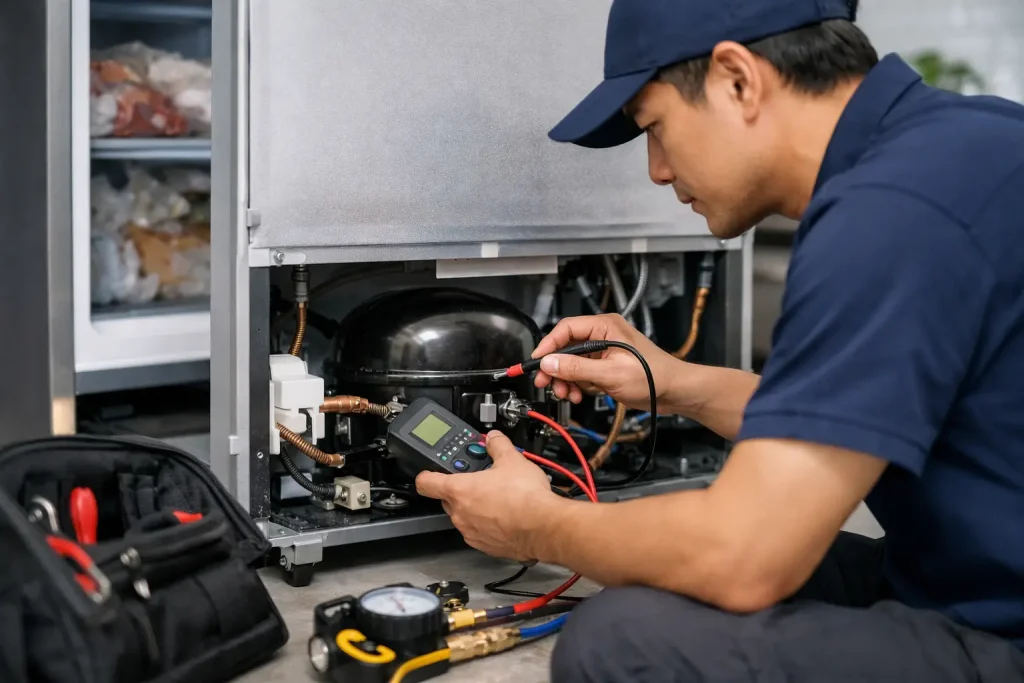
Professional freezer diagnosis starts with the basics: power supply, temperature settings, door condition, airflow, and condenser heat release. The technician then checks whether the compressor is receiving the correct power and whether the start relay and overload protector are operating correctly.
If the compressor runs, further testing may include checking running current, evaluating cooling performance, inspecting frost patterns, and looking for evidence of refrigerant loss or a restricted system. These tests help separate a true compressor failure from an external component fault.
For commercial freezers, diagnosis should also consider how the appliance is being used. Frequent door opening, overloading, poor ventilation, and high ambient temperatures can all affect recovery time. A freezer may not be faulty if it has simply been loaded with a large quantity of unfrozen stock, but it should return to a stable temperature within a reasonable period.
Repair or replace a faulty freezer compressor?
Whether to repair a freezer compressor fault depends on the appliance’s age, condition, brand, capacity, and the availability of compatible parts. A start relay, overload protector, fan motor, thermostat, or gasket repair is usually more economical than replacing the whole appliance, provided the cabinet and cooling system are otherwise in good condition.
Compressor replacement is a larger job. It involves replacing the compressor, working on the sealed refrigerant system, fitting a filter drier where required, pressure testing, vacuuming the system, and charging it correctly. The repair can make sense for a newer, higher-value freezer or a commercial unit that fits an existing business setup.
Replacement may be the better choice when the freezer is old, has a refrigerant leak in an inaccessible section, has multiple worn components, or has already needed repeated cooling repairs. A good repair assessment should explain the fault found, the parts required, the expected cost, and whether the repair is likely to provide reasonable service life.
Preventing compressor problems
Compressor life is affected by heat, airflow, and workload. Keep the freezer in a well-ventilated location and avoid pushing it flush against a wall unless the manufacturer specifically allows it. Do not cover vents or store boxes around the compressor area.
Check the door gasket regularly and avoid leaving the door open longer than necessary. Defrost manual-defrost freezers before ice becomes excessive, and keep the interior reasonably organized so cold air can circulate. For businesses, periodic preventive maintenance is especially useful because a freezer breakdown can interrupt operations and lead to stock loss.
A freezer that clicks repeatedly, runs nonstop, or cannot hold temperature is asking for attention. Early diagnosis can identify whether the problem is a replaceable starting component or a more serious sealed-system issue, helping you make a clear repair decision before the freezer stops completely.