A dryer that suddenly rattles during a late-night laundry cycle is more than an annoyance. If you are asking, “why is dryer making noise,” the sound can point to a loose item, an overloaded drum, or a worn internal part that needs attention. Acting early can prevent a minor repair from becoming damage to the drum, motor, or heating system.
Not every dryer sound means the same thing. A few light clicks from buttons or relays may be normal, while grinding, squealing, and repeated thumping are not. The timing of the noise also matters. A sound that starts only when the drum turns suggests a different issue from one that happens while the dryer is heating or winding down.
First, Stop the Dryer for Any Severe Noise
Turn the dryer off and unplug it if you hear loud metal scraping, repeated banging, burning smells, or a harsh grinding noise. Do not keep running the machine to finish the load. Continued use can damage the drum, belt, motor, or blower assembly, and a loose component can create a safety concern.
Allow the dryer to cool before checking inside. Remove the laundry and inspect the drum, door area, lint filter housing, and pockets of any remaining clothing for coins, zippers, screws, keys, or other small objects. A simple object caught in the drum can make a surprisingly loud sound.
For gas dryers, do not attempt to dismantle gas-related components yourself. If there is a gas smell, turn off the appliance, avoid switches or open flames nearby, and arrange professional assistance promptly.
Why Is Your Dryer Making Noise? Match the Sound to the Cause
The character of the noise provides useful clues. It is not a final diagnosis, but it helps determine whether a basic check is enough or whether the dryer needs repair.
Thumping or Banging
A steady thump often comes from bulky items bunching together, such as towels, bedding, shoes, or a single heavy garment. Pause the cycle, separate the items, and restart with a balanced load. Overloading can also cause clothes to strike the drum and place extra stress on the support components.
If the thumping continues with an empty dryer, the drum may have become misshapen, or a drum roller may have developed a flat spot. This is more common when a dryer has been unused for a long period or has been repeatedly run with heavy loads. Worn rollers can make a rhythmic bump once or twice per drum rotation.
Squealing or High-Pitched Screeching
A squeal usually points to friction in moving parts. Common causes include worn drum rollers, a dry or damaged idler pulley, or a stretched and slipping drive belt. These parts support and turn the drum, so the noise may become louder as the machine warms up or when it carries a full load.
Some dryers use a belt that can squeak briefly at startup, especially in humid conditions. However, a persistent squeal is not normal. Replacing a worn pulley or belt before it fails can avoid a situation where the dryer runs but the drum no longer turns.
Scraping, Grinding, or Metal-on-Metal Noise
Scraping deserves quick attention. A bra wire, coin, or zipper pull may be trapped between the drum and the front or rear seal. Sometimes the drum glides, rollers, bearings, or support shaft are worn, allowing the drum to rub against another surface.
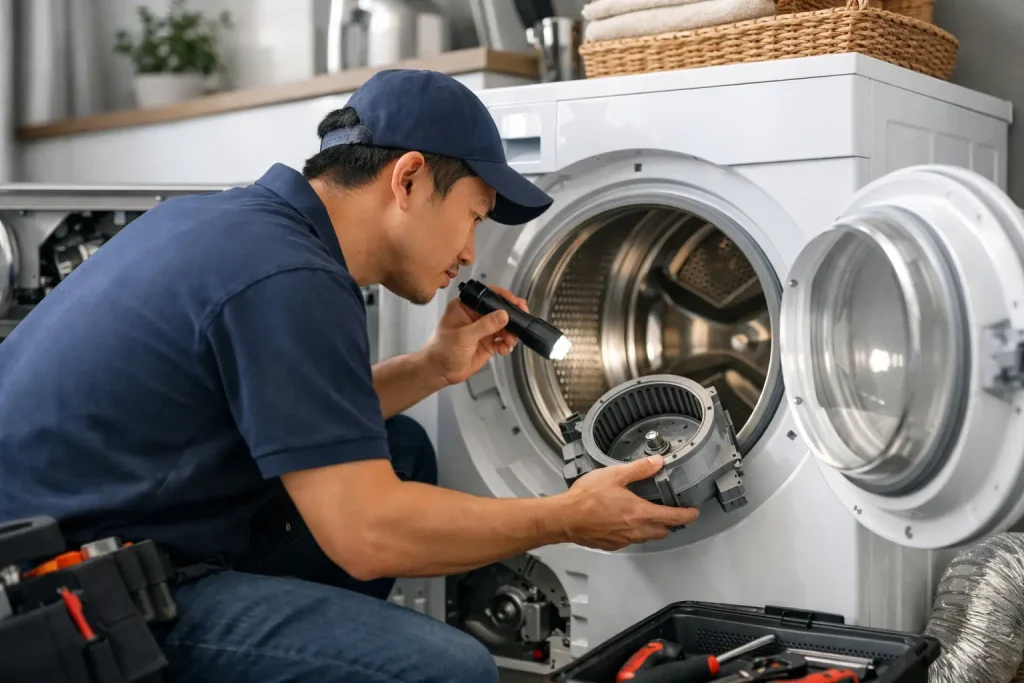
Grinding can also come from the motor or blower wheel. The blower wheel moves hot air through the dryer. If it cracks, becomes loose, or collects an obstruction, it may make a rough grinding or rattling sound while the dryer is operating. This repair usually requires opening the appliance and should be handled by a qualified technician.
Rattling or Vibrating
First, check whether the dryer is level and stable. A machine with one foot not firmly on the floor can vibrate, particularly during high-speed drum movement. Adjusting the leveling feet may solve the issue. Make sure the dryer is not pressed tightly against a wall, cabinet, or another appliance, as contact can amplify vibration.
A loose exhaust duct or rear panel can rattle too. If the noise seems to come from behind the dryer, inspect the visible duct connection after unplugging the appliance. Do not crush or sharply bend the duct when pushing the dryer back into position, since restricted airflow can cause poor drying and overheating.
Internal rattling may be caused by a loose blower wheel, worn roller bracket, or damaged motor mount. If the dryer vibrates strongly even when empty and level, professional diagnosis is the sensible next step.
Clicking or Ticking
A light, occasional click can be normal as controls switch on and off. Buttons, timer mechanisms, and heat-control components may click during a cycle. But a fast repetitive clicking, especially if the dryer does not start, heats poorly, or stops mid-cycle, may indicate an issue with the start switch, motor, belt switch, or control system.
A ticking sound that matches every drum rotation may be a foreign object caught in the drum seal. Check carefully before arranging a repair, but avoid forcing anything into narrow gaps where it could cause more damage.
Simple Checks You Can Safely Make
Before booking a dryer repair, there are a few practical checks worth making. They can resolve basic problems and give a technician clearer information if service is needed.
Make sure the load is not too large or made up of one heavy item. Clean the lint filter and inspect it for tears or a heavy film from fabric softener residue. Check that the dryer is level, with all feet firmly touching the floor. Then run the dryer empty for a few minutes and listen from a safe distance.
If the sound disappears when empty, the issue may be load balance rather than an internal fault. If it remains, note when it occurs: immediately after pressing Start, only when the drum rotates, after the dryer gets hot, or near the end of the cycle. A short recording of the noise can also help during diagnosis.
Do not spray lubricants into the dryer, remove major panels, or try to tighten internal parts without the correct tools and experience. Many dryer components sit close to wiring, heaters, sharp metal edges, and moving mechanisms. Improvised repairs can create additional faults and make later service more costly.
Parts That Commonly Need Dryer Repair
When a noise is caused by wear, a technician will usually inspect the drum support system, drive assembly, motor, and airflow components. The exact failed part depends on the dryer model and the sound, but these are frequent repair items:
- Drum rollers and roller shafts, which can wear down and cause rumbling, thumping, or squealing.
- The drive belt and idler pulley, which can create squeaks, chirps, or slipping noises.
- Drum glides, bearings, and seals, which can lead to scraping or grinding.
- The blower wheel and motor mount, which may rattle or vibrate when loose or damaged.
- Foreign objects lodged around the drum or blower housing.
A proper repair should address the underlying wear, not simply reduce the noise temporarily. For example, replacing only one badly worn roller may not be the best value if the matching roller is close to failure. The technician should assess the condition of related parts and explain the available options.
Repair or Replace: What Makes Sense?
For many dryers, a new belt, rollers, pulley, or blower wheel is a worthwhile repair. These are common mechanical faults, and replacing the affected parts can restore quiet operation and extend the appliance’s useful life. Repair is often especially practical when the dryer heats properly, the drum is in good condition, and there are no major electronic faults.
Replacement may make more sense if an older dryer has several problems at once, such as noisy bearings, weak heating, a failing motor, and corroded components. Parts availability also matters. A professional diagnosis helps you compare the repair cost with the appliance’s age, overall condition, and expected reliability after the work is completed.
For landlords, property managers, laundries, and other businesses, prompt repair can reduce disruption and prevent a small mechanical issue from taking a machine out of service completely. Keeping service records and addressing unusual sounds early is usually more cost-effective than waiting for a breakdown.
Prevent Future Dryer Noises
Use the correct load size, avoid drying loose items with heavy metal parts, and empty pockets before each cycle. Clean the lint filter after every load and keep the exhaust path clear so the dryer does not run hotter or longer than necessary. Do not place heavy items on top of the appliance, and check occasionally that it remains level after moving it for cleaning or maintenance.
A dryer should produce a steady, low operating sound, not a squeal, grind, or repeated bang. If the noise returns after simple checks or becomes louder, arrange a professional inspection. Fix It Appliance provides reliable dryer diagnostics and repairs across Singapore, helping homeowners and businesses identify the fault and bring their appliance back to normal operation before further damage occurs.