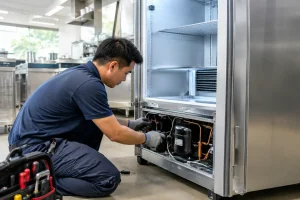

A wine chiller that suddenly runs warm can put an entire collection at risk, especially in Singapore’s heat and humidity. The right wine chiller repair versus replacement decision is not based on age alone. It depends on the fault, the cabinet’s condition, the availability of spare parts, and whether the unit can return to stable temperatures without repeated breakdowns.
For many homeowners and businesses, a professional diagnosis is the sensible first step. A chiller that appears to have failed may only need a fan motor, temperature sensor, door seal, or control adjustment. On the other hand, a major sealed-system fault in an older unit can make replacement the more practical long-term choice.
Wine Chiller Repair Versus Replacement: Start With the Fault
Wine chillers are more sensitive than standard refrigerators. They are designed to maintain a narrow temperature range, often with separate zones for different bottle types. A small fault can cause inconsistent cooling, excessive compressor cycling, condensation, or temperatures that rise gradually without triggering an obvious alarm.
Some common faults are usually worth repairing when the rest of the appliance is in good condition. These include a damaged door gasket, faulty interior fan, worn fan motor, failed temperature sensor, defective thermostat, broken light switch, loose wiring, or a minor control-board issue. These repairs can restore stable cooling without the cost and disruption of buying a new unit.
A repair becomes less attractive when the problem involves the compressor, refrigerant leak, evaporator, condenser, or extensive corrosion. These components are part of the cooling system. Repair work can be more labor-intensive, and the final decision should take the unit’s age, model, condition, and spare-parts availability into account.
Do Not Assume a Warm Chiller Needs Replacement
Before deciding, check a few simple points. Make sure the appliance has space around its vents, as built-in and freestanding units need proper airflow to release heat. Confirm that the door closes fully and that no bottle or shelf is preventing a tight seal. Dust around the condenser area, where accessible, can also reduce cooling efficiency.
If the display is on but the cabinet is warm, listen for the compressor and fan. If you hear unusual clicking, buzzing, rattling, or constant running, switch off the unit if it is overheating and arrange a diagnosis. Avoid repeatedly changing the temperature setting or unplugging and reconnecting the appliance, as this can make fault assessment more difficult.
When Wine Chiller Repair Is Usually Worth It
Repair is often the better option when the chiller is relatively new, has been reliable until now, and has no major rust, water damage, or cabinet deterioration. A quality built-in wine chiller may also be worth repairing because replacing it can involve matching dimensions, ventilation requirements, door alignment, and cabinetry cutout space.
A repair is generally sensible when the estimated repair cost is clearly lower than a comparable new unit and the technician can identify a specific, correctable cause. For example, replacing a fan motor or sensor is different from attempting to resolve an intermittent cooling issue with no confirmed cause.
Brand and model support matter too. If compatible spare parts are available and the unit has a serviceable design, repair can extend its useful life by several years. This is especially relevant for models with dual-zone controls, integrated doors, or specialized shelving that may be difficult to replace like for like.
It is also worth repairing a chiller that has temperature accuracy problems but otherwise cools normally. A faulty sensor may cause the display temperature to differ from the actual internal temperature. A technician can test the sensor, thermostat, control board, fan operation, and airflow before recommending a more expensive repair.
Repair Signs You Should Act on Quickly
Do not wait too long if you notice fluctuating temperatures, water droplets inside the cabinet, ice forming where it should not, a door that will not seal, or a fan making loud noises. Early repairs may prevent strain on the compressor and reduce the chance of a minor issue becoming a major failure.
For a commercial setting with stock stored inside, a chiller that cannot hold its programmed temperature needs prompt attention. Moving bottles to a stable, suitable temporary location while the fault is assessed can help avoid unnecessary exposure to heat.
When Replacement Makes More Sense
Replacement may be the better answer when the appliance has reached the later part of its expected service life and needs a costly major component. There is no universal age at which every wine chiller should be replaced. Usage, ventilation, maintenance history, and model quality all affect lifespan. However, an older unit with repeated cooling faults deserves a careful cost comparison.
Consider replacement if the compressor has failed, refrigerant is leaking from a difficult-to-access section, or the cabinet has severe corrosion. These repairs may be technically possible, but the total cost can approach a significant portion of a new appliance without guaranteeing that other aging components will not fail soon after.
Replacement can also be practical if spare parts have been discontinued. A control board, display panel, or custom fan assembly may not be available for older models. Using unsuitable replacement parts can lead to unreliable temperature control, which defeats the purpose of a wine chiller.
Energy use is another consideration, although it should not be the only one. A newer chiller may offer improved insulation, better temperature controls, and quieter operation. Still, replacing a repairable unit solely because it is not the latest model is not always necessary. A properly repaired appliance can remain dependable when its cooling system and cabinet are in sound condition.
Compare the Real Costs, Not Only the Quotation
A repair quotation should be assessed against more than the price of a new wine chiller. Include diagnostic charges, parts, labor, transport or installation needs, removal of the old unit, and any changes required to fit a replacement into an existing space.
For built-in models, measurements are critical. A replacement that is slightly wider, deeper, or taller may not fit correctly. Poor ventilation around a newly installed unit can shorten its life and cause the same overheating problems that affected the previous appliance.
A useful rule of thumb is to be cautious when a major repair on an older chiller costs close to half the price of a suitable replacement. This is not an automatic replacement rule. A premium built-in unit with an exact fit may still justify repair, while an inexpensive freestanding unit with recurring failures may not.
Ask for a clear explanation of the diagnosed fault, the parts required, and whether the repair addresses the root cause. Honest service means knowing when a repair offers good value and when spending more on an aging appliance is unlikely to be worthwhile.
Compressor and Thermoelectric Wine Chillers Need Different Decisions
Not all wine chillers cool the same way. Compressor models use a refrigeration system similar to a refrigerator. They generally provide stronger cooling and are often better suited to Singapore’s warm environment, but compressor and refrigerant faults can be more involved to repair.
Thermoelectric wine chillers use electronic cooling modules and fans. They can be quieter and have fewer moving cooling parts, but their performance is more affected by room temperature and ventilation. If a thermoelectric unit is struggling in a hot, enclosed space, the issue may be installation conditions rather than a failed module.
A technician should identify the cooling type before recommending repair or replacement. The parts, likely causes, repair process, and long-term expectations differ substantially.
Prevent the Next Breakdown After Repair or Replacement
Whether you repair or replace, proper use makes a noticeable difference. Keep ventilation openings clear and avoid placing the chiller beside strong heat sources. Do not overload shelves to the point that internal airflow is blocked. Check the door seal periodically and clean dust from accessible vents or condenser areas according to the manufacturer’s instructions.
Set a realistic temperature and allow the appliance time to stabilize after adding many bottles. Frequent door opening, direct sunlight, and an overly warm installation area can force the cooling system to run harder than intended.
If your wine chiller is warm, noisy, leaking, or unable to maintain its set temperature, do not decide based on guesswork. A proper assessment gives you the information needed to choose a repair that makes sense or a replacement you will not regret. Fix It Appliance provides professional wine chiller diagnostics and repair support across Singapore, helping customers make a clear, practical decision before their stored bottles are affected.