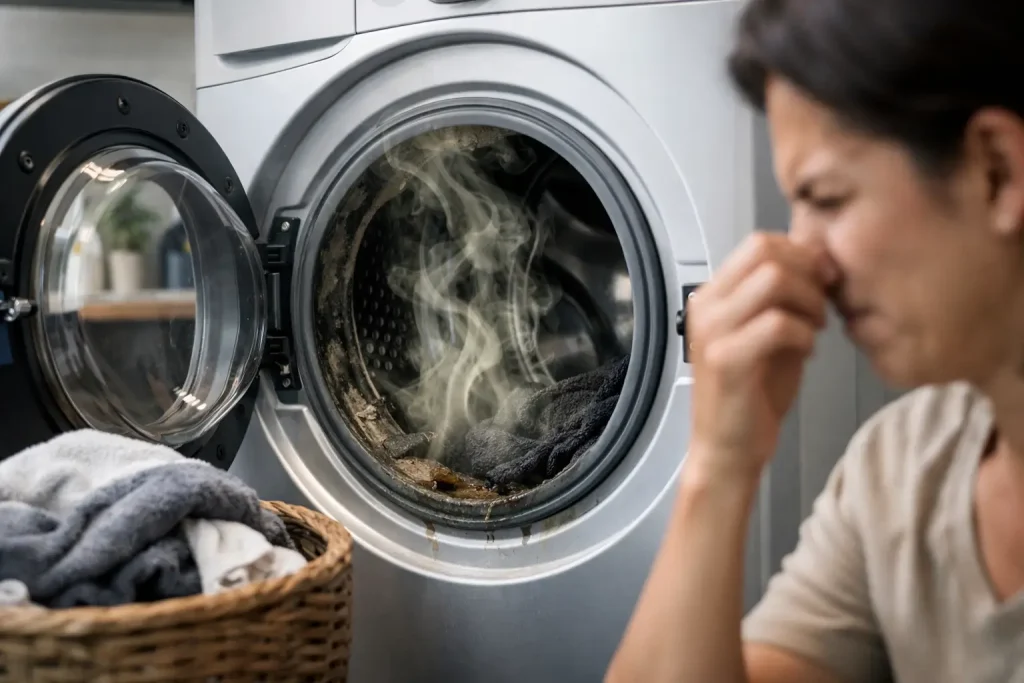
A washing machine that leaves clothes smelling worse than before is not a small annoyance. It usually means moisture, detergent residue, and trapped dirt have been building up inside the machine for a while. If you are wondering why washing machine smells bad, the short answer is that something inside is staying wet, dirty, or blocked longer than it should.
The smell can range from musty and sour to rotten or sewer-like. Each type points to a slightly different problem. Some are simple maintenance issues. Others suggest a drainage fault, a worn seal, or hidden buildup that needs professional attention before it turns into a breakdown.
Why washing machine smells bad in the first place
Washing machines are designed to clean, but they also create the exact conditions odor-causing bacteria and mold like most – warmth, moisture, and leftover residue. Modern high-efficiency machines are especially prone to this because they use less water, which means detergent, fabric softener, lint, and body oils can collect more easily inside the drum, gasket, dispenser, and drain system.
Front-load models usually have more odor complaints than top-load machines because the door seal traps water in folds around the gasket. If the door stays closed between cycles, that moisture has nowhere to go. Over time, mold and mildew begin to grow, and the smell spreads to the drum and your laundry.
Top-load machines are not immune. They can also develop odors when detergent builds up under the agitator or wash plate, when the drain line slows down, or when the tub is not draining completely after a cycle.
The most common causes of a bad washing machine smell
One of the biggest causes is detergent overuse. More soap does not mean cleaner laundry. In many homes, people use far more detergent than the machine needs, especially with concentrated formulas. The extra soap does not always rinse away fully. Instead, it sticks to the inner tub and hoses, where it mixes with lint, skin cells, and hard water minerals. That sludge becomes a food source for bacteria.
Fabric softener is another common contributor. It leaves a waxy coating that can cling to dispensers, hoses, and internal parts. That coating traps dirt and moisture, which leads to a stale, sour smell.
Another frequent cause is standing water. If water remains in the drum, pump housing, gasket, or drain hose after each cycle, the machine never fully dries out. That damp environment is ideal for mildew growth. Sometimes this is due to normal design limitations. Sometimes it is caused by a partial blockage or a drainage problem.
A dirty door gasket is a major issue in front-load machines. Small items, lint, hair, and soap residue often get caught in the folds. Once that debris stays damp, it starts to smell. Many homeowners do not realize how much buildup can hide there until the odor becomes strong.
The detergent drawer can also be part of the problem. Water and product residue collect in corners and channels, and mold forms in spots that are easy to miss. If the smell gets stronger when you open the dispenser, that area likely needs attention.
What the smell may be telling you
A musty smell usually points to mildew, detergent residue, or a machine that stays closed up too often. This is the most common type of odor and often starts gradually.
A sour smell often suggests old water, trapped organic residue, or buildup in the drum and drainage path. Laundry may come out smelling clean at first, then develop an unpleasant odor as it dries.
A rotten egg or sewer smell is different. That may indicate bacteria growing in trapped water, but it can also point to a drain connection issue, a clogged pump filter, or problems related to the standpipe or sewage line. This is the kind of smell that deserves closer inspection, especially if it appears suddenly or gets worse fast.
If you notice a burning smell, that is a separate concern. It may not be related to residue at all. Motor strain, belt issues, or electrical faults can produce a sharp, hot odor. In that case, the machine should be checked promptly.
Where odor usually hides
The visible drum is only part of the machine. Smells often come from places you cannot easily see. In front-load washers, the rubber gasket is one of the main problem areas. Water pools in the lower fold, and small debris can collect there for weeks.
Behind the drum, the outer tub can accumulate a film of detergent and dirt. You will not see it from the door, but the smell can still travel into every load. The same goes for the drain hose and pump area. If residue builds up there, the machine may keep washing clothes in an environment that never fully gets clean.
The pump filter can also trap hair, lint, coins, and sludge. When that happens, drainage slows down and stagnant water begins to smell. Not every machine gives easy access to this area, and forcing it open without the right handling can lead to leaks or damage. That is one reason some odor problems are better handled by a technician.
When a bad smell becomes a repair issue
Not every odor means the machine is failing, but some smells are early warning signs of a deeper problem. If the odor keeps coming back soon after cleaning, there may be hidden buildup in the tub, hose, or pump system. If the washer drains slowly, leaves water behind, or makes unusual sounds, odor is likely part of a larger drainage issue.
A machine that smells bad and also leaves marks, residue, or dampness on clothes may have a clogged drain pump, restricted hose, or internal contamination that routine cleaning cannot solve. If the washer is older, worn components can make it harder for the machine to flush out detergent and water properly.
This is where professional diagnosis matters. The goal is not just to remove the smell for a few days. It is to identify whether the issue is surface-level buildup or a mechanical problem that will keep returning until it is repaired. For homeowners, tenants, and landlords in Singapore, that distinction can save time, laundry frustration, and the cost of replacing a machine too soon.
Why washing machine smells bad even after a cleaning cycle
This catches many people off guard. They run a tub-clean or hot wash, but the odor returns quickly. Usually, that means the smell is not only in the drum. It may be sitting in the gasket folds, pump filter, drain hose, detergent drawer channels, or outer tub where a basic cleaning cycle does not reach effectively.
Another possibility is product use. If the machine is cleaned once but continues to receive too much detergent or fabric softener every week, buildup starts again almost immediately. The same happens when wet laundry sits in the machine for hours after a cycle finishes. Moisture lingers, and odor-causing growth returns.
It also depends on the machine type and how heavily it is used. A washer in a busy household, rental unit, or commercial setting will accumulate residue faster than one used lightly. That does not mean the machine is beyond repair. It means the source of the odor needs to be identified properly.
Signs it is time to call for service
If the smell is persistent, strong, or linked with poor performance, it is time to stop guessing. A washer should also be checked if it is not draining fully, if water is sitting in the drum, if clothes still smell after washing, or if there is a sewer-like odor near the machine.
Prompt service is especially helpful when the machine is shared by multiple users, such as in rental properties, offices, or staff areas. Odor issues tend to get worse with continued use, not better. A professional can inspect the drainage path, pump condition, internal buildup, and parts that may be worn or contaminated.
At Fix It Appliance, the focus is simple – honest diagnosis, clear pricing, and reliable washing machine repair that restores normal use without unnecessary replacement.
A bad smell is the machine telling you something is being trapped where it should not be. The sooner that is checked, the easier it is to get back to clean laundry and a washer that does its job properly.