A baked dish that is pale on one side, a grill that takes far too long to brown, or an oven that suddenly stops heating are not minor inconveniences. If you are searching for when should oven heating element be replaced, the answer usually comes down to one question: is the element itself faulty, or is another part preventing it from working?
An oven heating element is a replaceable component, not a reason to replace the entire appliance. However, it works with high voltage and can fail in ways that damage wiring, trip the circuit, or create a safety risk. Knowing the warning signs helps you avoid wasted money on the wrong repair and get the oven working reliably again.
What an oven heating element does
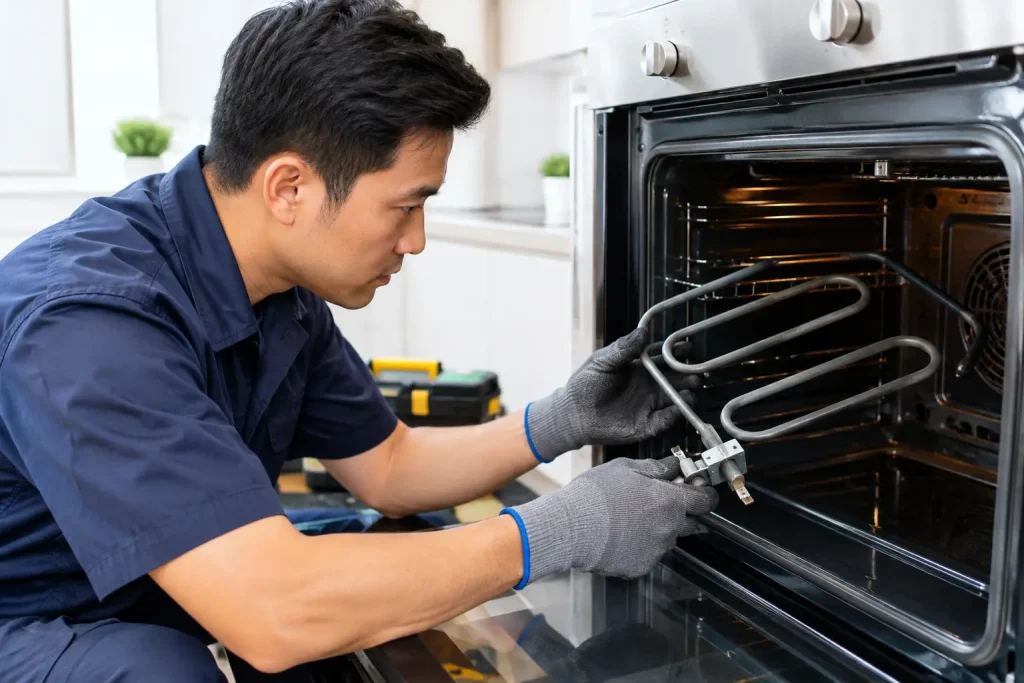
Most electric ovens use one or more heating elements. The lower bake element provides the main heat for baking, while the upper broil or grill element supplies top heat. Some fan ovens also use a circular element around the fan at the rear of the oven cavity.
When electricity passes through the element, its internal resistance creates heat. Over time, repeated heating and cooling can weaken the metal. Grease, food residue, moisture, and accidental impact can also shorten its life. A failed element may stop heating completely, heat unevenly, or develop a visible break.
The element is only one part of the heating system. A faulty thermostat, temperature sensor, selector switch, relay, control board, wiring connection, or door seal can cause similar symptoms. This is why proper diagnosis matters before ordering a spare part.
When should an oven heating element be replaced?
Replace the heating element when there is clear evidence that it has failed or has become unsafe to use. A professional technician can confirm this by inspecting the element and testing its continuity and electrical resistance with the oven isolated from power.
It has visible damage
A healthy element should have a consistent shape and surface. Replace it if you see a split, hole, crack, burn mark, blistered area, sagging section, or a part that has melted or broken apart. A damaged element cannot heat predictably and may arc or short against the oven cavity.
A bright spark, popping sound, or flash inside the oven is also a serious sign. Switch the oven off at the wall or circuit breaker and do not use it again until it has been checked. Continuing to operate an element after arcing can damage its terminals, wiring, or electronic controls.
The oven stays cold or heats only from one side
If the oven turns on but never reaches temperature, the bake element may have failed. This is particularly common when the display, interior lamp, and fan still work normally, but food remains undercooked even after a long preheat.
For a conventional oven, a failed lower element often means weak or absent bottom heat. For a fan oven, an oven may run but take much longer than usual to heat if the rear circular element is defective. A failed upper element can leave grilling weak or uneven. These faults do not always mean the element is the cause, but they justify testing it.
The element does not glow or heats unevenly
Many exposed elements glow red during operation, although some may cycle on and off as the oven regulates temperature. If an element stays completely dark while the oven is calling for heat, it may be open circuit or not receiving power.
An element that glows brightly in one section but remains dark in another is usually near the end of its life. Uneven glowing indicates an internal break or weakened section. Replacement is normally more reliable than trying to continue using it until it fails completely.
The oven trips the circuit breaker
A heating element can develop an electrical leak to the metal oven body as its insulation deteriorates. This can cause the circuit breaker or residual current device to trip when a heating function is selected.
Do not assume the breaker is the only problem. Repeated tripping when the oven heats requires a proper appliance inspection. The element may be at fault, but a technician should also check wiring, terminal connections, and other electrical components before fitting a replacement.
The oven cannot hold the set temperature
An oven that overshoots, runs cool, or cycles erratically may have an element problem, but this symptom is less conclusive. Temperature control faults are often caused by the sensor, thermostat, relay, or control board rather than the element.
If the oven takes a long time to preheat and then produces inconsistent results, an element test is sensible. If it reaches temperature quickly but is consistently too hot or too cool, temperature-control components are more likely to be responsible. Replacing an element without diagnosis may not solve the issue.
Signs that do not automatically mean replacement
A little discoloration on an older heating element does not always mean it has failed. Surface darkening is common after years of normal use. Likewise, a fan continuing to run after the oven is switched off may be a normal cooling function, not an element fault.
Poor cooking performance can also come from using the wrong heating mode, a door that does not close tightly, blocked airflow, or an oven cavity heavily coated with burnt residue. Before arranging a repair, check that the oven door closes properly and that no foil or tray is blocking the fan cover or airflow openings.
Still, do not attempt to bend, scrape aggressively, patch, or repaint an element. Heating elements are not designed for repair. Once their casing or internal conductor is compromised, replacement is the safe option.
Can you test an oven heating element yourself?
A visual check is reasonable for most homeowners. With the appliance switched off and fully isolated from its power supply, look for obvious breaks, burn marks, or loose mounting points. Never touch terminals or remove panels while the appliance remains connected to electricity.
Testing with a multimeter can confirm whether an element has continuity, but it requires access to electrical terminals and correct interpretation of the result. Built-in ovens may need to be removed from their housing, and wiring positions must be restored exactly. For most households and businesses, professional diagnosis is the safer choice.
This is especially true after sparks, burning smells, smoke, or circuit tripping. Those symptoms may involve more than a simple element replacement.
Repair cost and the repair-versus-replace decision
The cost of replacing an oven heating element depends on the oven brand, model, element type, accessibility, and whether other parts have been damaged. A standard exposed bake or grill element is often a practical repair. A concealed element or a part for a built-in premium oven may take more labor and have a higher spare-parts cost.
Replacing the element usually makes sense when the oven is otherwise in good condition, the door, controls, and fan work properly, and the correct spare part is available. It can extend the working life of the appliance at a lower cost than replacing the whole unit.
The decision becomes less straightforward if the oven has several major faults. For example, an element failure combined with a faulty control board, damaged wiring, poor door seal, and repeated circuit tripping may make replacement more economical. Age alone is not the deciding factor. The condition of the appliance, availability of parts, and total repair cost matter more.
For landlords, property managers, and commercial kitchens, a prompt diagnosis is also important because an unreliable oven disrupts tenants or operations. Keeping the model number and a clear description of the fault ready can speed up parts identification and repair planning.
How to help a new heating element last longer
Heating elements eventually wear out, but a few habits can reduce avoidable damage. Wipe up spills after the oven has cooled, especially sugary or salty residue that can bake onto the element. Avoid lining the oven base or fan cover with foil unless the manufacturer specifically permits it, as foil can trap heat and interfere with airflow.
Use the correct cookware size so trays do not strike or rest against exposed elements. Do not pour water onto a hot element, and avoid harsh tools that can scratch it during cleaning. If the oven begins taking longer to heat or produces uneven results, arrange a check early rather than waiting for complete failure.
A faulty oven element is often a manageable repair, but visible damage, sparks, burning smells, or tripped power should never be ignored. Fix It Appliance provides professional oven diagnostics and heating element replacement across Singapore, helping homeowners and businesses identify the actual fault and restore safe, dependable heating.