
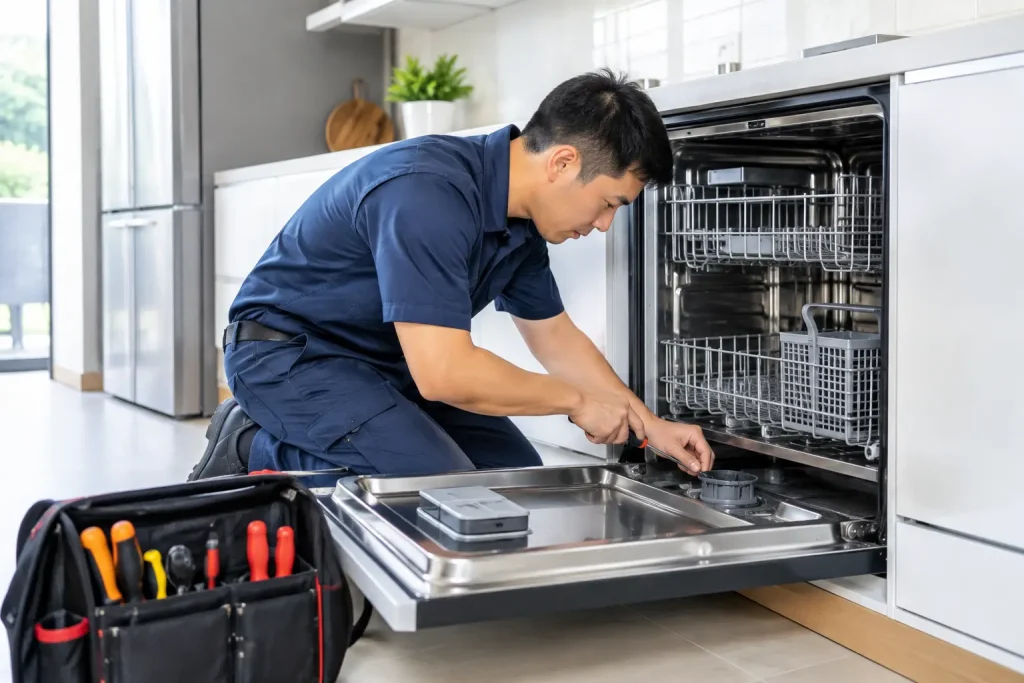
A dishwasher that stops mid-cycle, leaves greasy dishes behind, or leaks onto the kitchen floor creates an immediate question: repair versus replace dishwasher? The right answer is rarely based on one symptom alone. Its age, fault, repair cost, availability of spare parts, and how well it has performed before the breakdown all matter.
For homes, offices, cafés, and other busy premises in Singapore, a dishwasher is often part of the daily routine. Replacing it too quickly can mean unnecessary expense and installation work. Waiting too long on a failing unit, however, can lead to water damage, hygiene concerns, wasted power, and disruption. A proper diagnosis gives you a clearer, more cost-effective decision.
Repair Versus Replace Dishwasher: Start With the Fault
Some dishwasher problems sound serious but are usually repairable. A machine that will not drain may have a blocked filter, jammed drain pump, kinked hose, or a worn pump. Poor washing results can come from clogged spray arms, a faulty inlet valve, detergent dispenser issues, or low water flow. A dishwasher that will not start may have a door latch problem, control panel fault, or damaged wiring connection.
These faults do not automatically mean the dishwasher has reached the end of its useful life. If the cabinet is in good condition, the machine has been reliable, and the required part is available, repair is often the sensible route.
Other faults need closer assessment. A major water leak caused by a cracked tub, severe rust around the base, repeated electronic board failures, or a failed motor in an older machine can make replacement more practical. The key difference is whether the repair restores reliable operation or only postpones the next costly issue.
Do not continue using a dishwasher that is leaking, giving off a burning smell, tripping the electrical supply, or showing signs of overheating. Switch it off, isolate the power if safe to do so, and arrange a professional inspection.
Consider the Dishwasher’s Age and Service History
Age is useful, but it should not be the only deciding factor. Many dishwashers can provide years of dependable service when maintained properly. A relatively new unit with a single failed component is usually worth repairing. An older model with several past breakdowns may be approaching the point where further repairs offer poor value.
As a practical guideline, consider how the dishwasher has behaved over the previous 12 to 24 months. One isolated fault is different from a pattern of drain errors, water leaks, inconsistent heating, and repeated cycle interruptions. If you have already replaced several major parts and a new fault appears, replacement may offer more dependable long-term results.
Built-in dishwashers require extra thought. Replacing an integrated unit may involve checking panel compatibility, cabinet dimensions, hose routing, and electrical connection requirements. If the current dishwasher is repairable at a reasonable cost, keeping it can avoid those additional complications.
Compare the Full Cost, Not Just the Repair Quote
A repair quote should be compared with the total cost of replacement, not simply the advertised price of a new dishwasher. Replacement can involve delivery, dismantling, installation, disposal of the old unit, and possible adjustments to fit the new model. For built-in or commercial units, downtime can also be a meaningful cost.
Repair makes financial sense when the fault is clearly identified, the part is available, and the appliance is otherwise in sound condition. It is especially worthwhile for issues involving components such as pumps, valves, door latches, spray arms, heaters, sensors, seals, or control switches, provided there is no wider deterioration.
Replacement deserves stronger consideration when the repair cost is a large share of the cost of a suitable new model and the machine is already old or unreliable. The same applies when parts are discontinued, the dishwasher has structural damage, or multiple major components need attention at the same time.
A professional diagnosis should explain what failed, why it failed where possible, what parts are needed, and whether there are signs of further wear. Honest service means being told when repair is no longer the better investment.
Signs Your Dishwasher Is Usually Worth Repairing
Repair is often the practical choice when the dishwasher has one of these manageable issues:
- It does not drain, but the tub and internal components are otherwise in good condition.
- It leaks from a worn door seal, loose hose connection, pump seal, or inlet component.
- It stops due to a faulty door latch, sensor, float switch, or control button.
- It washes poorly because of blocked spray arms, a detergent dispenser fault, a heating issue, or a water inlet problem.
These problems require correct troubleshooting. For example, standing water in the base can trigger an anti-flood safety system, making the dishwasher appear completely dead. Resetting or drying the machine without finding the leak may only allow the same fault to return.
When Replacement Is the Better Choice
Replacement is not always about getting the newest model. It can be the more responsible decision when an existing dishwasher cannot be restored to safe, reliable operation at a sensible cost.
A cracked or badly corroded tub is a major concern because it can lead to recurring leaks. Extensive rust around the frame or door area may indicate long-term moisture damage that affects more than one component. If the main control board has failed repeatedly, the wiring is damaged, or the motor and heating system both require major work, a replacement assessment is reasonable.
Parts availability also matters. Some older dishwasher models no longer have original parts in stock, and compatible alternatives may not be appropriate for every repair. A reliable repair depends on using the correct parts and confirming the appliance completes a proper wash, rinse, drain, and drying cycle afterward.
For business users, reliability may outweigh the lowest immediate cost. A dishwasher that repeatedly fails during operating hours can disrupt workflow and create unnecessary staff time. In that situation, replacement may be justified even when a limited repair is technically possible.
Check These Simple Items Before Booking a Repair
A few basic checks can help describe the problem accurately, but avoid dismantling electrical or water-related components yourself. First, check whether the dishwasher has power and whether the door closes firmly. Clean the removable filter according to the manufacturer’s instructions, and look for food debris around the filter area.
Next, check that the water supply valve is open and that the drain hose is not visibly kinked or crushed. If the dishwasher displays an error code, note the code and when it appears – at the start, during washing, or while draining. Also note whether there is water in the bottom, unusual noise, a burning smell, or water on the floor.
These details help a technician narrow down the cause faster. They do not replace diagnosis, as similar symptoms can come from different faults. A humming dishwasher that will not drain, for instance, could have a blocked pump, an obstruction, or an electrical problem affecting the pump.
Maintenance Can Change the Repair Decision
Regular maintenance can extend a dishwasher’s service life and prevent avoidable faults. Clean the filter regularly, clear debris from spray arm holes, use the correct detergent, and do not overload the racks in a way that blocks the spray arms or prevents the door from sealing properly.
Hard water conditions can leave mineral deposits on internal parts, reducing washing performance and putting strain on heating components. Using dishwasher salt or other products only where recommended for your model can help manage this issue. Run an appropriate cleaning cycle periodically, and inspect the door seal for trapped food particles or early signs of wear.
For commercial dishwashers, preventive maintenance is particularly valuable. A technician can check pumps, hoses, seals, heating performance, drainage, and electrical connections before a minor issue becomes an urgent breakdown.
Get a Clear Diagnosis Before You Decide
The best repair versus replace dishwasher decision is based on evidence, not guesswork. Ask for a diagnosis that identifies the fault, explains the repair required, and sets out whether the appliance is likely to remain dependable after the work is completed.
Fix It Appliance provides dishwasher diagnostics, spare parts replacement, and reliable repair support across Singapore. Whether the issue is drainage, leaking, poor cleaning, heating, or an error code, an experienced assessment can help you avoid replacing a machine that still has useful life left.
A dishwasher should make daily work easier, not become a recurring concern. When the fault is clear and the repair is sound, restoring the machine can be the smart move. When reliability is no longer realistic, replacing it with the right unit lets you move forward with confidence.


