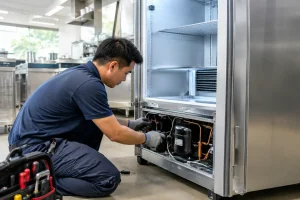

A wine chiller that runs quietly and holds a steady temperature is easy to overlook. But in Singapore’s warm, humid climate, small maintenance issues can quickly turn into warm bottles, excess condensation, loud operation, or a unit that runs almost nonstop. Knowing how to maintain wine chiller equipment properly helps protect both the appliance and the bottles stored inside.
Most wine chiller problems do not begin with a major part failure. They begin with blocked airflow, dirty condenser coils, a poor door seal, or an unsuitable location. A few practical checks throughout the year can prevent unnecessary repair costs and help your chiller maintain the conditions it was designed to provide.
How to Maintain a Wine Chiller Properly
Wine chillers are designed to keep temperatures more stable than a standard refrigerator, but they still need room to release heat. Start by checking where the unit is installed. A freestanding wine chiller should not be pushed tightly against a wall, cabinet, or other appliance unless the manufacturer specifically states it is suitable for that installation.
Leave the required clearance around the rear, sides, and top of the appliance. The exact space varies by model, so the user manual should take priority. If heat cannot escape, the compressor works longer to reach its set temperature. This increases power use and puts extra strain on components.
Keep the chiller away from direct sunlight, ovens, induction cooktops, and other heat sources. A unit beside a sunny window may cool adequately at night but struggle during the hottest part of the day. For built-in models, make sure the cabinet ventilation grilles are open and not blocked by bottles, packaging, or accumulated dust.
Set a sensible temperature
Set the temperature according to the type of wine and the chiller’s zones. As a general guide, many users keep white wines around 45 to 50°F and red wines around 55 to 60°F. If you have a single-zone chiller holding mixed bottles, choose a moderate setting rather than trying to match every bottle perfectly.
Avoid adjusting the temperature repeatedly. Every major change makes the cooling system work harder and can create unnecessary temperature swings. Give the appliance at least 24 hours to stabilize after changing the setting, restocking it heavily, or moving it to a new location.
A small independent thermometer can be useful if you suspect the display is inaccurate. Place it inside the chiller for several hours before comparing the reading. A difference of a few degrees may be normal depending on where the thermometer sits, but large or inconsistent differences may point to an airflow, sensor, fan, or control issue.
Clean the Interior Without Introducing Moisture
Spills, cork debris, and sticky labels can trap odors and encourage mold in a humid environment. Clean the interior every three to six months, or sooner after a spill. First, switch off and unplug the unit. Remove bottles carefully and place them in a cool area away from sunlight while you work.
Wipe shelves, walls, and the door gasket with a soft cloth dampened with warm water and a mild detergent. Do not pour water directly into the wine chiller or use harsh solvents, bleach, abrasive pads, or strong fragranced cleaners. These can damage plastic surfaces, affect the gasket, or leave odors that linger in the cabinet.
Dry all surfaces completely before loading the bottles back in. Check the drain area if your model has one, and remove any visible debris. Excess moisture inside the cabinet can lead to condensation, damp labels, and unpleasant smells.
Wooden shelves need gentler treatment. Wipe them with a barely damp cloth and dry them promptly. Soaking wooden parts can cause swelling, warping, or rough surfaces that make shelves difficult to slide.
Clean the condenser and vents
For many wine chillers, the condenser is located at the back or underneath the appliance. This part releases heat from the cooling system, and dust buildup makes it less efficient. In Singapore homes with frequent air-conditioning use, open windows, renovation dust, or pets, the condenser and vents may need attention more often.
Unplug the appliance before cleaning. Use a vacuum with a soft brush attachment or a clean, dry brush to remove dust from accessible vents and condenser areas. Do not bend delicate fins, force tools into tight spaces, or remove panels that are not intended for routine access.
Cleaning the condenser once or twice a year is usually enough for a lightly used household chiller. A commercial unit in an office, bar, hotel, or customer-facing space may need checks every few months because it is opened more often and may run for longer periods.
Protect Door Seals and Airflow
The door gasket is one of the most important parts to inspect. It keeps warm, humid air out of the cabinet. If the seal is dirty, torn, hardened, or not sitting evenly against the frame, cool air escapes and the compressor must run longer.
Wipe the gasket during interior cleaning and check for cracks, loose sections, or stains. Try the paper test: close the door on a thin sheet of paper and gently pull it out. If it slides out with almost no resistance at several points around the door, the seal may not be closing properly.
Also make sure bottles are arranged so the door closes fully. Oversized bottles, protruding racks, or loose items can stop the door from sealing even when it looks shut. Do not overfill the cabinet. Air needs to move around the bottles, particularly near interior fans and rear vents.
For dual-zone models, avoid opening both doors repeatedly while deciding what to remove. Open the required zone, take out what you need, and close it firmly. Frequent door opening is normal in a busy setting, but prolonged opening allows humid room air inside and can create condensation.
Keep the Chiller Level and Stable
A wine chiller should stand on a firm, level surface. If it rocks, vibrates, or leans noticeably, adjust the leveling feet where available. An unlevel unit may cause door alignment problems, noise, and reduced compressor performance over time.
Some vibration is normal when the compressor starts or fans operate. However, rattling bottles, buzzing that becomes unusually loud, clicking every few minutes, scraping sounds, or persistent vibration should not be ignored. Check first that the chiller is not touching a wall or cabinet and that shelves and bottles are secure.
If the noise continues after these simple checks, arrange a professional diagnosis. Continued operation with a failing fan, loose component, or compressor-start problem can lead to a more costly repair.
Watch for Early Signs of Trouble
A wine chiller rarely stops cooling without warning. The most useful maintenance habit is noticing changes early. Call for assessment if the display flashes, the temperature stays too high, frost appears where it normally does not, water pools inside or beneath the unit, or the compressor runs continuously.
Condensation on the glass door can sometimes be normal during humid weather, especially when the door has been opened frequently. Heavy condensation, water droplets inside the cabinet, or wet labels are different. They can indicate a door-seal problem, ventilation issue, poor ambient conditions, or a fault in the cooling system.
Do not attempt to recharge refrigerant, bypass electrical parts, or dismantle sealed cooling components yourself. These repairs require proper equipment and diagnosis. A technician can determine whether the issue is caused by airflow, a fan motor, thermostat, sensor, control board, compressor relay, or a refrigerant-system fault.
When Maintenance Is Not Enough
If the unit is clean, well ventilated, and correctly loaded but still cannot hold temperature, professional repair is usually the next step. The repair decision depends on the chiller’s age, capacity, brand, fault, and the availability of replacement parts. A door gasket, fan, sensor, or thermostat issue may be practical to repair. A major compressor or sealed-system fault on an older, low-cost unit may require a more careful cost comparison.
For landlords, offices, and hospitality businesses, keeping a record of temperature issues, error codes, and recent maintenance makes diagnosis faster. It also helps prevent repeat faults caused by the same installation or ventilation problem. Fix It Appliance provides wine chiller diagnostics and repairs across Singapore when a maintenance check points to a fault that needs professional attention.
A well-maintained wine chiller should be quiet, clean, properly ventilated, and stable in temperature. Check those basics regularly, and you are far more likely to spot a developing problem before your bottles and appliance are affected.