
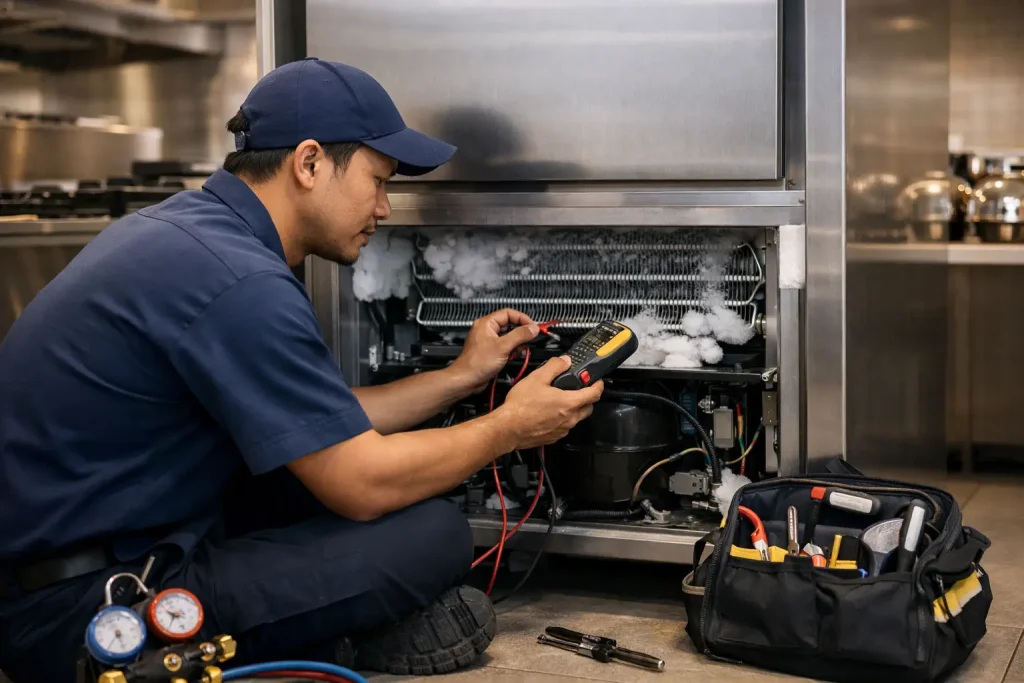
A freezer alarm sounding during a busy shift is not a minor inconvenience. In a hotel, one failed freezer can affect stored inventory, staff workflow, guest operations, and daily costs. Prompt hotel freezer repair Singapore service helps limit downtime, but the first actions taken by your team can make a real difference before a technician arrives.
Commercial freezers work harder than most household units. Doors are opened frequently, storage loads change throughout the day, and equipment may be installed in warm back-of-house areas with limited ventilation. A reliable repair starts with identifying what has changed, protecting the contents, and checking the right components rather than guessing at the cause.
What to Do When a Hotel Freezer Stops Freezing
First, check the display or use a separate thermometer if available. Do not assume the temperature reading is accurate simply because the unit has power. A freezer can have working lights and a running fan while the refrigeration system is unable to pull down to its set temperature.
Keep the door closed as much as possible. Repeated opening allows warm, humid air inside, which makes temperature recovery slower and increases frost buildup. If the freezer has to be opened to move stock, organize the transfer first so the door is open for the shortest possible time.
Check whether the power plug, wall outlet, isolator, or circuit breaker has been switched off or tripped. If the breaker trips again after being reset, stop using the freezer and arrange professional inspection. Repeated tripping can point to a compressor, wiring, defrost, or other electrical fault within the appliance.
For a unit showing a high-temperature alarm, record the displayed temperature, the time the problem was noticed, and any error code. Also note whether the compressor is running, whether there is unusual noise, and whether the door was left open for an extended period. These details give the technician a faster starting point.
Common Hotel Freezer Faults and Their Likely Causes
The freezer runs but does not get cold enough
This is one of the most common calls for hotel freezer repair in Singapore. The cause may be a dirty condenser coil, a condenser fan problem, frost blocking the evaporator, a failed defrost component, a weak compressor, or a refrigerant system issue.
Condenser coils release heat from the refrigeration system. When they are covered in dust, grease, or lint, the freezer has to run longer to remove heat. In Singapore’s warm and humid conditions, restricted airflow around the unit can add to the strain. Cleaning may solve a minor airflow problem, but a technician should investigate if the temperature remains high after the coil area is clear.
Heavy ice or frost inside the cabinet
A small amount of frost can occur over time, but thick ice on the internal back panel, around fan covers, or on stored items is a warning sign. The door gasket may not be sealing, the door may be misaligned, or the automatic defrost system may have failed.
Do not chip ice off with a knife, screwdriver, or sharp object. It is easy to puncture an evaporator coil or damage internal panels, turning a repairable issue into a more expensive refrigeration repair. A controlled defrost may temporarily restore airflow, but the root cause still needs to be identified.
The freezer is noisy or unusually hot
Rattling can come from loose panels, pipe vibration, or an unstable cabinet. Grinding or squealing may point to a failing fan motor. Clicking at regular intervals without the compressor starting can indicate a start relay, overload protector, compressor, or control issue.
Warm air near the condenser area is normal because the freezer is rejecting heat. However, excessive heat, a burning smell, or repeated clicking should be treated as an urgent fault. Switch off the appliance if there is smoke, a burning odor, or visible damage, and do not restart it until it has been checked.
Water leaks around or inside the freezer
Leaks often occur when a defrost drain is blocked, a drain pan is damaged, or excess condensation forms because of a poor door seal. Water on the floor creates a slip risk and can also reach nearby electrical connections. Clear the area, avoid placing towels against electrical parts, and arrange service if the leak returns.
Why Hotel Freezer Problems Need Proper Diagnosis
A commercial freezer can show the same symptom for several different reasons. For example, poor cooling may be caused by a blocked condenser, a fan failure, a faulty thermostat or sensor, an iced-up evaporator, or a sealed-system fault. Replacing parts without testing can waste time and increase costs.
A proper diagnosis normally includes checking operating temperatures, airflow, fans, door seals, defrost operation, control components, compressor performance, and the condition of the refrigeration circuit. The repair approach depends on the appliance type as well. An upright reach-in freezer, chest freezer, undercounter unit, and walk-in freezer each have different access points, controls, and common wear areas.
For hotel operations, speed matters, but so does an accurate repair. A quick part replacement that does not address the real fault may lead to another breakdown shortly afterward.
Repair or Replace? How to Make the Right Call
Replacement is not automatically the best answer when a freezer fails. Many faults, including worn door gaskets, fan motors, sensors, thermostats, relays, defrost heaters, and control boards, can be repaired when suitable spare parts are available.
The decision depends on the age and condition of the unit, the fault found, parts availability, repair cost, and its performance history. A freezer that has been dependable for years and needs a single replaceable part is often worth repairing. On the other hand, a unit with repeated cooling failures, major compressor problems, corrosion, damaged insulation, or obsolete components may no longer be a sensible long-term investment.
Ask for a clear explanation of the fault, the recommended repair, and whether the issue is likely to recur. This allows hotel managers and maintenance teams to compare the immediate repair cost with the disruption and cost of replacement.
Preventive Maintenance That Reduces Freezer Downtime
Most urgent failures are not fully predictable, but routine checks can catch early warning signs. Assign a staff member to monitor temperature displays and alarms, particularly during high-use periods. A freezer that takes longer than usual to recover after door opening should be checked before it stops cooling completely.
A practical maintenance routine should include these actions:
- Keep condenser areas clean and free from cartons, bags, or other items that block airflow.
- Inspect door gaskets for cracks, gaps, hardened sections, and loose corners that allow warm air in.
- Avoid overpacking the cabinet, which restricts internal airflow and creates uneven temperatures.
- Check for frost buildup, unusual fan noise, water leaks, and inconsistent temperature readings.
- Schedule professional servicing for high-use commercial units before small faults become operational emergencies.
Staff habits matter too. Doors should close fully after each use, and items should not be placed where they prevent the door from sealing. If a gasket is torn or the door needs to be lifted to close, report it early rather than waiting for a high-temperature alarm.
What to Expect From a Professional Repair Visit
Before service begins, the technician should assess the freezer’s symptoms and confirm the model details where possible. Providing the brand, model number, error code, and photos of frost or leaks can help prepare for the visit, especially when a specific spare part may be needed.
During inspection, the technician will test the relevant components and explain whether the issue is related to airflow, defrost, controls, electrical starting parts, or the cooling system. If replacement parts are required, the repair timeline can depend on stock availability and the freezer model.
Fix It Appliance provides professional freezer diagnostics, troubleshooting, spare parts replacement, and preventive maintenance for commercial and residential appliances across Singapore. For hotel equipment, clear fault reporting and timely action help reduce disruption and protect the freezer from further damage.
A freezer that is warming, frosting heavily, leaking, or making new noises is already asking for attention. Record the symptoms, keep the door closed, protect nearby areas from leaks, and arrange a proper inspection before a small performance issue becomes a full equipment stoppage.


