
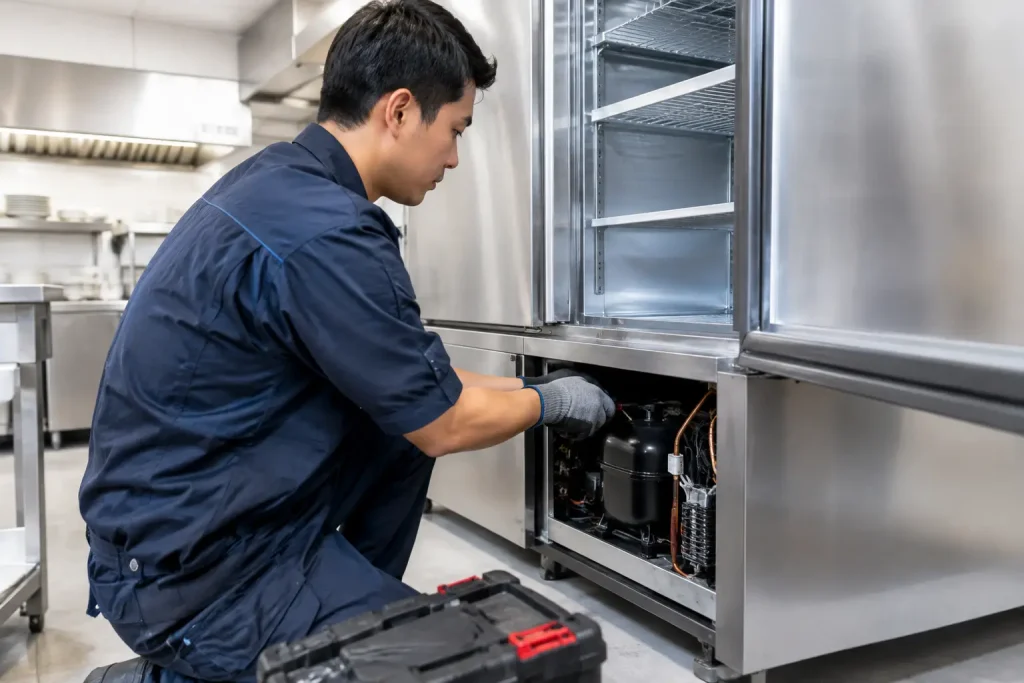
A hotel freezer rarely fails at a convenient time. It may begin with soft ice cream, excessive frost on stored items, a loud compressor, or an alarm during a busy service period. Fast hotel freezer repair helps limit stock loss, protect daily operations, and prevent a small fault from becoming a costly breakdown.
For hotels, serviced residences, commercial kitchens, and event facilities in Singapore, a freezer is not simply a storage appliance. It supports purchasing schedules, kitchen workflow, and guest service. When temperatures become unstable, the right response is to protect the stock first, identify the symptoms accurately, and arrange professional diagnosis before the unit stops cooling completely.
Signs Your Hotel Freezer Needs Repair
A freezer can still feel cold while operating below its required performance. The clearest warning sign is a temperature that does not hold steady. Most commercial freezers are expected to maintain frozen storage at around 0°F or -18°C, depending on the equipment specification and operating procedures. If the display rises, fluctuates repeatedly, or the unit runs constantly without reaching its set temperature, it needs attention.
Softening products, melting ice, water on the floor, or unusual condensation around the door are equally urgent signs. Do not assume that adding more stock will help retain cold air. A packed cabinet can restrict internal airflow, making recovery slower and placing extra strain on the refrigeration system.
Noise also tells a useful story. A low, steady compressor hum is normal. Repeated clicking, rattling fan blades, grinding sounds, or a compressor that starts and stops every few minutes are not. These faults may involve the condenser fan, evaporator fan, start relay, compressor, or electronic controls.
Excessive frost is another common issue. A thin layer of frost can develop during normal use, but thick ice on the rear panel, evaporator cover, or door frame points to a defrost or door-seal problem. Ice blocks airflow across the evaporator, so the freezer may become colder in one area and warmer in another.
What to Do When a Commercial Freezer Is Warming Up
Act early, but avoid improvised repairs that may damage the unit or create a safety risk. First, check the temperature display against an independent freezer thermometer if available. A faulty sensor or display can give misleading readings, while an independent reading helps confirm whether the cabinet is genuinely warming.
Keep the door closed as much as possible. Every door opening lets humid Singapore air enter the cabinet, increasing frost and making the compressor work harder. Move vulnerable stock to another operating freezer or a suitable temporary cold-storage unit according to your site procedures. Record the temperature trend and the time the issue was noticed. This information helps the technician assess the fault faster.
Then perform a few simple external checks. Confirm that the power plug has not loosened and that the circuit supplying the appliance has not tripped. Check whether cartons, trays, or other items are blocking interior air vents. Look at the door gasket for tears, gaps, hardened sections, or debris preventing a full seal. Also inspect the area around the condenser for blocked ventilation. Built-up dust and grease can prevent heat from leaving the system efficiently.
Do not chip ice with knives or sharp tools, force panels open, or repeatedly switch the freezer on and off. These actions can puncture components, break fan blades, or cause further damage. If there is a burning smell, visible damaged wiring, or unusual heat from the compressor area, turn the unit off and arrange urgent professional service.
Common Hotel Freezer Faults and Their Likely Causes
Dirty condenser coils or restricted airflow
A freezer removes heat from the cabinet and releases it through the condenser. When condenser coils are covered in dust, grease, or lint, heat cannot escape properly. The compressor then runs longer, energy use rises, and the cabinet may struggle to hold temperature.
This is especially common in equipment placed near cooking areas, laundry areas, or poorly ventilated back-of-house rooms. Cleaning may resolve the problem if the rest of the system is healthy, but a technician should also check that the condenser fan is operating correctly and that the appliance has adequate clearance.
Failed door gasket or misaligned door
A worn door seal allows warm, moist air into the freezer. The result is frost buildup, compressor overwork, and inconsistent temperatures. On a busy hotel site, a door may also become misaligned from frequent use, heavy loading, or impact from carts.
A gasket replacement is often a practical repair when the freezer is otherwise in good condition. However, if the door is warped or the hinges are damaged, the repair may require adjustment or replacement parts beyond the seal itself.
Defrost system problems
Many upright commercial freezers use an automatic defrost system. It includes components such as a defrost heater, sensor, timer, or control board. If one component fails, ice can build up around the evaporator and stop cold air from circulating.
The freezer may appear to cool normally at first, then gradually become too warm. Turning it off to melt the ice may restore cooling temporarily, but the fault will return unless the failed component is identified and replaced.
Faulty fan motor
The evaporator fan distributes cold air inside the cabinet, while the condenser fan helps remove heat from the refrigeration system. A failed fan can cause warm sections, a noisy unit, or a compressor that runs for long periods. Fan faults are often repairable, but the technician should determine why the motor failed and check for ice obstruction, worn bearings, or electrical damage.
Refrigerant or compressor issues
A refrigerant leak, restriction in the sealed system, or weak compressor can all cause poor cooling. These faults require specialized testing and should not be treated as a simple gas top-up. Adding refrigerant without locating a leak only delays the failure and increases operating cost.
Compressor repairs are among the more expensive freezer jobs because they involve major parts, labor, and system work. Whether repair makes sense depends on the freezer’s age, model, condition, repair history, and availability of replacement parts.
Repair or Replace: Making the Practical Decision
There is no single age at which every hotel freezer should be replaced. A well-maintained commercial unit may justify repair if the cabinet is structurally sound, the door seals properly, and the fault is limited to a fan, thermostat, sensor, relay, heater, or control component.
Replacement deserves stronger consideration when the compressor has failed on an older unit, refrigerant leaks keep returning, corrosion has affected the cabinet, or several major parts have failed within a short period. Frequent temperature alarms and long compressor run times can also point to declining efficiency, even if the freezer still operates.
Before approving a major repair, ask for a clear diagnosis, the affected parts, expected repair scope, and whether compatible parts are available. An honest assessment should compare the likely repair cost with the expected remaining service life of the appliance. For a hotel operation, downtime matters too. A lower repair bill is not always the best value if the same freezer is likely to fail again during a critical period.
Preventive Maintenance That Reduces Breakdowns
Preventive maintenance is usually less disruptive than emergency repair. Staff should monitor and record freezer temperatures regularly, report alarms promptly, and avoid overloading shelves or blocking airflow. Door gaskets should be wiped and checked for damage, while hinges and latches should close firmly without force.
Schedule professional servicing based on the freezer type, location, workload, and manufacturer guidance. High-use units in warm, humid, or grease-prone areas generally need more frequent inspection than lightly used storage freezers. A proper service visit can include condenser cleaning, fan checks, defrost inspection, temperature verification, drainage checks, door-seal assessment, and testing of electrical components.
For commercial freezer faults across Singapore, Fix It Appliance can diagnose cooling issues, replace faulty parts where appropriate, and help assess whether a repair is worth proceeding with. The best time to arrange service is when the first warning sign appears, not after the freezer has already stopped protecting the stock your operation depends on.


