
A refrigerator stops cooling overnight, the washer leaves clothes dripping wet, or the oven fails right before service starts in a busy kitchen. That is when home appliance repair stops being a minor task and becomes a priority. For households and businesses alike, the real problem is not just the broken machine. It is the disruption, the wasted time, and the question of whether repair is still worth it.
In many cases, it is. A professional diagnosis can quickly show whether the issue is a worn part, an electrical fault, a drainage problem, or a performance issue that can be corrected without replacing the entire unit. The right repair restores function, protects your routine, and avoids spending far more than necessary.
Why home appliance repair still makes sense
Replacing an appliance can look like the fastest option, but it is often the most expensive one. A repair usually costs a fraction of a full replacement, especially when the appliance is otherwise in good condition. That matters for homeowners managing a household budget, landlords trying to keep properties operational, and businesses that cannot afford extended downtime.
There is also the question of speed. Buying a new machine means comparing models, arranging delivery, removing the old unit, and adjusting to installation schedules. A repair appointment is often simpler and faster. When the fault is identified on-site and the correct part is available, the appliance may be returned to service much sooner than many people expect.
The key point is this: repair makes sense when the appliance has useful life left, the fault is specific, and the cost is reasonable compared with replacement. It depends on the age of the unit, the brand, the condition of key components, and the seriousness of the failure. Honest advice matters because not every machine is worth repairing, and customers deserve a clear answer.
What a professional home appliance repair visit should include
A proper repair service starts with diagnosis, not guesswork. Symptoms can be misleading. A refrigerator that is not cold enough may have a thermostat issue, a fan problem, a faulty sensor, or a sealed-system concern. A washing machine that will not spin could have a drainage blockage, a worn belt, a motor issue, or a control board fault. The same symptom can have several causes.
That is why experienced technicians focus first on testing and troubleshooting. They check how the appliance is behaving, inspect the relevant systems, and narrow the issue down before recommending parts or labor. This protects the customer from paying for unnecessary work.
Transparent pricing is just as important. People want to know what is wrong, what needs to be done, how much it will cost, and whether there are alternatives. Clear communication reduces stress. It also builds trust, especially when customers are deciding between repair and replacement.
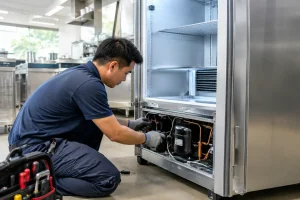
Good service should also be practical. On-site support matters because moving large appliances is inconvenient and sometimes impossible. For homeowners, that means less disruption. For restaurants, cafes, offices, and rental properties, it means getting essential equipment checked where it is installed and used.
Common repairs and what they usually mean
Refrigerator and freezer issues
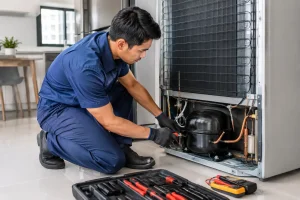
Cooling problems are among the most urgent because spoiled food creates immediate loss. Sometimes the cause is relatively straightforward, such as a damaged door gasket, blocked airflow, or a faulty fan motor. In other cases, the issue is more serious, involving sensors, defrost components, compressors, or control boards.
A noisy refrigerator is not always about age. It can point to a failing fan, vibration from loose components, or strain in the cooling system. Water leakage may come from a clogged drain line or excess condensation. The important thing is early diagnosis. Waiting too long can turn a manageable repair into a bigger one.
Washing machine and dryer faults
A washer that will not drain, spin, or complete a cycle can shut down a household quickly. In rental units and commercial settings, it can create even more pressure. Some failures are mechanical, while others involve sensors, pumps, locks, or electrical controls.
Dryers often show trouble through weak heating, long drying times, or sudden shutdowns. Those symptoms may point to heating elements, thermostats, airflow restrictions, or motor-related wear. Here again, diagnosis matters. Replacing the wrong part wastes time and money.
Oven and cooker hood problems
An oven that heats unevenly or not at all affects both convenience and consistency. For a family, that means interrupted meals. For a food business, it can affect service quality and customer timing. Heating elements, igniters, thermostats, and control systems are common sources of trouble.
Cooker hoods are often overlooked until they stop extracting smoke and grease properly. Poor suction, unusual noise, or failed lighting can signal motor issues, switch faults, or wear in internal components. Restoring proper ventilation improves comfort and helps keep the kitchen cleaner and safer.
When repair is the better choice and when it is not
Not every appliance should be repaired. The right answer depends on a few practical factors.
If the appliance is relatively new and the issue is limited to one component, repair is usually the better option. If the machine has been reliable and the rest of the system is in good condition, replacing a part makes financial sense.
If the appliance is older and already showing repeated failures, the decision gets harder. A second or third repair in a short period may not be good value. The same is true when major components fail and the repair cost approaches a large percentage of replacement cost. In those cases, a trustworthy technician should say so plainly.
This is where honest service stands out. Customers do not just need a technician who can complete repairs. They need one who can tell them when repair is worthwhile and when it is smarter to move on. That kind of guidance saves money in the long run.
Why speed matters in Singapore homes and businesses
Fast response is not just a convenience. In a warm climate, a refrigerator breakdown can become urgent very quickly. In a busy household, a failed washer or dryer creates an immediate backlog. In a cafe, restaurant, office pantry, or rental property, appliance failure affects operations, staff, tenants, and customer experience.
That is why responsive scheduling and efficient troubleshooting matter so much. A slow process increases disruption. A clear diagnosis and prompt repair reduce it. For many customers, the best service is not the one with the longest explanation. It is the one that arrives prepared, identifies the problem accurately, and gets the appliance working again as soon as possible.
For property managers and landlords, reliability has another layer. A broken appliance can trigger complaints, delays, and pressure from tenants. Quick, professional service helps maintain the property and reduces friction. It also shows that maintenance issues are being handled responsibly.
What customers should expect from a repair company
Trust is built through simple things done well. Customers should expect punctual communication, a clear diagnosis, transparent pricing, and professional workmanship. They should also expect realistic advice. If a repair will hold up well, say so. If the machine is near the end of its useful life, say that too.
Experience matters because appliance faults are not always obvious. A technician who has seen the same symptoms across many brands and models can often diagnose faster and more accurately. That saves time on-site and reduces the risk of repeat visits caused by misdiagnosis.
Consistency matters too. Whether the customer is a homeowner in Bedok, a landlord in Queenstown, or a business managing equipment in a commercial kitchen, the goal is the same: restore function with minimal disruption and no unnecessary upselling.
Fix It Appliance is built around that standard. The focus is straightforward – reliable repairs, honest service, and practical solutions that help customers repair rather than replace whenever it makes sense.
Home appliance repair is really about continuity
People do not call for service because they are interested in parts and fault codes. They call because daily life has been interrupted. Meals, laundry, tenants, business operations, and routines all depend on appliances working when they should.
That is why good repair work matters. It is not only about fixing a machine. It is about restoring normalcy, avoiding unnecessary replacement costs, and giving customers a clear answer they can trust. When service is responsive, diagnosis is honest, and workmanship is solid, repair remains one of the most practical decisions a customer can make.
If an appliance has stopped doing its job, the next step should be simple: find out what failed, understand whether repair is worthwhile, and act before a smaller problem becomes a bigger one.