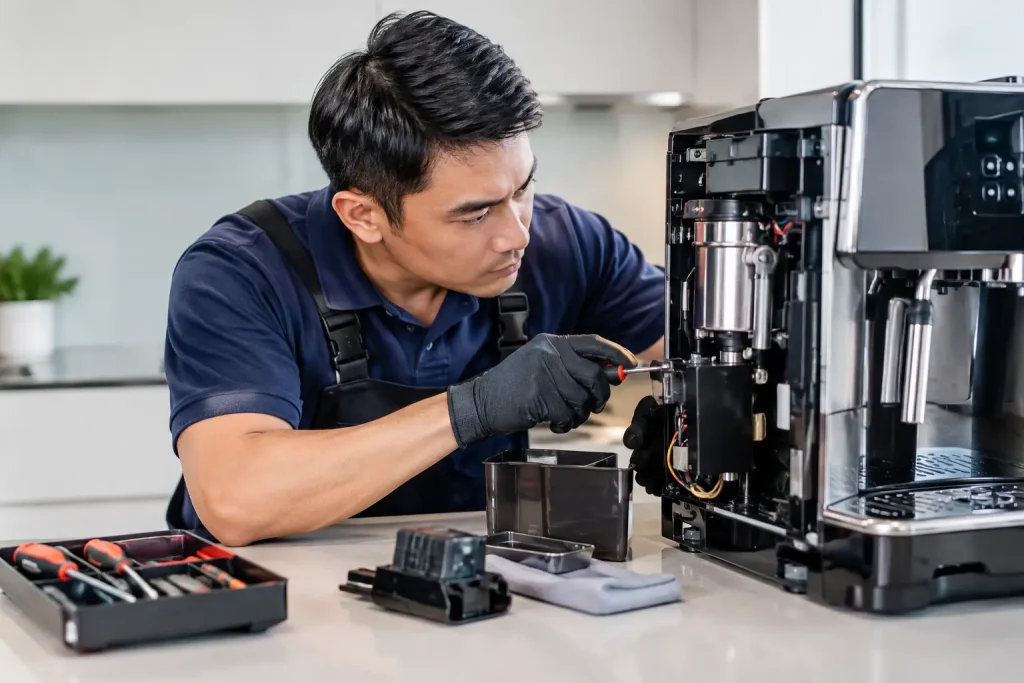
A coffee machine that suddenly stops brewing can disrupt a busy morning at home or slow down service in an office, hotel, or café. This coffee machine repair guide helps you identify the most common faults, carry out a few safe checks, and decide when a professional repair is the sensible next step.
Coffee machines combine water, heat, pressure, valves, pumps, and electronic controls in a compact appliance. A small issue, such as a blocked filter or worn seal, can affect taste and performance. Other faults, including leaks, electrical failures, or boiler problems, require proper diagnosis and replacement parts.
Start With Safe Checks Before Any Repair
Unplug the coffee machine and allow it to cool completely before inspecting it. Do not open the casing, remove internal wiring, or work around the heating system while the appliance is connected to power. This is especially important for espresso machines and bean-to-cup models, which can retain heat, pressure, and hot water after use.
Check that the power outlet is working by testing it with another appliance. Then inspect the power cord and plug for fraying, burning, looseness, or damage. If there is a burning smell, tripped circuit, sparks, smoke, or visible water near electrical components, stop using the machine immediately. These are not faults to troubleshoot at home.
For simple performance issues, empty and rinse the drip tray, grounds container, water tank, brew basket, and removable filters. Refill the tank with clean water and make sure it sits correctly in its position. Many machines will not brew if the water tank, drip tray, or service door is not fully fitted.
Coffee Machine Repair Guide: Common Problems
The machine will not turn on
If the outlet works but the machine remains completely dead, the fault may be in the power cable, internal fuse, control board, thermal fuse, or main switch. Some machines also have safety switches that prevent operation when a door, tray, or water tank is not correctly installed.
A reset may help after a temporary error, but repeated power failures are different. Avoid repeatedly switching the appliance on and off in the hope that it will recover. This can worsen an electrical fault. A technician can test the power supply and internal components safely to identify whether a repair is worthwhile.
The machine has power but will not brew
A machine that lights up but does not produce coffee may have a blocked water path, scale buildup, a stuck valve, a weak pump, or a faulty flow sensor. On capsule and filter machines, check for a misplaced capsule, clogged needle, blocked basket, or incorrectly fitted carafe.
On bean-to-cup machines, old grounds can build up around the brew unit and chute. If the brew unit is designed to be removed by the user, follow the manufacturer’s instructions to rinse it and let it dry fully before refitting it. Do not force a jammed brew unit, as plastic gears and drive mechanisms can break.
If the machine makes a loud humming sound but no water comes through, the pump may be trying to move water through a blocked system. Descaling may solve the issue when mineral buildup is the cause. If descaling does not restore flow, professional coffee machine repair is usually needed.
Coffee is weak, cold, or takes too long
Weak coffee is often caused by incorrect settings, insufficient coffee grounds, a coarse grind, or a dirty filter. Start with the simple causes: adjust the strength setting, use fresh coffee, and clean the filter or brew basket.
Cold coffee is more concerning. The machine may have a failing heating element, thermostat, temperature sensor, thermal fuse, or control board. Espresso machines may also have a boiler or thermoblock fault. Because these parts operate at high temperatures and involve electrical connections, they should be tested and replaced by a qualified appliance technician.
Slow brewing can point to partial blockage. A proper descaling cycle may help, but use a descaling product suitable for your machine. Vinegar is not appropriate for every model and can damage seals, leave odors, or trigger errors in certain coffee machines.
Water leaks from the machine
A small amount of water in the drip tray is normal. Water pooling under the machine, dripping from the brew head, or leaking from the base is not. First check whether the water tank has a cracked valve, loose lid, damaged seal, or poor fit.
Leaks can also come from worn O-rings, split hoses, loose connectors, a damaged pump, or an overflowing internal drain. For espresso machines, a leaking group head gasket may cause water to run around the portafilter during brewing. Replacing the correct seal can restore normal operation, but the source of the leak must be confirmed first. Replacing parts at random can add cost without fixing the fault.
Do not continue using a leaking coffee machine. Water can reach internal electrical parts and create a more serious repair issue.
The steam wand has little or no pressure
Milk residue is a common cause of a blocked steam wand. After the machine has cooled, remove the outer steam tip if your model allows it and clean the openings carefully. Purge the wand briefly after each use to prevent residue from hardening inside.
If the wand is clean but pressure remains weak, the cause may be a blocked steam valve, scale in the boiler, a leaking solenoid valve, or a heating problem. Commercial machines used frequently can develop these faults faster, particularly when preventive maintenance is delayed.
The grinder is noisy, jammed, or does not grind
For bean-to-cup machines, oily beans, foreign objects, worn burrs, and compacted grounds can affect the grinder. Empty the bean hopper and remove loose beans if the manufacturer’s instructions permit. Do not put fingers or metal tools into the grinder.
A grinder that runs but produces no grounds may have worn burrs or a blocked outlet. A grinder that does not run may have a failed motor, safety switch, control issue, or jammed drive mechanism. These faults generally need disassembly and should be handled professionally to avoid damage to the grinder assembly.
When Descaling Helps and When It Does Not
Singapore’s water conditions and frequent daily use can still lead to mineral deposits inside coffee machines. Scale restricts water flow, reduces heating efficiency, and can affect taste. A regular descaling routine is one of the most effective ways to prevent avoidable repairs.
Descale when the machine displays a warning, water flow becomes noticeably slower, brewing temperature drops, or the manufacturer’s recommended interval has arrived. Always remove compatible filters or cartridges first if the instructions require it, and run several rinse cycles afterward.
Descaling is not a cure for every problem. It will not repair a cracked hose, failed pump, defective heating element, damaged control board, or worn mechanical gear. If the machine leaks, trips power, displays recurring error codes, or remains blocked after a correct descaling cycle, further diagnosis is needed.
Repair or Replace: How to Make the Call
The right choice depends on the machine’s age, type, condition, and repair cost. A basic drip coffee maker with a major electrical fault may not be economical to repair. A quality espresso machine, built-in coffee system, bean-to-cup model, or commercial unit is often worth repairing when the main structure and key components are in good condition.
Ask for a diagnosis before approving work. A clear assessment should explain the fault, the parts required, and whether the repair addresses the root cause. For older machines, consider the condition of the pump, boiler, grinder, seals, and electronics together. Fixing one part may be reasonable, but multiple failing systems can change the value of repair.
Businesses should also consider downtime. A reliable repair may be more cost-effective than replacing a commercial machine at short notice, particularly when a specific model suits the existing workflow. Preventive servicing can reduce unexpected stoppages and help parts last longer.
Simple Habits That Prevent Coffee Machine Faults
Daily care makes a real difference. Empty used grounds, rinse removable parts, wipe the steam wand after use, and refill the water tank with fresh water. Do not leave old coffee grounds or standing water inside the machine for long periods.
Use the correct coffee type and grind setting for your machine. Fine grounds in the wrong filter system can cause blockages, while very oily beans can create buildup in automatic grinders. Follow the recommended cleaning and descaling schedule rather than waiting for performance to decline.
If your coffee machine is leaking, failing to heat, producing error messages, or making unusual noises, arranging a professional inspection early can prevent a smaller fault from becoming a major breakdown. Fix It Appliance provides practical diagnostics and reliable coffee machine repair for homes and businesses across Singapore, with the focus on getting your appliance working properly again.