A coffee machine that suddenly brews slowly, makes weaker coffee, or produces less coffee than usual may not have a major fault. In many cases, coffee machine descaling is the maintenance step that has been missed. Mineral deposits from the water supply can build up inside pipes, heating parts, valves, and the brew unit, restricting water flow over time.
For homeowners, offices, cafés, and other businesses in Singapore, regular descaling helps keep a coffee machine working consistently. It also makes it easier to spot the difference between routine buildup and a fault that needs professional repair.
What Descaling Does Inside a Coffee Machine
Descaling removes limescale and mineral deposits from the internal water system. These deposits form when heated water leaves behind minerals, particularly in areas such as the thermoblock, boiler, hoses, flow meter, valves, and coffee outlet.
You may not see this buildup from the outside. A machine can look clean while its internal water passages are partly blocked. As scale accumulates, the pump has to work harder to push water through the system. This can affect brewing temperature, flow rate, and the volume of coffee delivered into the cup.
Descaling is different from cleaning coffee oils and grounds. Cleaning tablets, brush cleaning, and rinsing removable parts deal with coffee residue. A descaling solution is designed to dissolve mineral deposits. Many automatic machines need both types of maintenance at different intervals.
Signs Your Machine Needs Coffee Machine Descaling
Many bean-to-cup, capsule, espresso, and filter coffee machines display a descaling light or maintenance message. Do not ignore it for weeks simply because the machine still makes coffee. The alert is usually based on water usage or an internal maintenance schedule, not just on visible symptoms.
Even without an alert, watch for practical changes in performance. Coffee may come out more slowly than before, the brew may stop early, or the machine may dispense a smaller volume than selected. You might hear the pump sounding louder or strained during brewing. Steam output can also weaken on machines with a steam wand.
Other signs include coffee that is not as hot as usual, repeated rinsing cycles, water leaking into the drip tray, or a machine that asks for descaling again soon after a cycle. These symptoms do not always mean scale is the only cause. A blocked brew unit, worn seals, clogged coffee outlet, faulty pump, or failing valve can create similar problems.
How Often Should You Descale?
There is no single schedule that suits every machine. The right interval depends on the model, water hardness setting, daily usage, and whether the machine uses a water filter.
For a lightly used home machine, descaling may be needed every two to three months. A busy household or office machine may need attention more often. Commercial machines can require a more structured preventive maintenance schedule because they produce far more drinks and any downtime affects operations.
The best starting point is the manufacturer’s maintenance instruction for your exact model. If the machine allows you to set water hardness, make sure that setting is accurate. An incorrect setting can cause the descaling alert to appear too late or too often.
Water filters can reduce mineral buildup, but they do not remove the need for descaling forever. Filters must also be replaced on schedule. A neglected filter may restrict water flow and create a different set of brewing problems.
How to Descale a Coffee Machine Safely
Always follow the instructions for your coffee machine model first. The menu steps, solution quantity, water tank capacity, and rinse requirements vary between brands. Some machines require the brew unit, capsule holder, or water filter to be removed before starting the program.
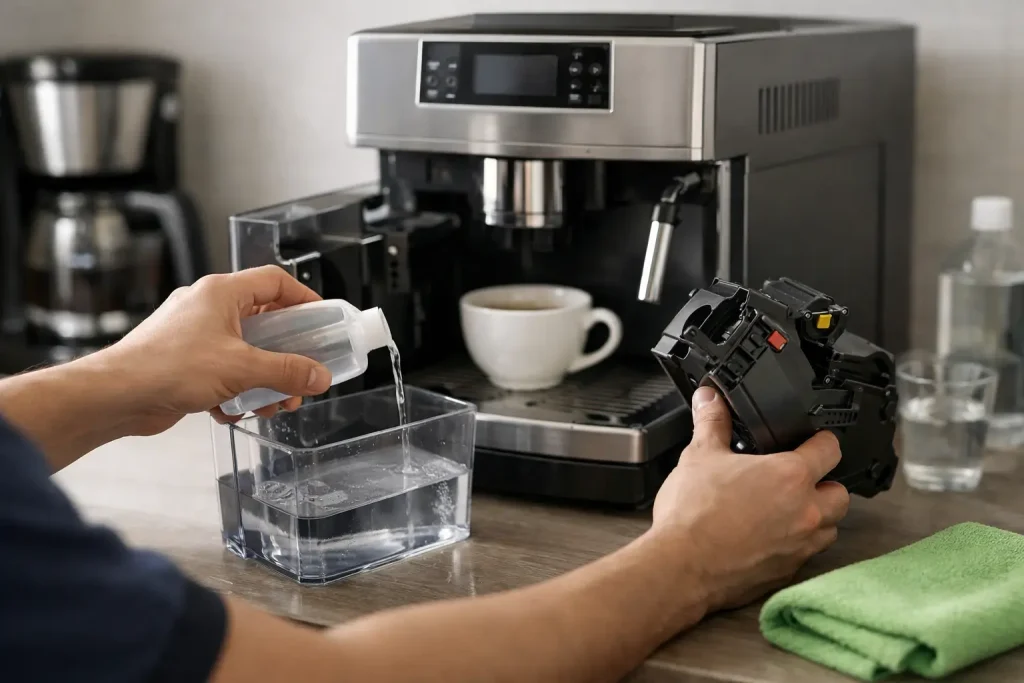
Before you begin, empty the drip tray and coffee grounds container. Remove any coffee capsule, pod, or beans being processed, and ensure there is no milk in the milk system. Place a container large enough to hold the full rinse water under the coffee and hot-water outlets.
Add the recommended descaling solution and the correct amount of water to the tank. Start the machine’s descaling program if it has one. Do not interrupt the cycle unless the manufacturer specifically instructs you to do so. Pausing or switching off the machine midway may leave descaling solution inside the system or prevent the maintenance counter from resetting properly.
When the descaling stage is complete, rinse the water tank thoroughly. Refill it with clean water and run every required rinse cycle. This step matters. Residual descaling solution can affect taste and may irritate internal parts if left in the machine.
Afterward, reinstall a new water filter if your model requires one, reset the filter setting if applicable, and wipe down the drip tray and exterior. Brew a small amount of plain water before making coffee to confirm the flow is normal.
Use the Right Descaling Product
Use a descaling product approved or recommended for coffee machines. Different machines use different materials, seals, and heating systems, so a product that works in one appliance may not be suitable for another.
Avoid using vinegar unless your manufacturer clearly permits it. Vinegar can leave a strong odor and taste, and its acidity may not be appropriate for certain internal components. Homemade mixtures and overly concentrated solutions can also damage seals or fail to remove scale effectively.
If you manage multiple machines in an office or commercial setting, keep a simple record of descaling dates, filter changes, and faults. This makes it easier to identify when a machine is developing a recurring issue rather than simply needing routine maintenance.
When Descaling Will Not Solve the Problem
Descaling is preventive maintenance, not a cure for every coffee machine fault. If the machine remains slow, leaks, produces error messages, or fails to heat after a complete cycle, further diagnosis is needed.
For example, weak or no water flow may be caused by a blocked inlet, faulty pump, clogged solenoid valve, damaged flow meter, or a jammed brew unit. Water collecting underneath the machine can point to worn O-rings, cracked hoses, a leaking tank connection, or an internal valve issue. A machine that powers on but does not heat may have a problem with the heating element, thermal fuse, temperature sensor, or control board.
Repeated descaling alerts can also be misleading. The machine may not be detecting water flow correctly, the program may not have completed, or the internal counter may not have reset. Continuing to run descaling cycles unnecessarily can waste solution and does not repair an electrical or mechanical fault.
Do not open the machine if you are not familiar with appliance repair. Coffee machines combine water, heat, pressure, and electrical components in a compact space. Improper dismantling can damage clips, seals, tubing, or the control system, and it may create a leak when the machine is reassembled.
Repair or Replace After Heavy Scale Buildup?
A professional repair is often worthwhile when a good-quality coffee machine has a blocked water system, worn seals, pump issue, or replaceable heating part. The decision depends on the machine’s age, condition, spare parts availability, and the cost of repair compared with replacement.
For a commercial machine, repair is often the more practical option because replacement may mean staff retraining, disruption to daily service, and higher upfront cost. Regular descaling and preventive maintenance can help avoid emergency breakdowns during busy periods.
For an older, entry-level machine with multiple faults, extensive internal scale damage, or an unavailable part, replacement may be more sensible. An accurate diagnosis helps avoid spending on repairs that do not address the underlying issue.
Fix It Appliance can inspect coffee machine faults, identify whether scale buildup is contributing to the problem, and advise on practical repair options across Singapore. A machine that receives the right maintenance before performance drops completely is usually easier and less disruptive to keep in service.