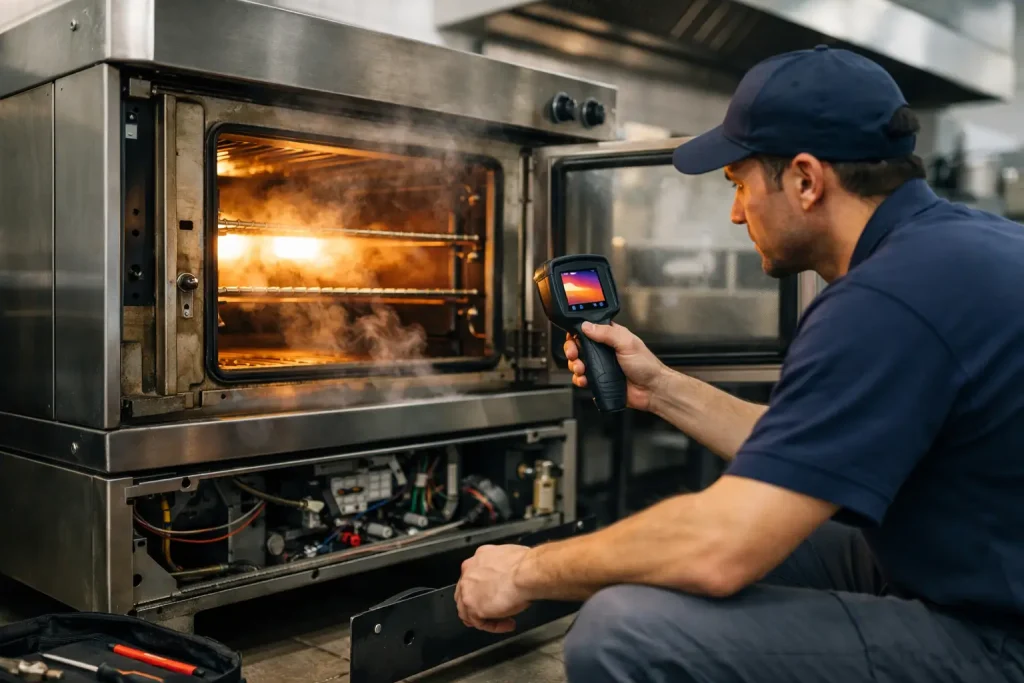
A commercial oven that reaches temperature but cannot hold it creates a costly problem. Cooking cycles run longer, batches come out uneven, and staff may keep raising the temperature setting to compensate. This commercial oven repair case study explains how a typical heat-loss fault is diagnosed, repaired, and prevented from returning in a busy Singapore commercial setting.
The problem: inconsistent heat during normal operation
The site manager reported that the oven appeared to heat normally at the start of the day. However, after the door was opened for loading, the temperature dropped sharply and took too long to recover. Some trays were heating more quickly than others, while the front area of the oven was noticeably cooler.
This type of complaint can point to several different faults. A weak heating element is one possibility, but it is not the only one. A damaged door gasket, inaccurate temperature sensor, faulty fan motor, loose wiring connection, or control board issue can produce similar symptoms.
Replacing a part based on guesswork may restore operation briefly, but it can also add unnecessary cost and leave the real fault unresolved. The first priority was a proper diagnosis.
Commercial oven repair case study: the inspection process
Before opening the appliance, the technician checked the oven’s basic operation. This included confirming the power supply, reviewing the error display if present, and observing the heating cycle from cold start to set temperature.
An independent temperature probe was placed at different points inside the oven cavity. The display showed that the oven had reached its selected temperature, but the measured temperatures varied significantly between the rear and front sections. The difference became more obvious after the door was opened and closed.
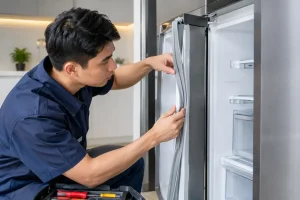
The technician then inspected the door seal. The gasket had hardened and was slightly compressed along one side. This created a narrow gap where hot air could escape. On its own, a worn gasket can lead to slower recovery times, higher energy use, and uneven results.
However, the gasket was not the full explanation. The convection fan was also running inconsistently. It started during the heat-up cycle but slowed after the oven had been operating for several minutes. A commercial oven depends on steady air circulation to distribute heat around the cavity. When airflow is weak, the thermostat or sensor may detect the correct temperature in one area while trays in another area remain underheated.
Further testing showed that the fan motor was overheating. Its internal bearings had worn over time, causing extra resistance. The motor could still turn, but it could not maintain the required speed under heat.
Why the displayed temperature was misleading
Many operators rely on the temperature shown on the control panel. That display is useful, but it reflects the reading from one sensor location. It does not guarantee that every section of the oven cavity is at the same temperature.
In this case, the sensor was functioning within an acceptable range. The main issue was heat escaping around the door and poor circulation from the weakening fan motor. Changing the temperature sensor would not have solved the uneven heating problem.
This distinction matters because commercial oven faults often overlap. A technician should test components in context rather than replacing whichever part seems most likely at first glance.
The repair: replacing the parts that caused the fault
The repair involved replacing the worn door gasket and the failing convection fan motor. The technician also checked the fan blade, mounting points, wiring terminals, and thermal protection components before fitting the new motor.
A fan motor replacement is not always required when an oven heats unevenly. Sometimes the fan blade is loose, obstructed, or coated with grease buildup. In other cases, the motor is sound but the control board is not providing stable power. Testing helps separate these faults before parts are ordered or installed.
Once the new components were fitted, the oven was reassembled and run through several heating cycles. Temperature readings were taken again from multiple positions in the cavity. The heat distribution was substantially more consistent, and recovery after opening the door improved.
The technician also checked that the door closed evenly and that the new gasket made full contact around the frame. A gasket should be snug, but the door should not require excessive force to close. If it is fitted incorrectly, it can wear prematurely or cause alignment issues.
What caused the parts to wear out?
The oven was used frequently, with repeated door opening during service periods. That is expected in a commercial environment, but the appliance had not received regular preventive maintenance. Small signs of wear had gone unnoticed until performance was affected.
Door gaskets are exposed to heat, moisture, and frequent contact. Over time, they can flatten, crack, loosen at the corners, or become hardened. A damaged gasket forces the oven to work harder to maintain heat and can place more strain on heating and circulation components.
Fan motors also work under demanding conditions. Grease, dust, heat, and restricted airflow can shorten their service life. Early warning signs include a rattling sound, reduced fan noise, intermittent operation, longer heat-up times, and uneven browning or cooking results.
The lesson from this case was not that every oven needs major repairs after a certain number of years. Usage pattern, model, maintenance history, and operating conditions all matter. But small performance changes should be investigated before they develop into a full breakdown.
Repair or replacement: how the decision was made
The oven’s control system, heating elements, cavity, and main electrical connections were still in serviceable condition. The required parts addressed a specific fault, and the repair was more practical than replacing the entire appliance.
Replacement may be the better option when multiple major systems have failed, spare parts are discontinued, the oven has serious cavity damage, or repair costs are approaching the value of a comparable replacement unit. Repeated breakdowns also deserve attention, especially if downtime is affecting daily operations.
For a repair decision, consider more than the immediate quotation. Ask whether the diagnosed fault is isolated, whether suitable replacement parts are available, and whether the appliance has been reliable apart from the current issue. A clear diagnosis gives you a better basis for comparing repair and replacement.
Preventing another commercial oven breakdown
After the repair, the site manager was advised to monitor heat recovery time and check the door seal regularly. Staff can spot early gasket wear by looking for cracks, loose sections, flattened areas, or visible gaps when the door is shut.
The oven interior and fan area should also be kept free from heavy grease and debris. Cleaning must be done safely and according to the appliance manufacturer’s guidance. Avoid spraying liquid directly into control areas, fan motor openings, or electrical components.
For heavily used ovens, scheduled servicing can identify loose terminals, weak fan motors, deteriorating gaskets, inaccurate temperature readings, and worn heating components before they interrupt operations. Preventive maintenance does not eliminate every unexpected fault, but it reduces the chance that a minor issue turns into urgent downtime.
When to call for professional oven repair
Arrange a professional inspection if the oven trips power, gives off a burning smell, shows an error code, fails to heat, overheats, has visibly damaged wiring, or produces highly uneven temperatures. Stop using the appliance if there are signs of electrical damage or abnormal sparking.
If the oven is still operating but takes longer to heat, loses heat after the door opens, or delivers inconsistent results, prompt diagnosis can often prevent a larger repair. Fix It Appliance provides commercial oven troubleshooting and repairs across Singapore, with a focus on identifying the actual cause before recommending parts.
A commercial oven does not need to fail completely before it needs attention. Recording changes in heating time, temperature consistency, fan noise, and door condition gives a technician useful information and helps keep a manageable repair from becoming extended downtime.