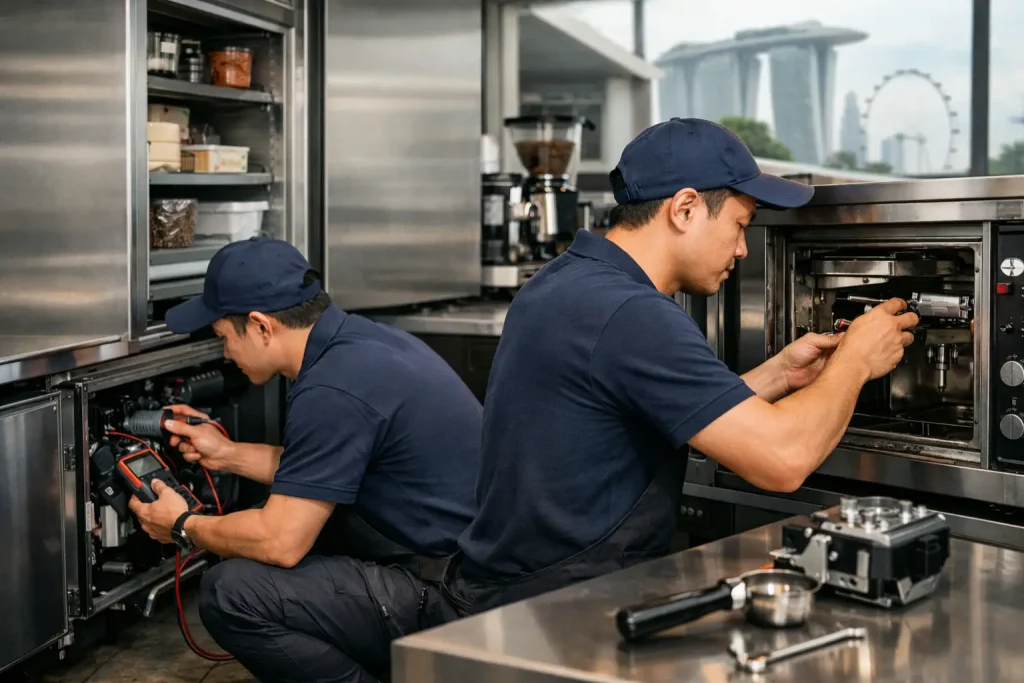
A refrigerator that stops cooling overnight, an oven that will not hold temperature, or a dishwasher that leaves standing water can disrupt an entire business day. This commercial appliance maintenance guide is designed for Singapore businesses that rely on equipment working reliably, from office pantries and serviced apartments to cafés, hotels, and shared kitchens. Regular care will not prevent every fault, but it can reduce avoidable breakdowns, protect food storage, and give you a clearer picture of when professional repair is needed.
Why Commercial Appliance Maintenance Matters
Commercial appliances work harder than most household units. Doors are opened more often, wash cycles run back-to-back, and cooling equipment may operate continuously in a warm, humid environment. Small issues that would be easy to ignore at home can become costly when they affect daily operations.
Maintenance also helps identify faults before a major component fails. A refrigerator with a dirty condenser may still cool, but its compressor has to work longer and hotter. A dryer with restricted airflow may still dry laundry, but cycles become slower and overheating risk increases. Addressing these early signs is usually simpler than waiting for a full breakdown.
The right approach depends on the appliance, its workload, age, and location. Equipment in a busy pantry or food-preparation area needs more frequent checks than a lightly used unit in a meeting room. Keep a simple maintenance record with the appliance model, installation date, service history, error codes, and parts replaced. It makes troubleshooting faster when a technician is called.
Commercial Appliance Maintenance Guide: Set a Practical Schedule
A clear schedule prevents maintenance from becoming a job that is only remembered after something fails. Assign daily checks to the user or site staff, while deeper cleaning and technical inspections should be handled by trained personnel.
Daily and weekly checks
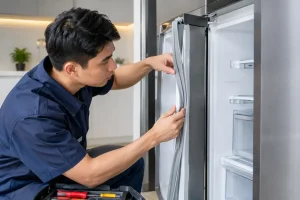
For refrigerators, freezers, wine chillers, and ice makers, check that the cabinet is reaching its usual temperature and that doors close fully. Wipe spills promptly, inspect door gaskets for food residue or tears, and make sure cartons or containers are not blocking internal vents. Poor airflow inside the cabinet causes uneven temperatures and can make the unit run continuously.
For dishwashers, clear food debris from filters and inspect spray arms for blocked holes. Standing water after a cycle, weak wash results, or a sour smell often points to a blocked filter, drainage restriction, or buildup that needs attention. Do not keep restarting a machine that is not draining, as repeated attempts can strain the drain pump.
For washing machines and dryers, inspect the drum area before use and remove loose items from pockets. Check for unusual vibration, knocking, burning smells, or water around the base. Dryer lint filters should be cleaned after every use. This is particularly important for high-use machines, where lint buildup can restrict airflow and cause poor drying performance.
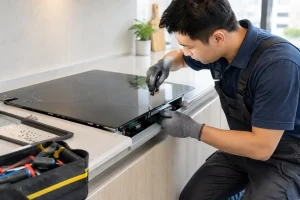
For ovens, microwave ovens, induction cooktops, ceramic hobs, and gas hobs, clean spills after the appliance has cooled. Burnt-on residue can damage surfaces, block burners, affect heating performance, and create smoke during later use. Avoid flooding controls or vents with water and do not use abrasive tools on glass cooktops.
Monthly checks
Once a month, inspect external ventilation areas and clear dust from accessible grilles. Leave enough space around appliances for heat to escape, especially refrigerators, freezers, dryers, coffee machines, and built-in ovens. A unit installed tightly against a wall or inside an unventilated cabinet may overheat even when its internal parts are working properly.
Look for damaged power cords, loose plugs, cracked door seals, worn hinges, and leaking hoses. A slow water leak behind a dishwasher, washing machine, or ice maker can go unnoticed until it damages nearby surfaces or causes an electrical fault. If you see recurring water leaks, do not rely on tape or sealant as a permanent fix. The source needs to be diagnosed.
Run a visual check on appliance performance as well. Note longer cooling times, extended wash cycles, inconsistent oven temperatures, loud compressor noise, or frequent error messages. These changes often provide useful clues before the appliance stops working completely.
Quarterly or scheduled professional servicing
Some tasks need more than a surface clean. Refrigeration equipment may require condenser cleaning, fan inspection, drainage checks, and temperature assessment. Professional maintenance for washing machines and dishwashers can include checking pumps, hoses, inlet valves, filters, seals, and internal connections.
Coffee machines, ice makers, ovens, and cooktops may also need specialized checks based on the model and how heavily they are used. A technician can test components that are not safely accessible to users, such as heating elements, thermostats, sensors, motors, control boards, and wiring connections.
Scheduled servicing is especially worthwhile for appliances that would cause immediate disruption if they failed. It does not mean replacing parts unnecessarily. It means identifying wear, contamination, or abnormal operation early enough to make a sensible repair decision.
Appliance-Specific Care That Prevents Common Faults
Refrigerators and freezers need clean door seals, open air vents, and properly maintained condenser areas. Do not overload shelves or pack products tightly against the rear panel. Frost buildup, water inside the cabinet, or a compressor that runs almost constantly should be checked early. These may be related to a defrost problem, blocked drain, worn gasket, fan issue, or refrigerant-system fault.
Wine chillers are sensitive to ventilation and temperature settings. Keep them away from direct heat sources and avoid frequent temperature changes. If the chiller is noisy, warm, or forming excessive condensation, do not assume it only needs a lower setting. Restricted airflow or a failing fan can produce similar symptoms.
Dishwashers perform best when filters, spray arms, and door seals are cleaned regularly. Use detergent and rinse products suitable for the machine, and do not overload racks so heavily that water cannot reach all items. Repeated leaks, tripped power, failure to fill, or failure to drain require professional diagnosis rather than continued use.
Dryers need particular attention to lint control and ventilation. If clothes are taking longer to dry, the machine feels unusually hot, or a burning smell appears, stop using it until the cause is checked. The problem may be a clogged vent, faulty heater, thermostat issue, worn belt, or motor fault.
Ovens and cooktops should heat evenly and respond predictably to settings. Uneven baking, a burner that will not ignite, a cooktop that switches off unexpectedly, or an oven that takes too long to preheat can indicate a problem with an element, igniter, sensor, control, or power supply. Do not dismantle built-in appliances without proper experience, as access can be difficult and parts can be damaged during removal.
Signs Maintenance Is No Longer Enough
Basic care is useful, but it cannot correct a failed compressor, broken heating element, damaged control board, leaking refrigerant line, or worn pump. Call for repair when an appliance repeatedly shows the same error code, trips the power supply, leaks water, produces burning smells, makes loud mechanical noises, or performs poorly after cleaning and routine checks.
For cooling equipment, treat temperature instability as urgent when products rely on safe chilled or frozen storage. Move contents to another suitable unit where possible and avoid repeatedly opening the affected door. Continuing to operate a struggling refrigerator or freezer can turn a repairable issue into a larger failure.
Repair versus replacement depends on the age of the appliance, availability of spare parts, repair cost, energy use, and how critical the unit is to your operations. A well-maintained unit with a single replaceable part is often worth repairing. If faults are frequent, parts are obsolete, or the appliance no longer meets your capacity needs, replacement may be the more practical option.
Make Maintenance Part of Daily Operations
The best maintenance plan is one your team can actually follow. Keep cleaning instructions near the appliance, train staff to report changes early, and avoid assigning technical repairs to untrained users. A short log of temperatures, faults, and servicing dates can prevent repeated guesswork and help a technician diagnose the issue faster.
For businesses across Singapore, Fix It Appliance provides diagnostics, preventive maintenance, spare parts replacement, and repair support for a wide range of commercial and household appliances. When an appliance starts showing warning signs, early professional attention is usually the fastest way to protect your equipment and keep operations moving.